 TEKZARO
Startups
Accel reportedly in talks to lead $1B round for Thinking Machines at $40B valuation
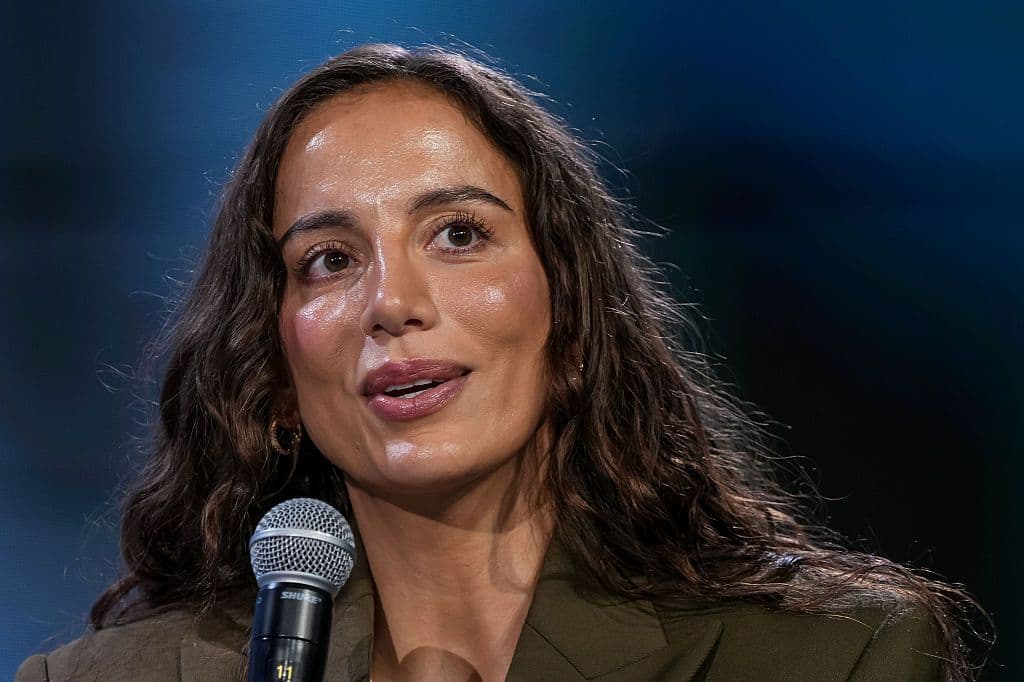
Thinking Machines Lab, the artificial intelligence company founded by former OpenAI Chief Technology Officer Mira Murati, is in discussions to raise at least $1 billion at a valuation of approximately $40 billion, according to The Information. Existing investor Accel is negotiating to lead the funding round, with Nvidia—already an investor and infrastructure partner—reportedly considering participation. The proposed valuation, while extraordinarily high on a revenue basis, represents a marked retreat from the over $50 billion valuation the startup pursued late last year. Still, it reflects aggressive investor confidence in Murati's founding team and the company's trajectory as one of the few independent AI labs gaining meaningful commercial traction.
From $10B to $40B in 14 Months
The valuation progression underscores how quickly Thinking Machines has ascended in investor perception, though with notable pullbacks reflecting market sentiment shifts: July 2025: Thinking Machines raised $2 billion at a $10 billion pre-money valuation in its seed round Late 2025: The company explored raising $4-5 billion at a valuation exceeding $50 billion (talks did not close) September 2026: Negotiations for $1 billion at $40 billion valuation The trajectory shows both explosive growth and market correction. The company went from $10 billion to $50 billion valuation in roughly six months, then pulled back to $40 billion as market conditions tightened and investor appetite for ultra-high AI company valuations cooled.
A 400x Revenue Multiple
What makes the $40 billion valuation remarkable is the revenue picture. Thinking Machines generates over $100 million in annualized revenue run rate, according to sources with knowledge of the company's financials. This implies a revenue multiple of approximately 400x—an extraordinarily high figure even by AI industry standards. For context, most software companies trade at 5-20x revenue. Cloud infrastructure providers typically command 10-50x multiples. Even high-growth AI platforms rarely reach 400x. That Thinking Machines commands such a multiple reflects not current revenue but investor expectations about the company's long-term market position. The business model drives this optimism. Thinking Machines offers open-weight AI models for free, creating a developer community and data flywheel. The company monetizes through its Tinker platform, which charges usage-based compute fees when enterprises customize models on proprietary data. This freemium-to-enterprise model has proven effective at generating revenue while building network effects.
Inkling: The Product That Changed Perception
The catalyst for the revaluation was Thinking Machines' release of Inkling in July 2026—the company's first proprietary AI model. Inkling is positioned as an open-weight model optimized for enterprise model customization, differentiating from pure open-source projects by bundling it with enterprise infrastructure. Inkling's release marked the transition from Thinking Machines being a company built by AI talent with promising prospects to a company with shipped products generating revenue. The timing coincided with broader market validation for open-source AI—Nvidia's acquisition of Hugging Face for $13 billion announced the same day as these funding discussions underscores institutional commitment to open-weight AI infrastructure.
Murati's Credibility and Departure Drama
The funding round is as much about Mira Murati as it is about technology or revenue. Murati served as OpenAI's Chief Technology Officer before departing to start Thinking Machines in late 2024. Her background as an engineer who shaped critical OpenAI products—including contributions to the design of GPT systems—carries enormous weight with investors betting on AI ventures. However, the company has experienced notable departures. Co-founders Lilian Weng and Luke Metz, both former OpenAI researchers and prominent figures in the AI research community, recently departed Thinking Machines to return to OpenAI. This represents a significant loss of star power, though Murati's continued leadership and the freshness of the Inkling release have kept investor momentum strong. The departures signal intense competition for top AI talent. Even well-funded startups struggle to retain researchers when OpenAI—which remains the most prestigious brand in AI—offers to bring them back. Whether Thinking Machines can stabilize leadership around Murati and other core team members will be critical to execution.
Accel as Lead Investor
Accel's reported lead role signals confidence from one of Silicon Valley's most influential venture firms. Accel has backed some of the most valuable AI and infrastructure companies, including Mistral AI and others. The firm's involvement suggests a long-term commitment—Accel typically expects to participate in follow-on rounds and provide strategic guidance. For Thinking Machines, Accel's participation provides both capital and the imprimatur that comes from an endorsement by a top-tier investor. It also likely signals confidence that the company can reach the scale required to justify a $40 billion valuation.
Nvidia's Infrastructure Partnership
Nvidia's reported consideration of participation is significant beyond capital. Nvidia has already established itself as an infrastructure partner for Thinking Machines, meaning the company relies on Nvidia's GPUs and potentially other services for training, inference, and compute. An equity investment would deepen that relationship and align incentives. For Nvidia, investing in Thinking Machines serves multiple purposes: it secures a major compute customer, it positions Nvidia to benefit from Murati's products, and it diversifies Nvidia's AI portfolio beyond pure chip sales. Nvidia has become an investor in numerous AI companies, creating a constellation of bets on various approaches to AI development.
Market Context: AI Valuations Cooling
The $40 billion valuation, while high, reflects a cooler market than late 2025. The startup landscape has consolidated, with layoffs among struggling AI companies. Mega-rounds at $20+ billion valuations have become less frequent. Investors are increasingly focusing on companies with demonstrated revenue and path to profitability. Thinking Machines' $100+ million annual revenue run rate and recent product launch position it better than most AI startups for this new environment. But the gap between the $50 billion valuation pursued late last year and the current $40 billion target suggests market expectations have moderated.
The Round's Purpose
If completed, the $1 billion round would fund: Scaling compute infrastructure to handle growing demand for Inkling Expanding the developer ecosystem and community around open-weight models Accelerating enterprise product distribution through Tinker platform Building out go-to-market capabilities The capital would essentially allow Thinking Machines to move from seed-stage company with promising technology to growth-stage company scaling a proven business model.
Timeline and Status
The fundraising discussions are ongoing. Neither Accel nor Thinking Machines has confirmed formal term sheets or closing timelines. If the round closes, it would likely complete within the next 2-3 months, based on typical venture fund decision-making speed. The larger market question is whether AI infrastructure companies like Thinking Machines can sustain the valuations investors are assigning. A $40 billion pre-money valuation implies the company will need to grow revenue by 50-100x over the next 5-10 years to justify the valuation at typical exit multiples. That's possible but requires flawless execution, sustained demand for customizable AI models, and Murati's team to retain and attract top talent despite competition from OpenAI and others. For now, the reported round demonstrates that Thinking Machines has successfully navigated the transition from "promising startup founded by AI talent" to "promising startup with revenue and product." That progression, combined with Murati's credibility and Accel's backing, keeps investor interest strong even as overall market expectations for AI company valuations have tempered.
Sources
Related Articles