 TEKZARO
Pakistan
KP Establishes Pakistan’s First AI and Digital Institute
KP Establishes Pakistan's First AI and Digital Institute
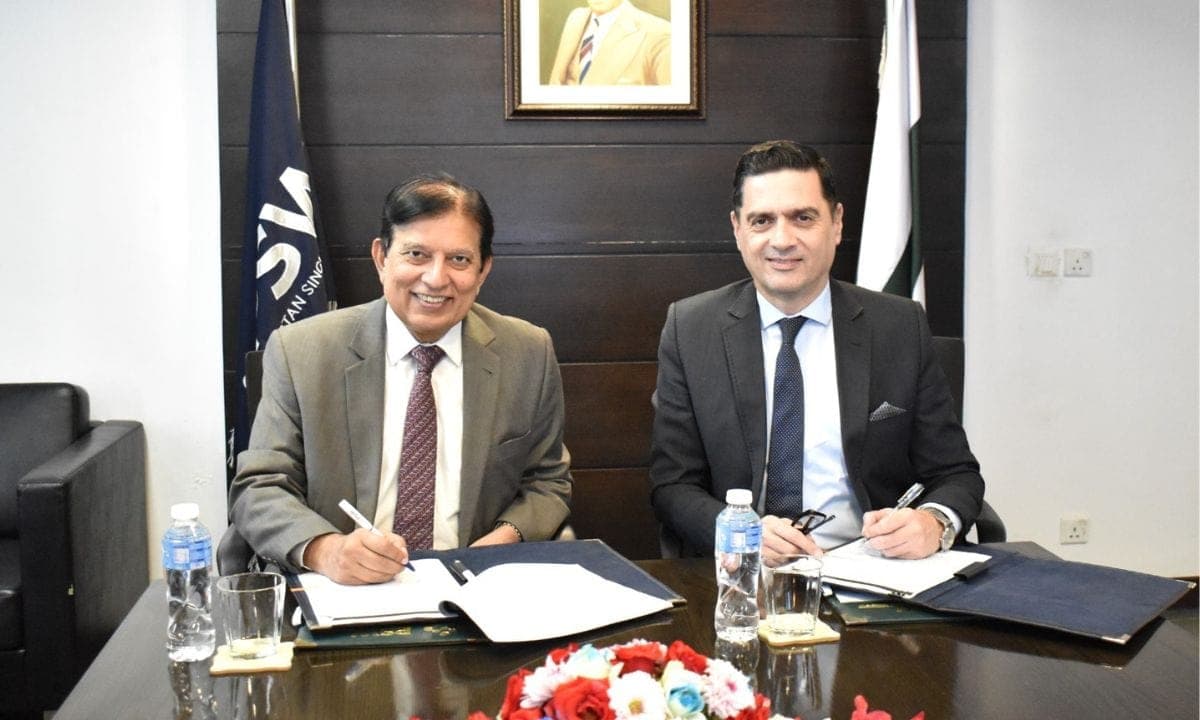
The Khyber Pakhtunkhwa Elementary and Secondary Education Department has established what it describes as Pakistan's first Artificial Intelligence and Digital Institute, aimed at bringing modern technology into the province's education sector.
The institute's stated focus is developing AI-based solutions and accelerating digital transformation within the department.
What It Will Actually Do
A seven-member team has been formed to prepare technical frameworks and guidelines for the initiative.
Its mandate breaks into three parts. It will review existing systems across the department. It will recommend measures to reduce manual procedures. And it will work on developing modern digital applications intended to improve transparency, efficiency and service delivery.
That is a narrower brief than the name suggests. This is not a research centre or a training academy for AI engineers. It is an internal digital transformation unit within a provincial education bureaucracy, with a mandate to automate paperwork and build applications.
Whether that is a disappointment depends on what you were expecting. Provincial education departments in Pakistan run on enormous volumes of manual process — teacher attendance, transfers, school inspections, examination records, budget disbursement — and most of it is still paper-based or handled through systems that do not talk to each other. A unit dedicated to fixing that could deliver more measurable value than a research lab would.
The "First" Claim Needs Context
The description of this as Pakistan's first AI institute is doing some work.
Punjab launched an AI Intelligence Hub on September 5, 2026, at the Punjab Enforcement and Regulatory Authority headquarters in Lahore — described as Pakistan's first provincial AI-based security facility. It uses AI to detect security threats and push digital alerts to district administrations, working alongside the Provincial Intelligence Fusion and Threat Assessment Center.
Punjab also approved Pakistan's first provincial AI Roadmap in March 2026, with an AI Delivery Unit chaired by Chief Minister Maryam Nawaz and a stated goal of becoming South Asia's leading AI-driven province by 2029.
At the federal level, the Presidential Initiative for Artificial Intelligence and Computing has been running since December 2018.
So KP's claim is most defensible as the first AI institute established specifically within an education department. That is a real distinction, but it is a narrower one than the headline implies, and worth stating plainly rather than letting the "first" do unearned work.
KP's Broader Digital Push
The institute fits into a wider provincial agenda.
Chief Minister Sohail Afridi announced in July 2026 that KP is establishing a Khyber Pakhtunkhwa Artificial Intelligence Authority to promote research, innovation and the adoption of emerging technologies. Whether the new education institute sits under that authority or operates independently has not been clarified.
Other elements include the KP Open Wi-Fi Initiative, currently covering Peshawar and divisional headquarters with plans to extend to the merged districts, and Rs. 5 billion allocated in the current budget to bring out-of-school children into the formal education system.
The province has also introduced digital driving licences through the Rabta app, where citizens enter their national identity card number to obtain an electronic version accessible on their phone.
KP's Higher Education Department separately introduced Pakistan's first provincial university ranking system, with IMSciences taking the top position.
The Gaps
Several things that would determine whether this succeeds have not been announced.
There is no stated budget. There is no timeline for deliverables. The seven-member team has not been named publicly, and there is no indication of whether the members are technical specialists brought in from outside or existing departmental officers assigned additional responsibility.
That last detail matters more than it sounds. Digital transformation units staffed entirely from within the department they are meant to reform tend to produce frameworks rather than software. Units staffed with outside technical capacity tend to produce software that the department then struggles to maintain.
There is also the question of what "AI-based solutions" means in practice for an education department. Attendance verification, dropout prediction, resource allocation and document processing are all plausible applications. None of them has been specified.
What to Watch
The measurable outcome is not the institute's existence. It is whether any manual process in the KP education department is actually eliminated within the next twelve months.
That is a low bar and a fair one. Pakistan has no shortage of announced digital initiatives; it has considerably fewer that changed how a government office works day to day.
Sources
Related Articles