 TEKZARO
Pakistan
Major General Faisal Naseer Appointed NACTA National Coordinator
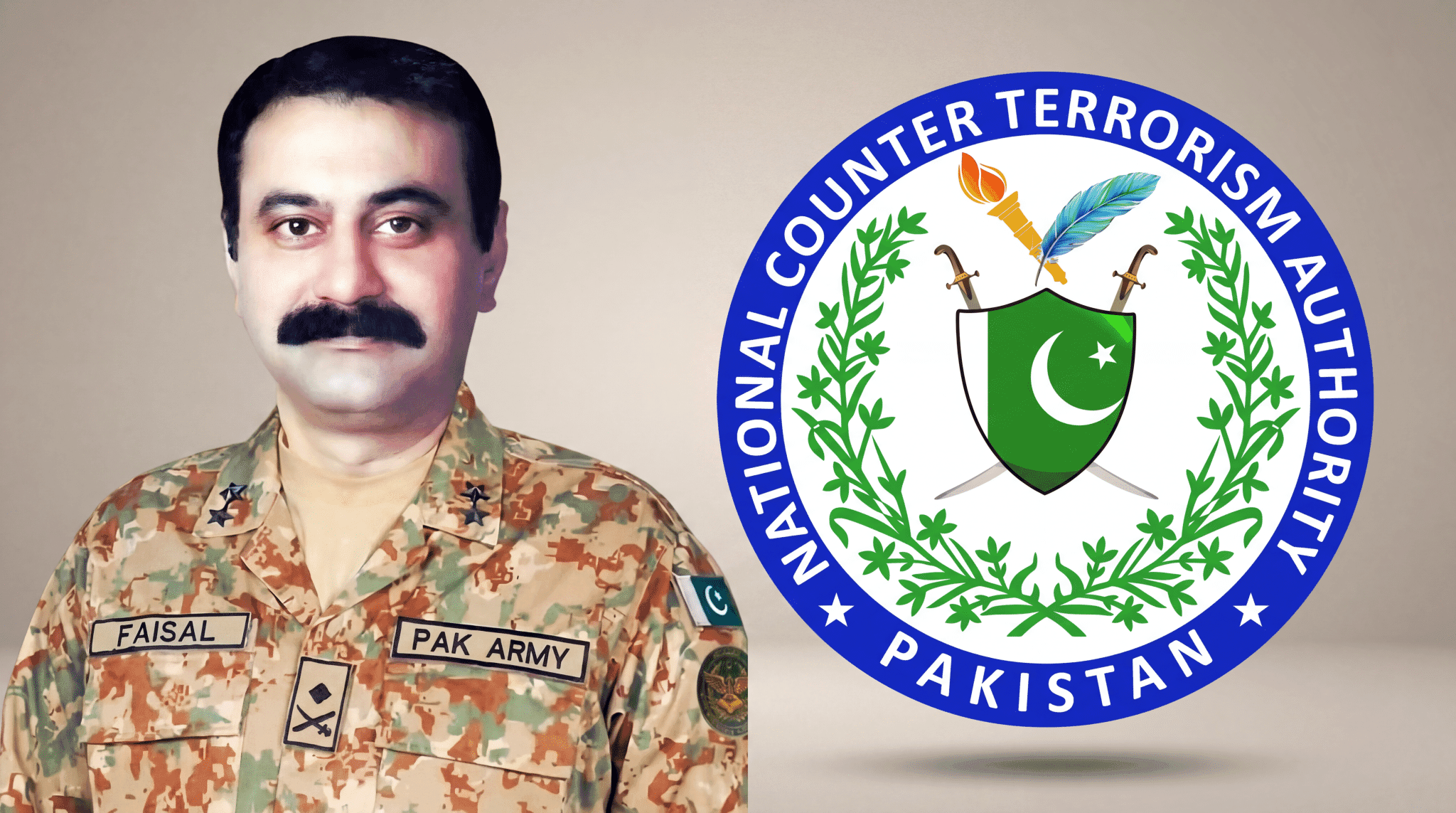
The Government of Pakistan has appointed retired Major General Faisal Naseer as the new National Coordinator of the National Counter Terrorism Authority (NACTA), effective immediately. The appointment, formally notified by the Establishment Division on September 4, 2026, places one of Pakistan's most experienced counterintelligence officials at the helm of the country's apex counter-terrorism coordinating body for a three-year term. Naseer's appointment under Section 9(1) of the NACTA Act 2013 is made on a secondment basis, marking a significant leadership transition at NACTA following the conclusion of prior coordinators' tenures.
A Career at the Apex of Intelligence Operations
Major General Faisal Naseer's appointment to NACTA represents the culmination of a career spent at Pakistan's highest levels of intelligence and counterintelligence operations. Inducted into the Pakistan Army in 1992, Naseer built his reputation through operational roles in some of Pakistan's most sensitive security environments. His work in Balochistan and Sindh earned him the informal designation "super spy"—recognition from colleagues and analysts of his effectiveness in intelligence gathering and counterinsurgency operations during periods of significant security challenges in both provinces. In 2018, while serving as a Brigadier, Naseer was conferred with the Tamgha-i-Basalat, a distinguished service decoration recognizing his contributions to national security. Three years later, in July 2022, he was promoted to the rank of Major General, reflecting seniority and trust within Pakistan's military and intelligence establishment.
ISI's Counter Intelligence Chief
Naseer's most recent and most senior intelligence position was as Director General of Counter Intelligence (DG-CI) at the Inter-Services Intelligence (ISI), a role he assumed in 2022 following his Major General promotion. As DG-CI, Naseer held the second-highest position within ISI's hierarchy, responsible for internal security and counterintelligence operations. The DG-CI role is arguably Pakistan's most sensitive intelligence position after the ISI Director General himself. The counter intelligence directorate manages internal security of state institutions, counterintelligence against foreign intelligence services, and protection of sensitive national security information. It is also responsible for vetting military and government personnel for security clearances. Naseer's tenure as DG-CI spanned years of significant counterterrorism pressure, including operations against militant networks operating across Pakistan's border regions and urban centers. His management of counter intelligence during this period involved coordination with military, intelligence, and civilian security agencies.
Why NACTA Now?
NACTA's mandate is broader and more coordinating in nature than ISI's counter intelligence role. Established under the NACTA Act 2013, the authority is tasked with leading, coordinating, and synchronizing counter-terrorism efforts across all government agencies and stakeholders, both at national and international levels. Unlike ISI, which operates as an independent intelligence service, NACTA functions as a platform for coordination among federal agencies (interior, defense, foreign affairs), provincial governments, and international partners. It develops counter-terrorism strategy, shares intelligence analysis across agencies, oversees counter-terrorism training and capacity-building, and manages Pakistan's engagement with international counter-terrorism frameworks. Naseer's appointment to NACTA suggests the government views coordination and strategic counter-terrorism leadership as the priority. His experience at ISI, where he managed internal security and counterintelligence, directly informs the coordination challenge NACTA faces: integrating intelligence from multiple agencies into coherent counter-terrorism strategy.
The Transition
Naseer's predecessor as NACTA National Coordinator was Muhammad Tahir Rai, a police officer who held the position from July 2022 through August 2024. Prior coordinators include Jawad Ahmad Dogar and Tariq Pervez, each of whom brought different backgrounds—military, police, civilian—to the role. The rotation of NACTA coordinators between military intelligence, police, and civilian bureaucrats reflects the multi-agency nature of Pakistan's counter-terrorism challenge. No single service—neither military intelligence nor civilian law enforcement—has complete purview over counter-terrorism, so NACTA's leadership alternates to maintain institutional credibility across stakeholder groups.
A Military Intelligence Leader in a Coordinating Role
Naseer's appointment as a military intelligence officer to lead NACTA represents an emphasis on intelligence-led counter-terrorism coordination. This contrasts with previous appointments of police officers or civilians who might have emphasized law enforcement or administrative approaches. His background suggests NACTA's strategic direction will emphasize intelligence sharing and coordination across agencies, threat assessment and strategic planning based on intelligence analysis, and operations against terrorist networks. This approach leverages ISI's intelligence capabilities and Naseer's knowledge of active terrorist threats.
Challenges Facing NACTA Under New Leadership
Pakistan's counter-terrorism landscape has evolved significantly since NACTA's establishment in 2008. Key challenges Naseer will face: Militant Revival in Border Regions: The resurgence of the Tehrik-i-Taliban Pakistan (TTP) and affiliated groups in recent years has created renewed pressure on counter-terrorism operations. NACTA must coordinate responses across Khyber Pakhtunkhwa, Balochistan, and beyond. Urban Terrorism and Lone Actor Threats: Terrorism has increasingly manifested in urban centers and through radicalized individuals. Coordination between federal and provincial law enforcement is critical. Counter-Financing and Money Laundering: Terrorist groups rely on funding flows. NACTA must coordinate with financial intelligence units, banking regulators, and customs agencies to disrupt funding. Deradicalization and Counter-Violent Extremism: Alongside operational counter-terrorism, Pakistan has invested in counter-violent extremism (CVE) programs. NACTA oversees these alongside direct counter-terrorism operations. International Cooperation: Pakistan engages with international counter-terrorism frameworks, joint operations with Afghanistan and Central Asian states, and multilateral arrangements. NACTA provides strategic coordination for these relationships. Provincial Coordination: Pakistan's federal system means counter-terrorism responsibility is shared between federal and provincial governments. NACTA must coordinate across this divide despite limited direct authority over provincial agencies.
Naseer's Intelligence Background as Strategic Asset
Naseer's experience managing counter intelligence—which inherently involves coordination between military and civilian intelligence, vetting of personnel and institutions, and protection of sensitive information—provides specific skills applicable to NACTA's coordination mission. Counter intelligence work requires building trust across agencies, validating intelligence from multiple sources, and synthesizing disparate information into actionable analysis. These are precisely the skills coordination requires. Additionally, Naseer's understanding of ISI's threat assessments and intelligence capabilities positions him to leverage military intelligence assets effectively in NACTA's strategic planning. ISI remains Pakistan's most comprehensive source of intelligence on terrorist networks, and NACTA's effectiveness depends partly on integrating ISI analysis with civilian agency efforts.
The Three-Year Mandate
Naseer's three-year term runs through 2029, providing continuity across multiple years of counter-terrorism operations. This term length reflects recognition that counter-terrorism strategy requires sustained leadership to implement, adapt to changing threat environments, and measure effectiveness. His secondment basis—rather than permanent appointment to a civilian position—allows for potential return to military intelligence roles after his NACTA tenure concludes. This arrangement is common in Pakistan's security establishment, where officers rotate between intelligence and coordinating positions.
What Comes Next
Naseer's appointment will be formally validated through briefings to civilian and military leadership. As National Coordinator, he will preside over NACTA's executive council, which includes representatives from interior, defense, foreign affairs, and other agencies. His first priorities are likely: Strategic Threat Assessment: Comprehensive review of current terrorist threats and NACTA's counter-terrorism priorities Agency Coordination Enhancement: Strengthening intelligence-sharing protocols and coordination mechanisms between federal agencies Provincial Engagement: Strengthening NACTA's relationship with provincial government counter-terrorism cells International Partnerships: Review of Pakistan's engagement with international counter-terrorism mechanisms and allied countries' counter-terrorism operations The appointment of Faisal Naseer represents a deliberate choice to place Pakistan's most experienced military intelligence officer in charge of the country's counter-terrorism coordination architecture. Whether this emphasis on intelligence-led coordination proves effective will depend on his ability to maintain trust across Pakistan's multi-agency security establishment while navigating the complex political and operational challenges defining Pakistan's counter-terrorism landscape.
Sources
Related Articles