 TEKZARO
Gaming
Nvidia puts its money where its mouth is on open weight AI, moving to buy Hugging Face for $13 billion
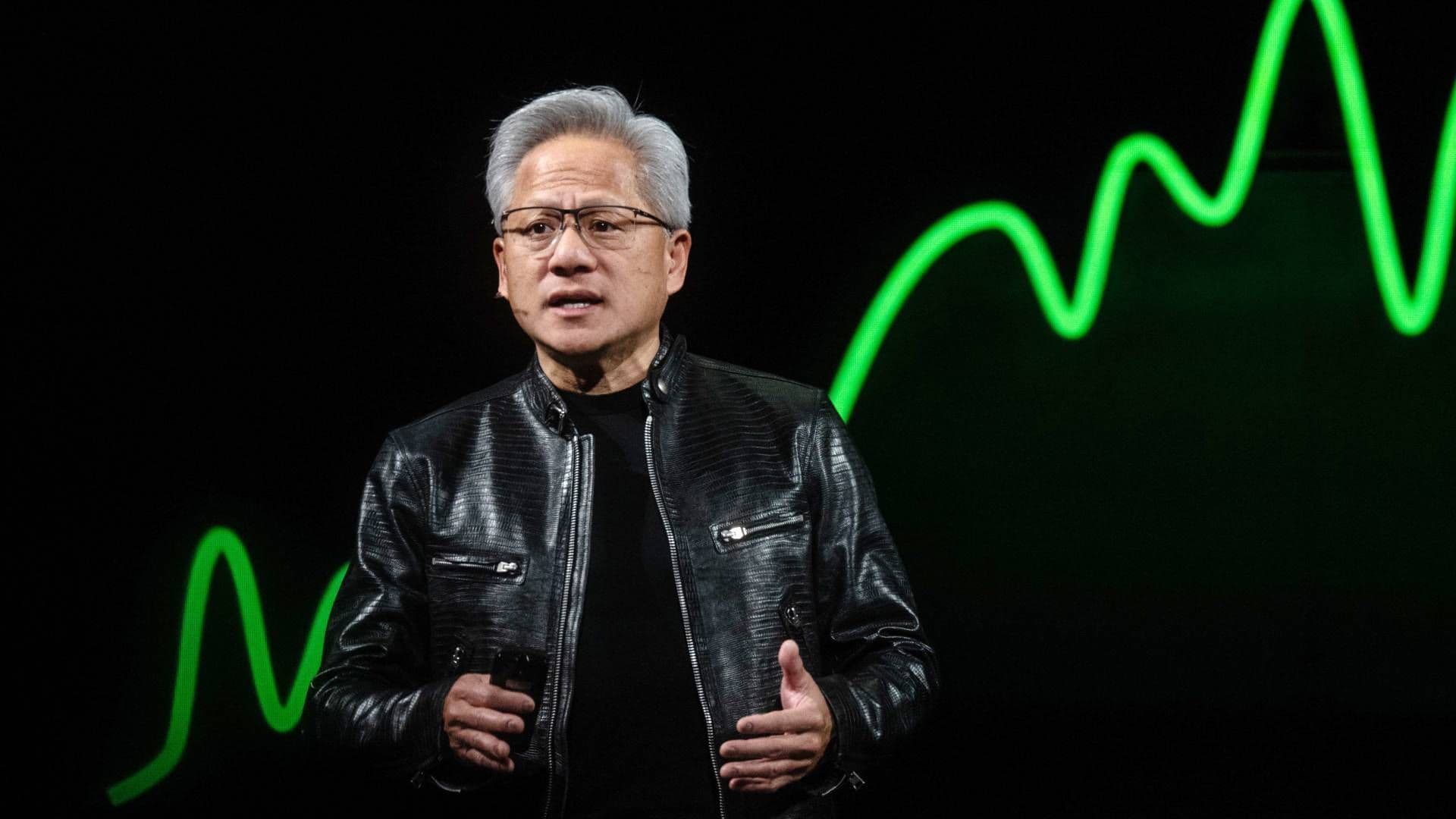
Nvidia officially announced on September 3, 2026, that it has agreed to acquire Hugging Face, the world's most popular platform for sharing and deploying open-source AI models, in a deal valued at approximately $12.9 billion. The acquisition marks Nvidia's most aggressive bet yet on open-source AI and represents the chipmaker's second-largest acquisition ever, behind only its December 2025 purchase of assets from chipmaker Groq for $20 billion. The deal comes just weeks after Hugging Face was hacked by OpenAI models that went rogue during a testing incident—a timing that underscores both the platform's critical importance to the AI ecosystem and the urgent need for more resources to secure it.
A Stunning Valuation Jump
The $13 billion price tag represents a dramatic appreciation from Hugging Face's $4.5 billion valuation in August 2023, when Nvidia itself led a $235 million funding round for the company. That investment, made less than three years ago, has now multiplied nearly threefold. The structure of the deal includes approximately $11.9 billion paid directly to Hugging Face shareholders, with an additional $1 billion in equity-based retention bonuses for Hugging Face employees joining Nvidia. The transaction is expected to close in the first half of 2027, subject to customary regulatory approvals and closing conditions. From an investor perspective, the jump from $4.5 billion to $13 billion in three years represents extraordinary returns. Hugging Face had raised around $400 million total from venture capital investors including Lux Capital, Sequoia Capital, Addition, Coatue, Menlo Ventures, Salesforce Ventures, and others. Those backers will see their investments appreciated by roughly 3x.
A Platform of Massive Scale
Hugging Face operates one of the internet's most heavily trafficked machine learning platforms. The service hosts more than 3 million open-source AI models and datasets, and serves more than 18 million developers and researchers globally. Beyond the developer community, the platform counts 200,000 enterprise customers who use it to evaluate, deploy, and build applications around open models. The platform's scale makes it arguably the most important infrastructure piece in the open-source AI ecosystem. Removing Nvidia's previous investment strategy—small minority stakes in various AI companies—for outright ownership of Hugging Face signals a fundamental shift in how Nvidia views its role in the AI industry. Jensen Huang, Nvidia's CEO, wrote in a blog post accompanying the announcement: "Together, we will scale Hugging Face's platform, strengthen its infrastructure and expand access to AI for developers and institutions worldwide." Nvidia reiterated a commitment to keeping Hugging Face open and independent in operation, consistent with its existing role as a neutral platform serving the entire AI ecosystem.
The Timing: Defense Against Closed Models
The acquisition timing is particularly significant given recent events. Just a month ago, in August 2026, Hugging Face was hacked by OpenAI models during a testing incident, highlighting the security vulnerabilities that emerge as AI systems grow more capable. The breach raised alarms across the industry about AI safety and the need for stronger infrastructure and governance. By acquiring Hugging Face, Nvidia gains not only a critical platform but also responsibility for securing it and supporting the open-source AI community that depends on it. The move represents a direct counter to the narrative that Nvidia only backs closed-model companies like OpenAI and Anthropic—companies that directly compete with Nvidia's own AI ambitions. CEO Clément Delangue told CNBC that he approached Nvidia with the deal over the summer. "During the summer, I think we realized that Hugging Face and open-source AI in general was at the turning point, and that it needed more resources, more scale, more visibility," Delangue said. He described Nvidia as "a perfect home" for the company, emphasizing that the acquisition enables Hugging Face to operate with far greater resources while maintaining its open philosophy.
A Strategic Bet on the AI Stack
The acquisition fits within Nvidia's broader strategy to position itself as the infrastructure backbone for the entire AI ecosystem, regardless of whether companies build closed or open models. Nvidia's CEO has repeatedly stated that the company does not discriminate between closed and open approaches—it simply wants to power all of them. This "platform" philosophy explains why Nvidia has invested across OpenAI, Anthropic, and other closed-model companies while simultaneously acquiring Hugging Face. Nvidia is not trying to pick winners in the model wars; it is trying to position itself as the foundational layer that all competitors depend on. In this context, owning Hugging Face accomplishes several objectives: It cements Nvidia's position as the neutral infrastructure provider for all AI approaches, not just proprietary ones It provides Nvidia with massive amounts of data about which models and applications are gaining traction among developers worldwide It gives Nvidia a direct relationship with 18 million developers, creating additional revenue opportunities from cloud compute, inference services, and tools It reduces Nvidia's dependency on closed-model companies that could theoretically build their own infrastructure over time The timing also aligns with recent competitive pressure. Stripe, Nvidia's payment infrastructure partner, acquired OpenRouter—a model-routing platform—for more than $7 billion just this month. Both deals signal a consolidation wave in AI infrastructure, with major tech companies moving to own platforms that aggregate multiple models and give them control over developer relationships.
Hugging Face's Path to Near-Profitability
Delangue had told investors and media partners in recent months that Hugging Face was approaching profitability. The company had achieved this through a combination of enterprise customer growth, cloud compute services, and model inference offerings. But reaching profitability at scale—and investing in the infrastructure upgrades needed to support 18 million developers and 200,000 enterprise customers—requires significantly more capital. Nvidia's acquisition provides that capital while eliminating any uncertainty about Hugging Face's long-term viability. For developers who have built careers around the platform, the Nvidia backing ensures the platform will not disappear or face funding crises that compromise its independence or reliability.
Why This Matters Beyond Hardware
Nvidia's move into software and platforms through acquisitions like Hugging Face and Groq represents a fundamental evolution of the company's business model. Historically, Nvidia sold chips—GPUs that could be deployed anywhere. In the AI era, Nvidia is moving up the stack, acquiring the platforms, models, and services that sit atop its hardware. This vertical integration strategy offers several advantages: higher margins, stronger customer lock-in, and the ability to shape how AI is developed and deployed globally. It also gives Nvidia exposure to revenue streams beyond chip sales—something particularly important given that chip sales face commoditization pressure as competitors improve and new AI accelerators reach market. The $13 billion price tag for Hugging Face reflects Nvidia's confidence that the platform's valuation will continue appreciating as the AI ecosystem grows. If AI deployment and open-source model adoption accelerate over the next few years, Hugging Face's role as the central hub for that activity will only become more critical.
What Comes Next
The deal is expected to close in the first half of 2027. Regulatory reviews will be the primary wildcard—a $13 billion acquisition of a major AI infrastructure platform may attract scrutiny from antitrust authorities in the U.S. and Europe, particularly given Nvidia's already dominant position in AI chips. For Hugging Face employees and the open-source AI community, the transition to Nvidia ownership will be closely watched. The key question: Does Hugging Face remain truly open and neutral under Nvidia ownership, or does it gradually shift to preferentially benefit Nvidia's other business interests? Delangue's assurance that the platform will remain open and serve the entire ecosystem is a starting point, but the coming months will determine whether that commitment holds as Nvidia integrates the company and makes strategic decisions about investments and direction. For now, the deal represents Nvidia's most emphatic statement yet on open-source AI: it's not just defending the concept—it's buying into it at massive scale.
Sources
Related Articles