 TEKZARO
Gadgets
Tesla starts offering Cybercab robotaxi rides
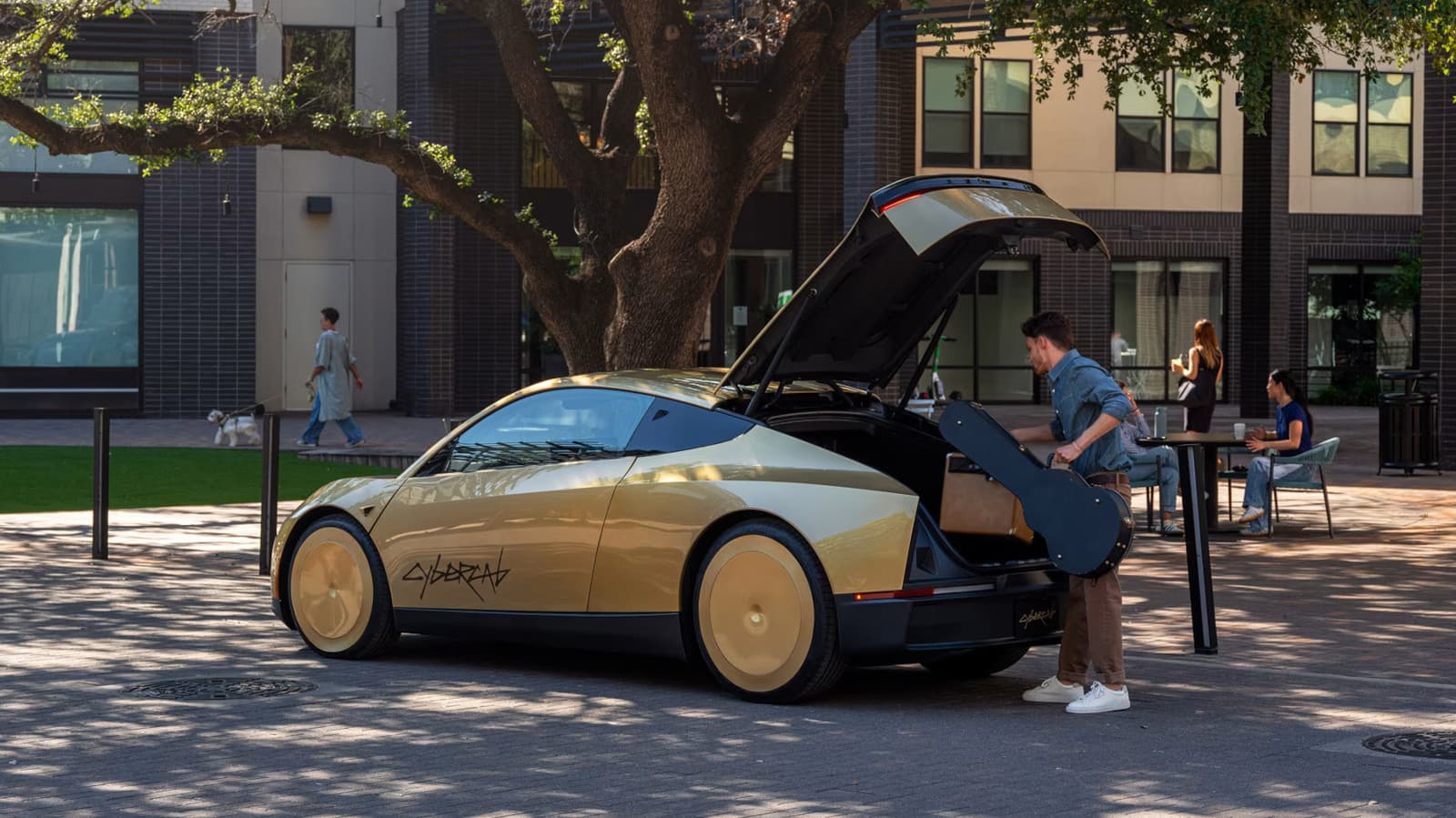
Tesla officially launched its Cybercab robotaxi service on September 3, 2026, in Austin, Texas, marking a watershed moment in the company's years-long push toward fully autonomous ride-hailing. For the first time, Tesla is deploying purpose-built, driverless two-seater vehicles without steering wheels or pedals for paying customers—a leap beyond the Model Y robotaxis that have been offering semi-autonomous rides in select cities. The Cybercab is built entirely around autonomous operation, relying on Tesla's Full Self-Driving software to navigate city streets without human intervention. The launch in Austin is just the beginning, with Tesla simultaneously operating driverless Cybercabs and Model Y robotaxis across Dallas, Houston, Miami, Orlando, and Tampa.
A Vehicle Purpose-Built for Autonomous Operation
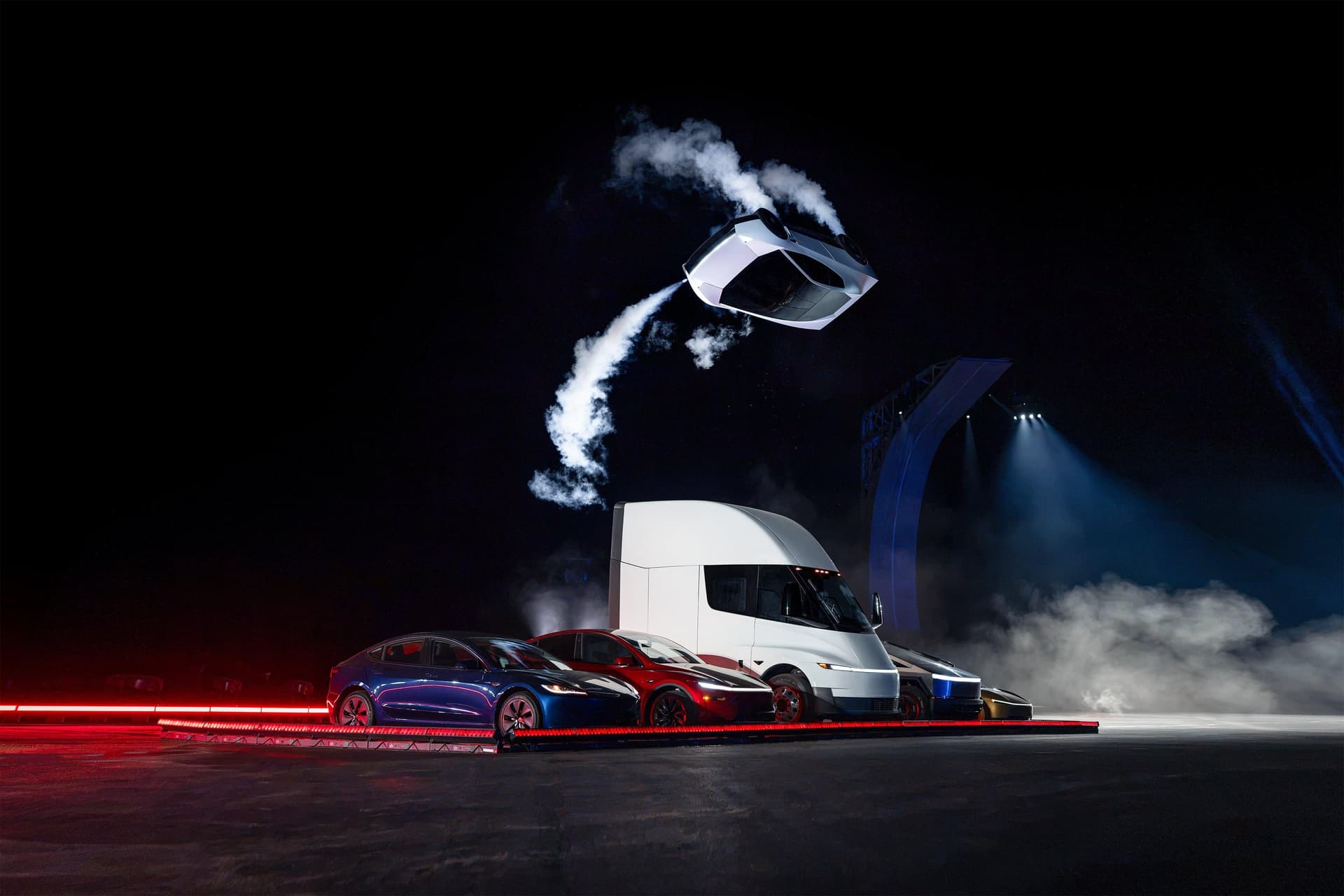
The Cybercab strips away all traditional driving controls. Two seats, butterfly doors, a touchscreen interface for passenger adjustments, and the complete absence of a steering wheel or pedals define the design. Passengers control cabin climate, seat adjustments, door locks, and media volume through the touchscreen—the vehicle handles everything else. The production Cybercab runs on a 48 kWh battery pack, delivers 219 horsepower from a single front motor, and carries a manufacturer's range estimate of 418 miles. Curb weight is 3,113 pounds. Tesla has positioned operating costs at approximately $0.30 per mile for the robotaxi fleet, undercutting traditional ride-hailing services like Uber and Lyft and positioning the economics aggressively against autonomous competitors like Waymo. One distinctive feature is inductive (wireless) charging. Rather than requiring plug-in charging, Cybercabs can charge by parking over an inductive charging pad—a design choice that simplifies fleet maintenance and reduces downtime. The vehicles also include a self-cleaning routine, addressing operational concerns about cleanliness in a shared-use fleet.
Booking Through the Tesla App
Customers in the six operating cities can request Cybercab rides through Tesla's Robotaxi app, the same interface used for Model Y robotaxi bookings. Availability remains limited, and wait times can be substantial—Tesla is not attempting to replicate Uber's instant-response service model. Early adopters should expect delays as the fleet ramps. For now, 2026 production goes entirely into Tesla's own fleet. Consumer purchases are targeted to begin in 2027 at a price under $30,000, making it Tesla's cheapest new vehicle if the company hits that target. Musk previously confirmed that material revenue from the robotaxi business is "likely not until at least 2027," underscoring that current operations are focused on proving the technology works at scale rather than generating near-term profit.
Rapid Geographic Expansion
The launch in Austin follows rapid geographic expansion through 2026. Tesla first began Model Y robotaxi service in Austin in mid-2024, expanded to Dallas and Houston in 2025, and rolled out to Miami, Orlando, and Tampa in July 2026. The Austin metro area expanded to full metro coverage as of June 2026. Most significantly, Tesla received an Autonomous Vehicle Network Company permit in Nevada in August 2026, clearing regulatory pathways for up to 5,000 robotaxis across Clark County—which includes Las Vegas—and statewide over the next 12 months. Nevada remains offline for now, but the regulatory groundwork is complete, suggesting deployment could follow quickly.
The Fleet Reality: Small Numbers, Huge Ambitions
According to monitoring of Tesla's registered autonomous fleet, roughly 200 vehicles in Tesla's U.S. fleet carry the "unsupervised" designation, meaning they can operate without any human aboard within geofenced zones. As of early September 2026, approximately 45 Cybercabs were authorized for driverless operations in Texas. These numbers are small relative to Waymo's fleet and microscopic compared to Tesla's stated long-term ambition of 2 million Cybercabs annually across multiple factories. But the focus now is on operational reliability and regulatory approval, not fleet size. Tesla must prove that autonomous operation can function reliably in real-world conditions with paying passengers before scaling to hundreds of thousands of vehicles.
Safety and Regulatory Scrutiny
The Cybercab's launch comes amid broader regulatory scrutiny of autonomous driving. Investigators are examining Tesla's Autopilot and Full Self-Driving systems following a series of fatal collisions. In October 2024, after earlier Cybercab demonstrations, reports surfaced that Tesla's Optimus humanoid robots interacting with attendees were remotely controlled by humans, damaging the credibility of the company's autonomous claims. Tesla has been more cautious with the Cybercab rollout than earlier rhetoric suggested. CEO Elon Musk acknowledged technical and safety challenges as the rollout progressed more slowly than initially expected in 2026. Employee rides began in July 2026 as an internal validation step before public commercial operation.
The Vision-Only Advantage
One structural advantage Tesla holds over Waymo is vehicle cost. Waymo's autonomous vehicles, equipped with lidar and other specialized hardware, cost between $70,000 and $150,000. Tesla's Cybercab, relying on camera-based Full Self-Driving, costs an estimated $23,000-$25,000 to manufacture. If Tesla proves vision-only autonomy can operate safely at scale, the fleet economics become dramatically more favorable—multiple Waymo vehicles could be deployed for the cost of one traditional autonomous system. This cost advantage is why analysts have attributed significant value to Tesla's robotaxi business, with some models suggesting the business could eventually account for half of Tesla's valuation. But that value remains speculative until Tesla demonstrates safe, reliable, large-scale commercial operation.
Competitive Pressure and Industry Disruption
The Cybercab launch arrives amid broad industry disruption in mobility. On the same day Tesla unveiled the Cybercab in September 2026, Uber announced workforce cuts of approximately 3,300 employees—10% of its global workforce—as the company redirects resources toward autonomous driving development and acquisition. Waymo remains the leading robotaxi operator in the U.S., with extensive public road testing and commercial operations in multiple cities. But Tesla's lower-cost production advantage and access to real-time driving data from its existing consumer fleet give the company structural assets Waymo cannot match.
What Comes Next
The Cybercab launch event livestreamed from Austin on September 3 included public rides available to select invitees, expanded fleet deployment announcements, and updated timelines. Tesla has an opportunity to increase visibility among early adopters and demonstrate that driverless operation can function reliably in the eyes of skeptical observers. Immediate challenges include scaling production to meaningful fleet sizes, managing regulatory approvals across additional states, and demonstrating safety data convincing enough to win broader public acceptance. The next 12-18 months will determine whether Tesla's robotaxi ambitions become a transformative transportation business or another delayed moonshot in the company's portfolio. For now, the Cybercab is real, operational, and carrying paying customers in several American cities. Whether that becomes the foundation of a multi-trillion-dollar business or an expensive footnote in Tesla's history depends entirely on execution—the one thing Tesla has consistently struggled with on ambitious timelines.
Sources
Related Articles