 TEKZARO
Gaming
Wardogs sold over 1 million copies in its first 24 hours, making its launch a bright spot in an otherwise tough year for multiplayer shooters
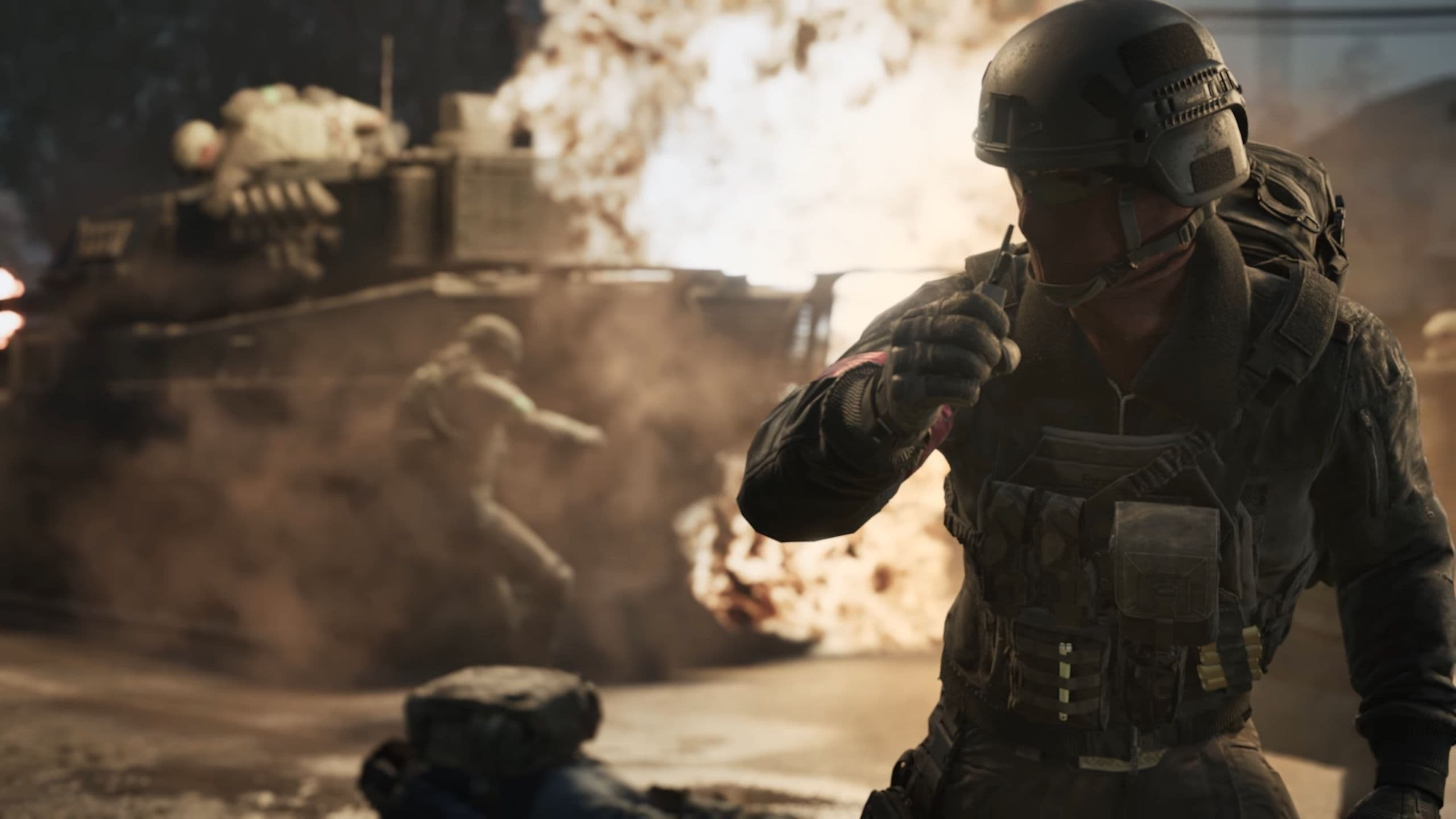
Wardogs Sold Over 1 Million Copies in Its First 24 Hours
Wardogs sold more than a million copies on its first day in Steam Early Access, with developer Bulkhead later updating the figure to 1.25 million. The 100-player military shooter peaked above 300,000 concurrent players and became Steam's third most-played game by the following day, sitting behind only Counter-Strike 2 and Dota 2.
For a genre that has spent the past two years producing expensive failures, this is an unusual outcome.
What Actually Launched
Wardogs is developed by Bulkhead and published by Team17. It entered Early Access on September 10, 2026, on PC only, priced at $39.99.
The game describes itself as an all-out warfare FPS. Up to 100 players are split into three teams competing for control of randomly selected 2x2km zones within larger maps, in a structure loosely modelled on King of the Hill. Teams accumulate points based on how many of their players hold the zone, with the first to 100 winning.
The part that separates it from the Battlefield comparisons it immediately attracted is the construction layer. Players do not simply capture territory — they build and fortify forward operating bases, including turrets and SAM sites. Vehicles, logistics systems, support roles and proximity voice chat sit alongside the infantry combat.
Zone locations shift between matches, which is the mechanism intended to keep the sandbox from settling into a fixed meta.
The Marketing Was the Opposite of Hype
Bulkhead CEO Joe Brammer's reaction was blunt. "To cross a million copies sold as we launch into early access is mental," he said.
His explanation for the result is worth attention because it runs against how most live-service launches are handled. Brammer said the studio spent months showing players exactly what Wardogs is and what it is not, and at one point published a list of ten reasons not to buy it. The stated goal was to avoid people buying into blind hype.
That is not false modesty dressed up as strategy. The single most reliable predictor of a live-service collapse over the past two years has been a launch population that arrived with expectations the game could not meet, then left within a fortnight. Deliberately filtering out the hype-driven portion of your audience costs day-one sales and protects week-four retention.
The wishlist trajectory suggests it worked. Wardogs hit 100,000 Steam wishlists within three days of its reveal, reached 500,000 by May and crossed a million in August. Nearly half a million players got hands-on during an August closed beta. Converting a million wishlists into more than a million day-one sales is an unusually high conversion rate.
The Launch Was Not Clean
Demand overwhelmed capacity almost immediately. Server queues formed within hours, with some players reporting over 340,000 people ahead of them. Bulkhead acknowledged being rate limited while scaling infrastructure.
Reports of server disconnects, frame rate drops and thin content in the current build followed. Steam review scores have reflected that, sitting in mixed territory in the mid-60s to low-70s percent positive depending on when you check.
None of that is unusual for a launch of this size, but it is the immediate problem. The window for fixing stability issues closes at roughly the same speed that launch curiosity fades.
Why This Counts as a Bright Spot
The context makes the number more interesting than the number itself.
2026 has been punishing for multiplayer shooters. Highguard, Wildlight's free-to-play hero shooter, drew two million players and nearly 100,000 peak concurrents on Steam at its late-January launch, then shut down on March 12 — under 50 days of service, following mass layoffs reportedly triggered by Tencent pulling funding. PUBG: Blindspot entered Early Access in February, peaked at just over 3,000 players, and was delisted and shut down by March 30.
Roughly 52 games had been taken offline by the midpoint of 2026. Research tracking 19 major live-service titles launched in 2025 found most had lost between 80 and 99 percent of their players by early 2026.
Against that backdrop, a studio most people had not heard of a year ago converting a cold-start audience into a million paying customers is a genuine outlier.
What Happens Next
Brammer has said the goal is settling into a sustainable community rather than holding launch-level concurrency, which is the correct framing and also an implicit acknowledgement that the 300,000 figure will not hold.
Bulkhead expects Early Access to run roughly one to two years, with more maps, weapons, vehicles, objective variations and deeper progression planned. The $39.99 price is set to rise in stages toward $59.99 at full 1.0 release. PlayStation 5 and Xbox versions are targeting 2028, which gives a rough sense of the intended Early Access runway.
That is a long time to keep a player base engaged on a sandbox built around base-building and logistics — systems that historically appeal intensely to a smaller audience rather than broadly to a large one.
The sales number is banked. The harder question is what the concurrent count looks like in January.
Sources
Related Articles