 TEKZARO
Pakistan
China to Help Pakistan Build AI-Powered Law Enforcement Center

China has agreed to support Pakistan in establishing a modern law enforcement centre built around artificial intelligence-based technology, the Interior Ministry announced on Wednesday.
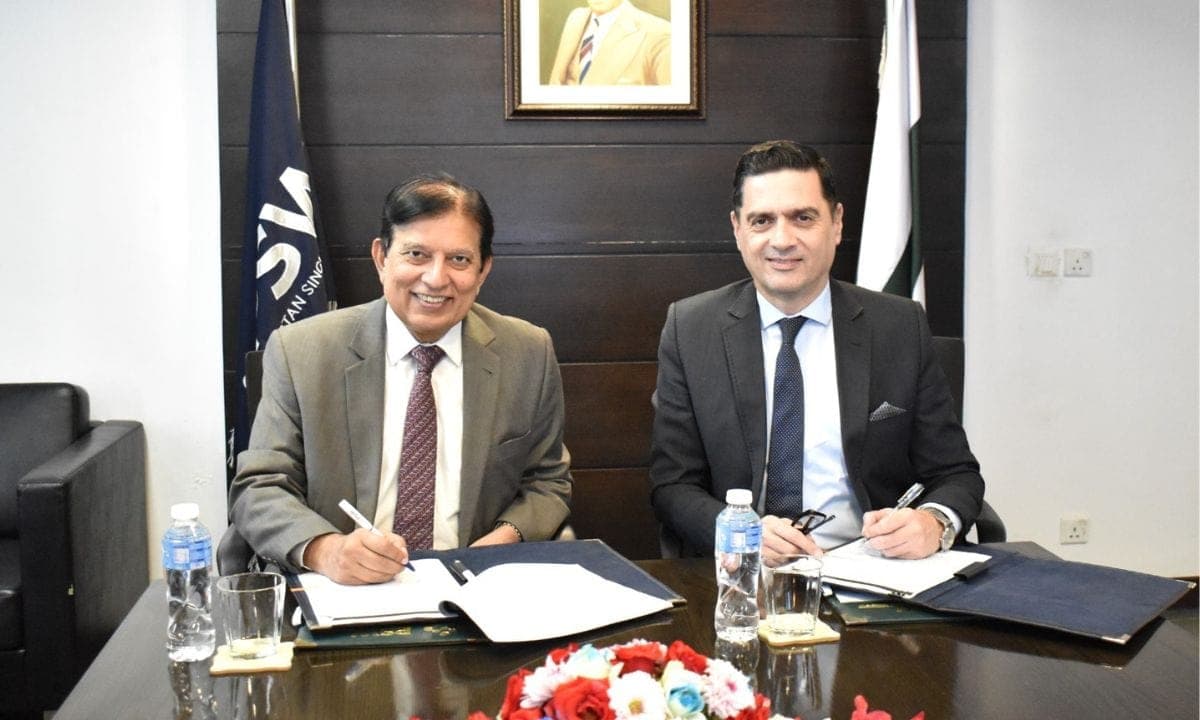
The agreement came during a meeting in Islamabad between Interior Minister Mohsin Naqvi and China's Vice Minister of Public Security, Gao Qi.
What Was Agreed
The two sides discussed bilateral relations, joint measures against terrorism and drug trafficking, and cooperation in police training alongside modern technology and equipment.
Beyond the centre itself, they agreed to expand police training exchange programmes and to cooperate on advanced law enforcement technologies and equipment, with China supporting the development of Pakistan's AI-based capabilities.
Naqvi described the proposed centre as another bright symbol of Pakistan-China friendship, and said Chinese AI technology and modern equipment could substantially help Pakistan address its security challenges. He said Pakistan wants to further expand internal security cooperation with China.
Gao Qi praised Pakistan's sacrifices and commitment in the fight against terrorism, and reaffirmed the value of continued security cooperation between the two countries.
The Groundwork Was Laid in August
This is not a standalone announcement. It follows a plan Naqvi outlined six weeks ago.
In early August, he announced a pilot Law Enforcement Investigation Centre for Islamabad, explicitly modelled on China's policing system. The concept brings detention, investigation and summary trial procedures under a single roof, with the aim of speeding up disposal of minor offence cases and reducing delays in the criminal justice process.
That announcement came at a meeting with Assistant Superintendents of Police who had just completed specialised training in China and Türkiye. The officers briefed Naqvi on modern policing methods, surveillance systems and equipment used in both countries.
He said at the time that overseas training would become a permanent component of professional development for Pakistani police officers.
The wider reform package announced alongside it includes advanced drones for the Interior Ministry's Aviation Wing for aerial surveillance, specialised investigation rooms at the National Police Academy, a revised training curriculum focused on modern investigation techniques, and a redesigned police uniform.
So Wednesday's meeting converts an August plan into a bilateral commitment, with China now attached as the technology partner.
What "AI-Powered" Likely Means
Neither government has specified the technology involved, which is the most significant gap in the announcement.
China's domestic policing model is built on integrated systems combining video surveillance networks, facial recognition, vehicle and licence plate recognition, and centralised data platforms that correlate information across sources. The Skynet and Sharp Eyes programmes are the best-known examples.
If the Pakistani centre follows that template, the capabilities would centre on surveillance integration and pattern analysis rather than on anything resembling a large language model.
The consolidation of detention, investigation and summary trial in one facility is a separate design choice from the AI component, and arguably the more consequential one. It compresses the distance between arrest and disposition, which is efficient by design.
The Questions That Follow
Efficiency in criminal procedure cuts in more than one direction, and the announcement does not address the safeguards.
Summary trials handle minor offences without the procedural protections of a full hearing. Combining them physically with detention and investigation removes friction, and friction in criminal procedure is sometimes the thing preventing error. What oversight applies, what appeal route exists, and which offences qualify are all unanswered.
On the surveillance side, Pakistan has no comprehensive data protection law in force. A Personal Data Protection Bill has been in draft form for years without passage. Deploying AI-driven surveillance infrastructure ahead of a legal framework governing its use means the rules will be written, in practice, by whoever operates the system.
Facial recognition accuracy is also uneven across demographic groups in most deployed systems, and error rates in a policing context produce wrongful stops and detentions rather than inconvenience.
The Broader Relationship
Security cooperation between the two countries has been intensifying, and the driver is not abstract.
Chinese nationals working on CPEC projects have been repeatedly targeted in attacks, particularly in Balochistan and Khyber Pakhtunkhwa. Protecting Chinese personnel and infrastructure has become a standing item in bilateral discussions, and Beijing has pressed consistently for stronger Pakistani security arrangements.
That context shapes how to read this. Pakistan gains technology and training it would otherwise have to buy. China gains a partner whose policing capacity is directly relevant to protecting its own investments and citizens.
Both motivations are legitimate. Neither is the same as the announcement's framing around friendship.
What Would Make This Concrete
No location, budget, timeline or implementing agency has been announced for the AI centre, and no procurement details have been disclosed.
Whether it is the same facility as the Islamabad pilot announced in August, or a separate project, has not been clarified.
Those specifics are where a memorandum either becomes infrastructure or stays a photograph.
Sources
Related Articles