 TEKZARO
Pakistan
Federal Govt Introduces Digital Pension Verification System

The federal government has replaced the paper-based pension verification process with a fully digital system, ending the requirement for retired employees to visit banks every six months for biometric checks and proof-of-life certificates.
The Ministry of Finance issued revised Standard Operating Procedures for pension payments and digital proof-of-life verification following a directive from Prime Minister Shehbaz Sharif.
How the New System Works
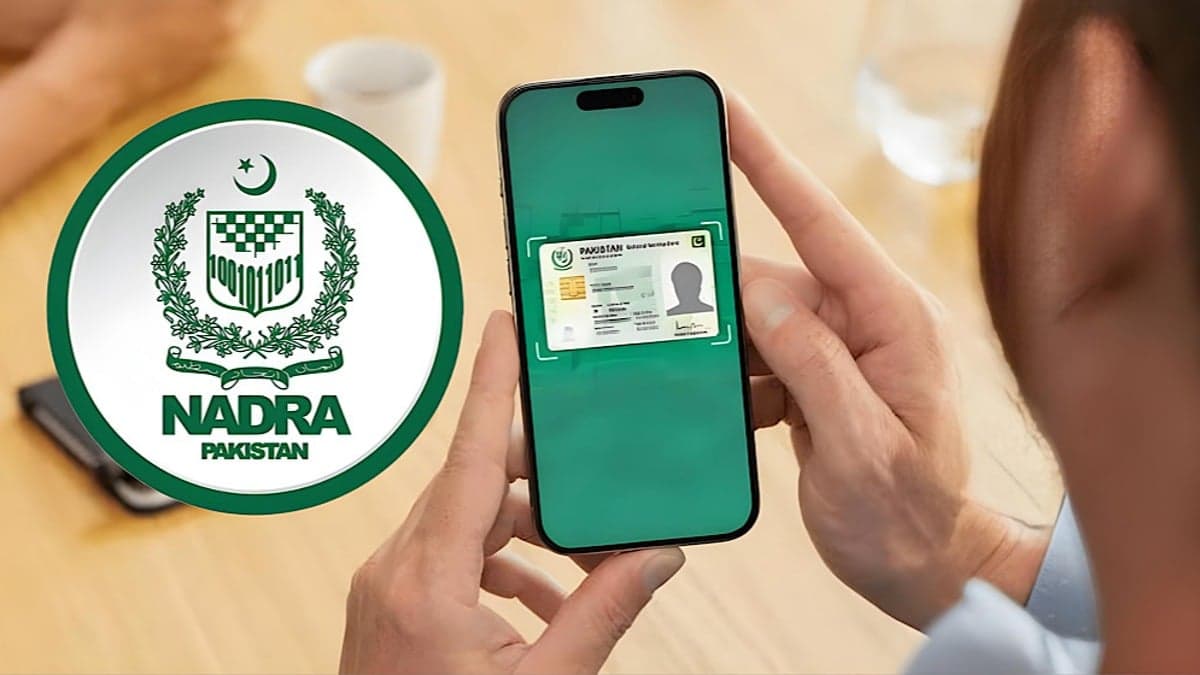
NADRA will link pensioners' data directly with the Controller General of Accounts and the Military Accountant General. Digital proof-of-life signals are transmitted from NADRA to those departments through a secure API.
Pensioners complete verification through the Pak-ID mobile application. Biometric verification and proof-of-life certification through private banks are no longer required.
The procedure applies to retired federal government employees, including pensioners living in Pakistan and those residing abroad who receive their pensions here.
Verification must be completed every six months. The previous fixed March and September schedule has been discontinued.
Banks Are Now Only Paymasters
The most significant structural change is what banks no longer do.
Commercial banks now serve solely as pension disbursement agencies. They have no statutory or administrative role in verifying, collecting, retaining or validating proof-of-life certificates or biometric data under ordinary circumstances.
All federal pension payments go through the Direct Credit System, with amounts credited directly to designated bank accounts through the electronic payment system.
Bank branches will still function as NADRA verification centres, giving pensioners an additional place to complete the process — but as NADRA touchpoints rather than as banks performing their own checks.
The Fallback Options
The government has built in alternatives for pensioners who cannot use the digital route, particularly the elderly and those with limited mobility or no smartphone.
Verification is available through NADRA centres, mobile units, facilitation franchises and district offices.
Pensioners can visit a District Accounts Office or Pension Facilitation Centre and submit Form-10, the Life Certificate, for physical verification. Staff then enter the information into the centralised digital system.
Forms 10, 11 and 12 cover manual verification, with a separate form introduced for pensioners residing abroad. Family pensioners whose entitlement depends on marital status must submit Form-12, the non-marriage or re-marriage declaration.
The Suspension Rule
One provision needs reading carefully.
Pension accounts will not be declared dormant purely because verification was not completed. However, pension payments are suspended if a pensioner does not complete digital verification within six months.
So the account stays open, but the money stops. For a household living on a single pension, a suspension is a serious event regardless of what happens to the account status.
The six-month clock is now rolling from each individual verification rather than tied to fixed calendar months, which removes the seasonal bottleneck but also means every pensioner has a different deadline to track.
Why This Was Needed
Finance Minister Muhammad Aurangzeb described the previous arrangement bluntly at the launch ceremony in Islamabad, saying the rounds of banks every six months and the fingerprint issue were not small problems.
He noted that people faced real complications, with pensions stopped and delays of a week, two weeks or longer.
The fingerprint point is the substantive one. Biometric verification fails disproportionately for elderly people, whose fingerprints degrade with age and manual work. A system that requires a fingerprint match to release a pension will reliably fail the oldest pensioners — exactly the people least able to travel to a branch and argue about it.
Moving to facial recognition and a NADRA-held identity record addresses that specific failure mode rather than just digitising the same process.
The Scale
Officials estimate nearly 1.7 million federal and provincial pensioners will benefit.
The fiscal context is larger. Pakistan's pension bill was estimated at Rs. 1.055 trillion in the FY26 federal budget — roughly 0.81 percent of GDP and about 6 percent of the total federal outlay of Rs. 17.573 trillion.
The system also serves a control function the government has been less vocal about. Digital verification linked to the national identity database makes fraudulent and duplicate claims considerably harder to sustain, and pensions continuing to be drawn after a pensioner's death has been a long-standing leakage in the system.
What It Doesn't Fix
Verification reform addresses administration, not economics.
The pension bill's growth is driven by the structure of the defined-benefit scheme itself, and that is being tackled separately. A Contributory Pension Fund Scheme applies to new federal civil service entrants under a September 2024 Ministry of Finance circular, and Punjab has issued its own Defined Contribution Pension Scheme Rules for provincial employees.
Those reforms take decades to affect the bill, because they only apply to people who have not yet retired.
Digital verification saves administrative cost and removes a genuine hardship for 1.7 million people. It is worth doing on those grounds alone. It is not a solution to the fiscal problem, and should not be presented as one.
Sources: Aaj English TV, ARY News, 24 News HD, Arab News Pakistan, Profit by Pakistan Today
Sources
Related Articles