 TEKZARO
Pakistan
Hyundai Unveils Fifth-Generation 2027 Tucson
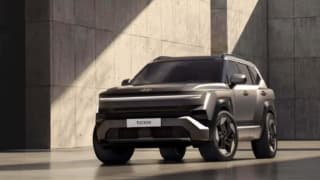
Hyundai has given its best-selling compact SUV its biggest overhaul in six years, unveiling the fifth-generation 2027 Tucson at a media event at the CJ ENM Studio Center in Paju, South Korea on September 21, 2026.
The new Tucson is larger, boxier and substantially more electrified than the model it replaces. South Korea will be among the first markets to receive it in Q4 2026, with a wider international rollout following through 2027. Pricing has not been announced.
The Design: Art of Steel
The fourth-generation Tucson built its identity on sharp, futuristic creases and angular parametric patterns. The fifth generation takes the opposite direction.
Hyundai calls the new approach Art of Steel — a squarer, more upright shape with cleaner surfaces and a stance that reads more like a traditional SUV than a design exercise. H-shaped daytime running lights broaden the front visually, while three-dimensional prism tail lamps with transparent lenses create a distinctive rear signature.
The result brings the Tucson visually closer to its larger sibling the Santa Fe, giving the lineup a more coherent family look. Eight exterior colours are offered, including five new ones: Serenity White Pearl, Driftwood Grey Matte, Driftwood Grey Metallic, Redrock Orange Matte and Goyo Copper Pearl.
Bigger in Every Direction
The fifth-generation model grows on all three dimensions. It is 60mm longer overall, rides on a wheelbase stretched by 30mm, and is 40mm wider. The wider track is intended to improve ride quality and expand interior space, both of which have been consistent complaints in Tucson owner surveys.
The Powertrains
The core global powertrain is an updated 1.6-litre turbocharged four-cylinder producing 190 horsepower in base form and 242 horsepower in hybrid configuration. Both are paired with an eight-speed automatic transmission. The hybrid variant can return up to 41 miles per gallon under optimal conditions.
A plug-in hybrid variant is confirmed with a targeted all-electric range of approximately 100 kilometres. Hyundai's electrification strategy for this generation is clear: the internal combustion-only version is a fallback for markets where hybrid demand lags, while hybrid and PHEV are positioned as the primary direction for the model going forward.
Generative AI features are confirmed for the infotainment and driver assistance systems, running through Hyundai Motor Group's Android Automotive OS-based Pleos Connect cockpit — the same platform already deployed in the 2027 Elantra and Ioniq 3.
The XRT Variant
Alongside the standard model, Hyundai revealed the Tucson XRT — a rugged-focused trim aimed at buyers who want an off-road aesthetic without committing to dedicated trail hardware.
The XRT receives a completely different front fascia, unique grille, pronounced fender cladding with a carbon effect finish, skid plate and all-terrain tyres. It is primarily an appearance package at this stage — Hyundai's own notes describe it as not yet enhancing off-road performance — but more capable XRT Pro and N variants are under consideration for later introduction.
What It Competes Against
The Tucson enters one of the most fiercely contested segments in the global market. The Toyota RAV4 leads in volume, having moved aggressively toward an all-hybrid lineup. The Honda CR-V, Kia Sportage — the Tucson's closest corporate relative — Ford Escape and Volkswagen Tiguan all compete directly.
Hyundai's answer for this generation is size, electrification depth and technology. The longer wheelbase addresses the interior space gap that has cost the Tucson in family-buyer comparisons with the RAV4 and CR-V. The 100km PHEV range, if achieved in real-world driving, would make the Tucson PHEV one of the most practical plug-in options in the segment at the price point it typically occupies.
Availability
South Korea receives the new Tucson and Tucson Hybrid in Q4 2026. Other markets follow through 2027, with the North American version expected as a 2028 model year in Canada and potentially 2027 in the US depending on factory scheduling.
Hyundai has confirmed no pricing for any market yet.
Sources
Related Articles