 TEKZARO
Pakistan
Pakistan Army Test-Fires Hypersonic Ballistic Missile Fatah-2 Extended Range
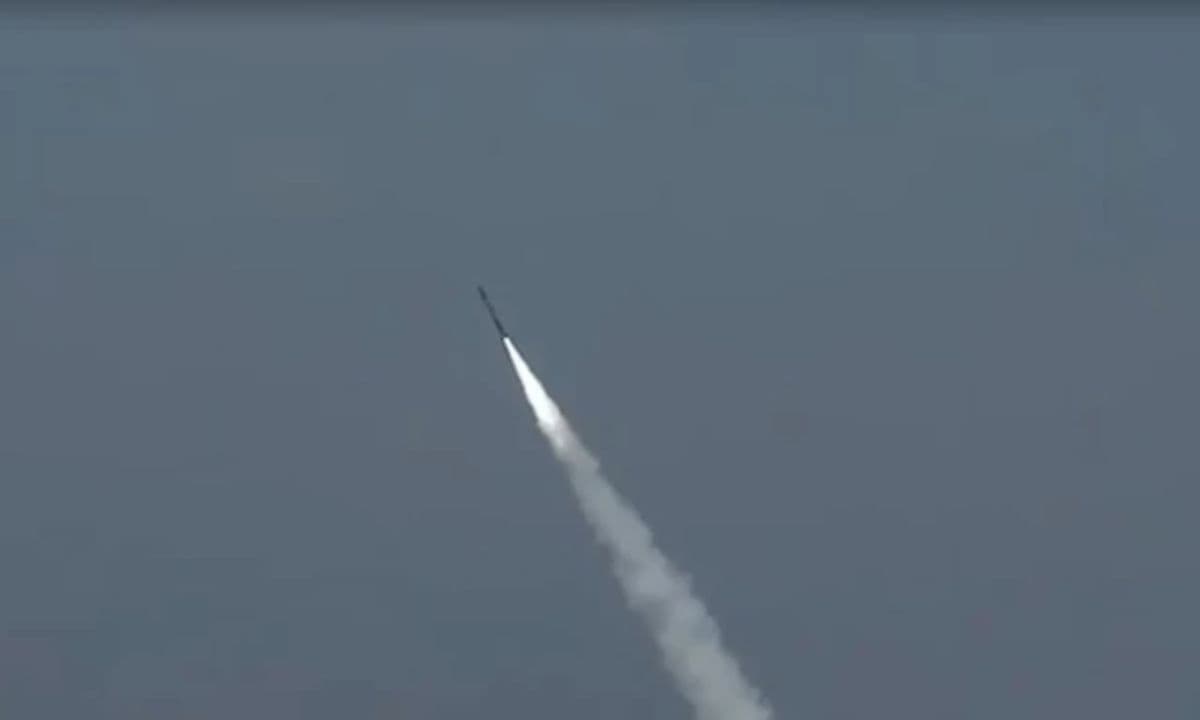
The Pakistan Army has successfully test-fired the extended-range (ER) version of its Fatah-2 missile, according to the military’s media wing, Inter-Services Public Relations (ISPR), on October 13, 2026. The military said the upgraded system features advanced navigation and avionics designed to improve targeting accuracy and manoeuvrability, potentially extending the Army’s ability to engage targets at greater distances.
ISPR Confirms Successful Fatah-2 Extended-Range Test
According to the military’s announcement, the test involved the extended-range version of the Fatah-2 weapon system. The launch was witnessed by the Commander of the Army Rocket Force Command, senior Pakistan Army officers, and scientists and engineers involved in the missile’s development.
The Army said the system’s upgraded capabilities would improve its operational reach and precision-strike potential. The commander of the Army Rocket Force Command praised the scientists and engineers involved in developing and testing the weapon.
President Asif Ali Zardari, Prime Minister Shehbaz Sharif, Chief of Army Staff and Chief of Defence Forces Field Marshal Syed Asim Munir, and the services chiefs congratulated the participating teams following the test, according to ISPR.
The announcement did not disclose the test location, the distance covered during the flight or the maximum range of the extended-range variant. It also did not provide independently verifiable performance data from the trial.
Advanced Navigation and Manoeuvrability
ISPR said the Fatah-2 ER incorporates advanced navigation systems and modern avionics intended to improve accuracy. The missile’s flight trajectory and ability to manoeuvre during flight were also highlighted as features that could complicate interception by opposing missile defence systems.
Navigation and avionics are important components of modern guided weapons because they help determine a missile’s position, maintain its intended flight path and support accurate engagement of a designated target.
Manoeuvrability can make interception more difficult by introducing changes in the missile’s trajectory. However, the effectiveness of such features depends on several factors, including the missile’s flight characteristics and the capabilities of the opposing defence system.
The military did not publish detailed test results showing the degree of improvement achieved by the extended-range variant. Its statements about precision and the ability to overcome missile defences should therefore be understood as official claims rather than independently verified assessments.
How Fatah-2 Fits Into Pakistan’s Missile Programme
The Fatah-2 is part of Pakistan’s Fatah family of guided surface-to-surface missile systems, developed to provide the Army with a conventional precision-strike capability.
In December 2023, ISPR announced a successful Fatah-2 flight test and stated that the system could engage targets at ranges of up to 400 kilometres. In May 2024, the military announced another training launch and said the system was being inducted into the Army’s artillery divisions.
The Army also conducted a Fatah-2 training launch in April 2026. At the time, ISPR said the exercise was intended to train personnel, validate technical parameters and evaluate subsystems designed to improve accuracy and survivability.
The October 2026 test represents a further development of the system, specifically involving an extended-range variant. However, the military has not publicly specified how much additional range the new version provides compared with the earlier Fatah-2.
The previously announced 400-kilometre range should not automatically be applied to the extended-range version, as its final operational specifications have not been disclosed.
What an Extended-Range System Could Mean
An increase in missile range can allow military planners to engage targets from greater distances, potentially reducing the need to move launch units closer to their intended target areas. Combined with precision guidance, this can provide additional flexibility in planning conventional military operations.
For Pakistan, an extended-range Fatah-2 could expand the Army’s options for engaging targets within the missile system’s operational envelope. Its practical value would depend on verified range, accuracy, reliability, deployment arrangements and performance under operational conditions.
The distinction between a successful test and full operational effectiveness is important. A test can demonstrate that a weapon system has completed a particular flight or evaluation, but it does not by itself establish how the system would perform against sophisticated air and missile defence networks in a real conflict.
The military has not released enough technical information to independently assess the extended-range variant’s performance against those challenges.
Hypersonic Claims and the Missing Technical Details
The missile has been described in local reports as a hypersonic ballistic missile. However, the October 13 announcement did not publish a measured maximum speed, detailed flight profile or other technical data sufficient to independently verify that classification for the extended-range version.
The term hypersonic generally refers to speeds of at least Mach 5, or 5 times the speed of sound. Speed alone, however, does not determine whether a weapon belongs to a particular class of advanced hypersonic systems; its flight characteristics and ability to manoeuvre are also relevant to how it is categorised.
Earlier descriptions of the Fatah-2 have highlighted its guided trajectory and manoeuvrability, but the public information released about the latest test remains limited. Without additional technical evidence, the precise performance of the extended-range system cannot be established independently.
What Comes Next for Fatah-2 ER
The successful test indicates continued development of Pakistan’s indigenous missile capabilities, but important questions remain unanswered. The military has not announced the extended-range variant’s maximum range, detailed performance measurements or a specific timeline for its induction into operational service.
Further official disclosures could clarify whether the test validated a substantial increase in range, improved guidance performance or other changes to the existing system.
For now, the confirmed development is the reported successful test of the Fatah-2 extended-range variant. Its precise capabilities and operational status will depend on information released by the military and any independently verifiable technical assessments that become available.
Sources
Related Articles