 TEKZARO
Pakistan
Pakistan Updates US Envoy on Virtual Asset Regulatory Framework
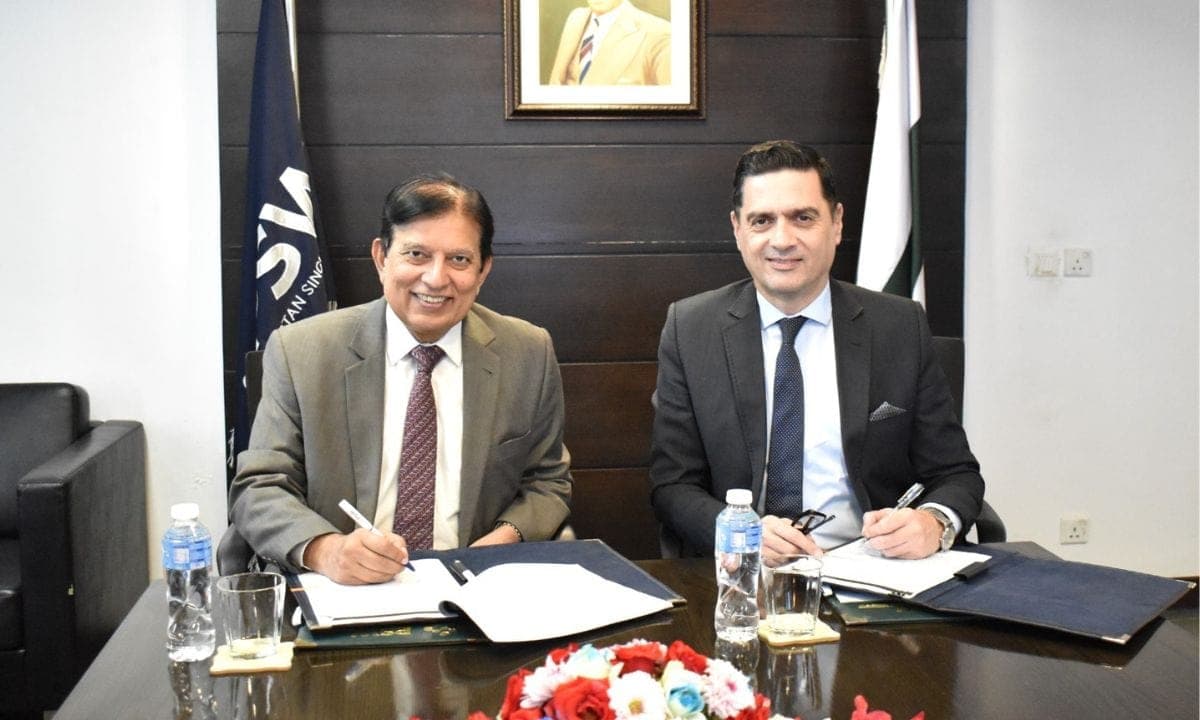
Minister of State and Pakistan Virtual Assets Regulatory Authority Chairman Bilal Bin Saqib met US Chargé d'Affaires Natalie Baker on Sunday, briefing her on Pakistan's digital asset regulatory environment and the country's progress toward a formal framework aligned with international standards.
The two sides also discussed the wider digital economy, with a focus on innovation and financial transparency.
What Was Discussed
Saqib briefed Baker on rapid developments in Pakistan's digital assets sector and the efforts to establish what he described as a modern, robust and transparent regulatory framework.
"Pakistan is developing a modern and robust regulatory framework for the digital assets sector," he said. "Pakistan is laying the foundations for a digital economy while keeping the future of the financial system in view. Through innovation and financial transparency, Pakistan is charting a new direction for its digital economy."
The meeting follows growing engagement between the two countries on digital asset governance since at least December 2025, when Pakistan's ambassador to Washington met his US counterpart to seek cooperation on regulation and described the US approach as a model worth learning from.
The Framework Being Built
PVARA was established under the Virtual Assets Ordinance, 2025, signed by President Asif Ali Zardari on July 8, 2025. It operates as an autonomous federal regulatory body under the Ministry of Finance, with a mandate to license, supervise and regulate virtual asset service providers across Pakistan.
The Virtual Assets Act, 2026 has since provided the comprehensive legal foundation, replacing the ordinance with full parliamentary legislation. PVARA has begun operations and is processing licensing applications through a formal portal covering the Regulatory Sandbox, No Objection Certificates and VASP licences.
The AML and CFT compliance framework is central to the authority's design. VASPs must verify customer identities under KYC requirements, monitor transactions, maintain records and report suspicious activity — aligning Pakistan's standards with FATF requirements. PVARA has also granted NOCs to major global crypto exchanges including Binance and HTX, marking the first formal regulatory acknowledgement of international platform operations in Pakistan.
The Economic Coordination Committee approved Rs. 800 million in supplementary funding for PVARA to strengthen institutional capacity and continue framework development.
Why the US Engagement Matters
Digital asset regulation is an area where bilateral engagement produces real outcomes rather than diplomatic optics.
The United States is the largest single market for virtual asset activity and has been developing its own federal regulatory approach in 2026, including through SEC and CFTC frameworks for crypto exchanges. Pakistan's regulators benefit from access to US regulatory experience, including how licence conditions have been structured, what compliance failures have emerged and how FATF-aligned monitoring has worked in practice.
From the US side, engagement matters because unregulated virtual asset flows create cross-border compliance exposure. A transparent Pakistani framework with effective AML enforcement makes the bilateral financial relationship cleaner, reduces the risk of illicit finance routing through Pakistani platforms, and keeps Pakistan aligned with the FATF process — where the US carries significant weight.
Pakistan spent years on the FATF grey list, exiting in 2022 after meeting required action plan items. Virtual asset regulation is one of the areas FATF has been pressing countries on globally, and PVARA's creation is partly a response to that international expectation.
The Practical State of Play
Pakistan's crypto user base is substantial and pre-existed any formal regulation by years. Millions of Pakistanis have used digital asset platforms informally, often through international exchanges accessed via VPN during periods when crypto was officially restricted.
Bringing that activity into a regulated space requires both a credible legal framework and functional enforcement capacity — which PVARA is still building. The Regulatory Sandbox exists to allow platforms to operate under supervised conditions while full licensing requirements are finalised, which is standard practice for new regulatory regimes and reduces the risk of pushing activity back underground.
The international engagement track — Washington in December, and now this meeting — serves the dual purpose of building framework legitimacy domestically and signalling to foreign platforms that Pakistan's regulatory environment is open and converging on recognisable standards.
Sources: Dawn, Daily Times, Express Tribune
Sources
Related Articles