 TEKZARO
Pakistan
New Digital App to Track Price Violations as Punjab Prepares for Ramazan
Punjab has introduced a digital application for price control enforcement ahead of Ramazan, with advance monitoring of essential commodity supply, demand and stocks set to begin in October.
The directive came from Salma Butt, the Punjab Chief Minister's Special Assistant for Food Safety and Consumer Protection, who chaired a performance review of the PERA Force and price control magistrates at the Deputy Commissioner's Office on Sunday.
What the App Does
The application is intended for enforcement officials rather than consumers. Butt directed officials to upload inspection and enforcement records to the system without delay, and ordered strict implementation of officially notified price lists.
That makes it a compliance tracking tool sitting on the official side of the price control operation — a way for supervisors to monitor whether inspections are being conducted, where they are happening, and what action has been taken, rather than a citizen-facing complaint portal.
This sits alongside the existing Qeemat Punjab app, which has been running for some time and is aimed at consumers. That app publishes daily official rates for fruits, vegetables and essential commodities set by the district administration, and allows citizens to file geo-tagged complaints against shops for overcharging. During Ramazan 2026, the Qeemat Punjab app received 522 overpricing complaints, of which 454 were resolved by price control magistrates within 24 hours, with fines totalling Rs. 352,000.
The Qeemat Punjab app ran into trouble during Ramazan 2026 itself, when users in Islamabad encountered server errors that prevented them from accessing updated rates — exactly the period when demand is highest. Proactive maintenance ahead of next year's Ramazan would be the obvious lesson from that.
The Operational Directives
Beyond the app, Butt's meeting covered a range of pre-Ramazan preparations.
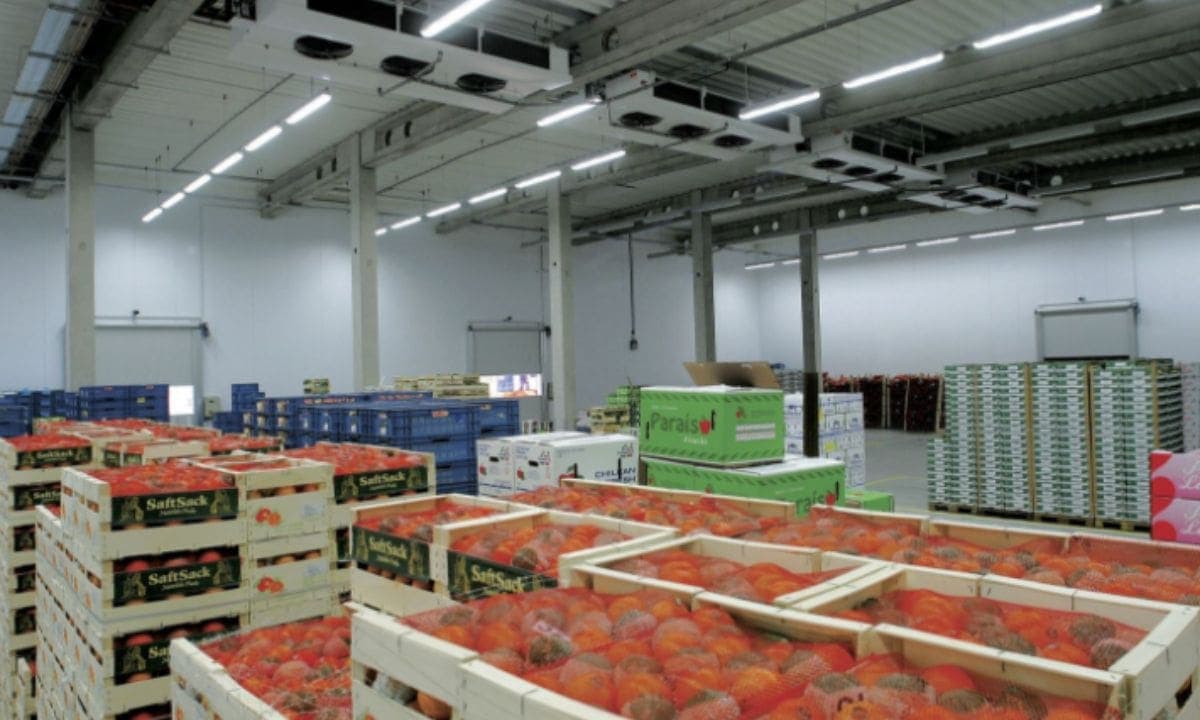
She ordered enhancement of cold storage capacity to ensure adequate stocks of apples, dates, gram, bananas and other essential items. Advance monitoring of supply, demand, stocks and prices will begin in October — several months before Ramazan is expected to fall.
The meeting reviewed price control measures and enforcement operations already underway. The district food controller briefed participants on current wheat and flour stocks and the operational status of flour mills.
What Last Ramazan Showed
The enforcement scale during Ramazan 2026 was substantial.
Under directives from Chief Minister Maryam Nawaz, price control magistrates launched a crackdown from the third day of Ramazan. Raids were conducted at more than 69,000 locations across Punjab. Action was taken against 5,258 profiteers. Cases were registered against 54 individuals for illegal profiteering. Fines totalled Rs. 9.23 million, and 1,307 people were arrested. 1,601 price control magistrates operated across all districts.
Those numbers are large, and they point to the scale of the compliance problem the digital app is intended to address. 69,000 raids conducted by 1,601 magistrates over a month-long period generates an enormous volume of records. Managing, verifying and acting on that paper trail manually is both slow and prone to gaps. A system that captures inspection records digitally in real time allows supervisors to identify districts or markets where enforcement activity has dropped off, spot patterns in which violations are recurring, and confirm that reported enforcement matches what is actually happening on the ground.
The Cold Storage Directive
Requiring enhanced cold storage capacity before Ramazan is the supply-side component of the same problem.
Price spikes in perishables during Ramazan are frequently attributed to real supply constraints as much as to profiteering. Dates, fruits and gram are high-demand items in Ramazan specifically, and if cold storage capacity is insufficient to hold stocks accumulated in advance of the month, availability tightens as the month progresses regardless of how many inspections are conducted.
Building cold storage ahead of demand reduces the pressure enforcement has to carry on its own.
The Timing
Ramazan 2026 fell in late February and March. Ramazan 2027 is expected to fall in mid-February, moving roughly ten days earlier.
Starting monitoring preparations in October gives authorities roughly four to five months of lead time — sufficient to identify supply gaps, build stocks, certify cold storage, train magistrates on the digital system, and fix any technical issues before the month actually begins.
Whether those months are used productively is the open question.
Sources: Express Tribune, TechJuice
Sources
Related Articles