 TEKZARO
Smartphones
Samsung stages a celebrity intervention for anyone still clinging to an iPhone
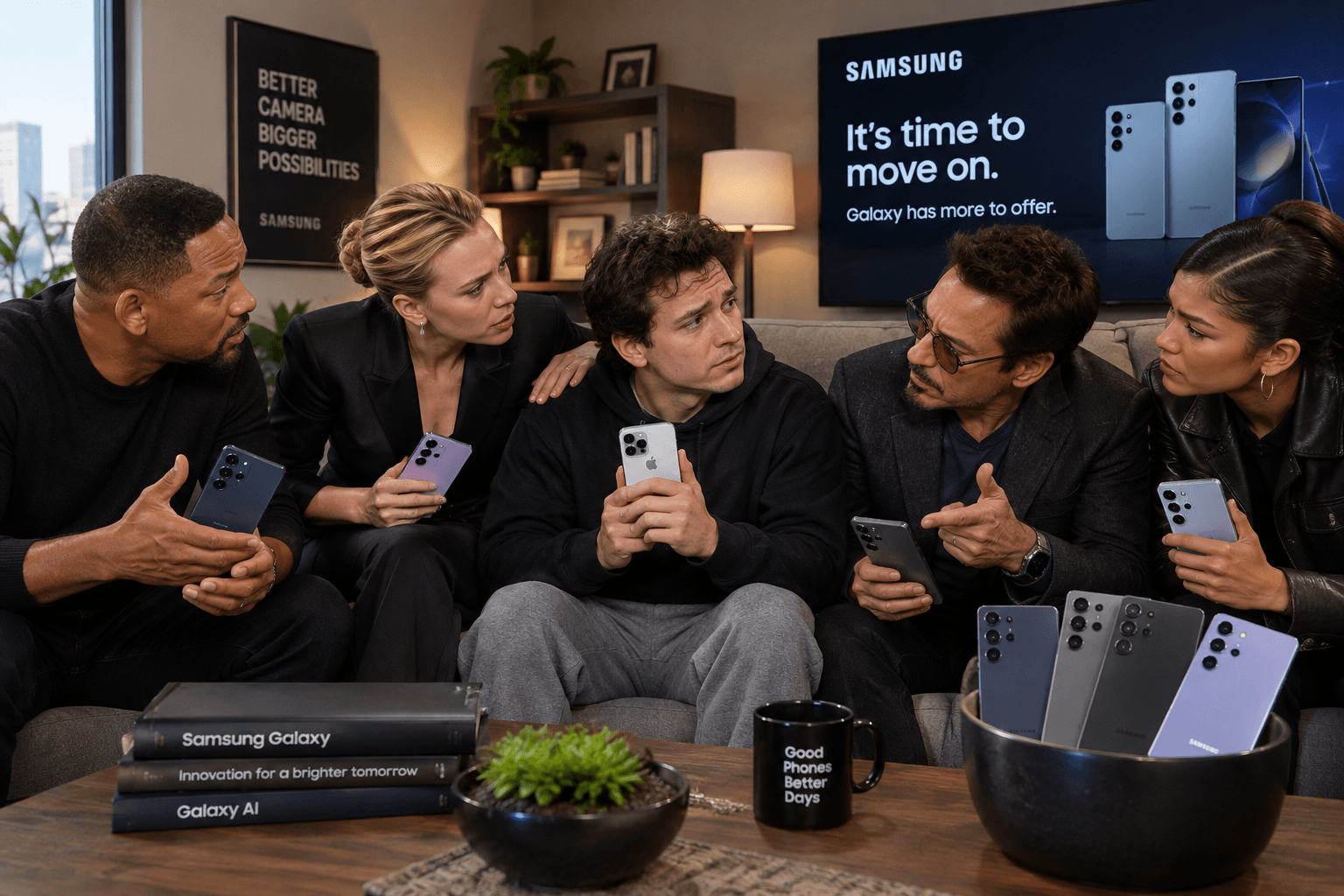
Samsung's new campaign puts six celebrities in couples therapy — not over their relationships, but over their phones.
The ad, titled "Switchers," pairs three couples in a therapist's office where one partner has moved to a Galaxy and the other is still holding an iPhone. The format lets Samsung work through every standard objection to switching, in order, while making the holdouts look like the problem.
The Objections It Targets
The Galaxy-owning partners take shots at their counterparts for being afraid of being seen as the green bubble guy, afraid of switching from an iPhone at all, and afraid of losing their stuff in the transfer.
Those three fears cover most of what actually keeps people on iOS. And Samsung's answers to them are more substantive than they were a few years ago.
On messaging, RCS now carries the features that used to be iMessage-exclusive — typing indicators, read receipts, high-resolution media, group chat behaviour that works properly. The green bubble remains, but what it signals has changed.
On data transfer, the ad references Google's updated Android transfer process, where switchers scan a QR code on their new Android phone and pull across the bulk of their data, including messages and photos.
On sharing, AirDrop and cross-platform photo sharing get addressed directly rather than dodged.
This is the important shift in the campaign. Samsung's switching ads used to argue that iPhone was worse. This one argues that switching is easier — a much narrower claim, and a much more defensible one.
The Hardware on Display
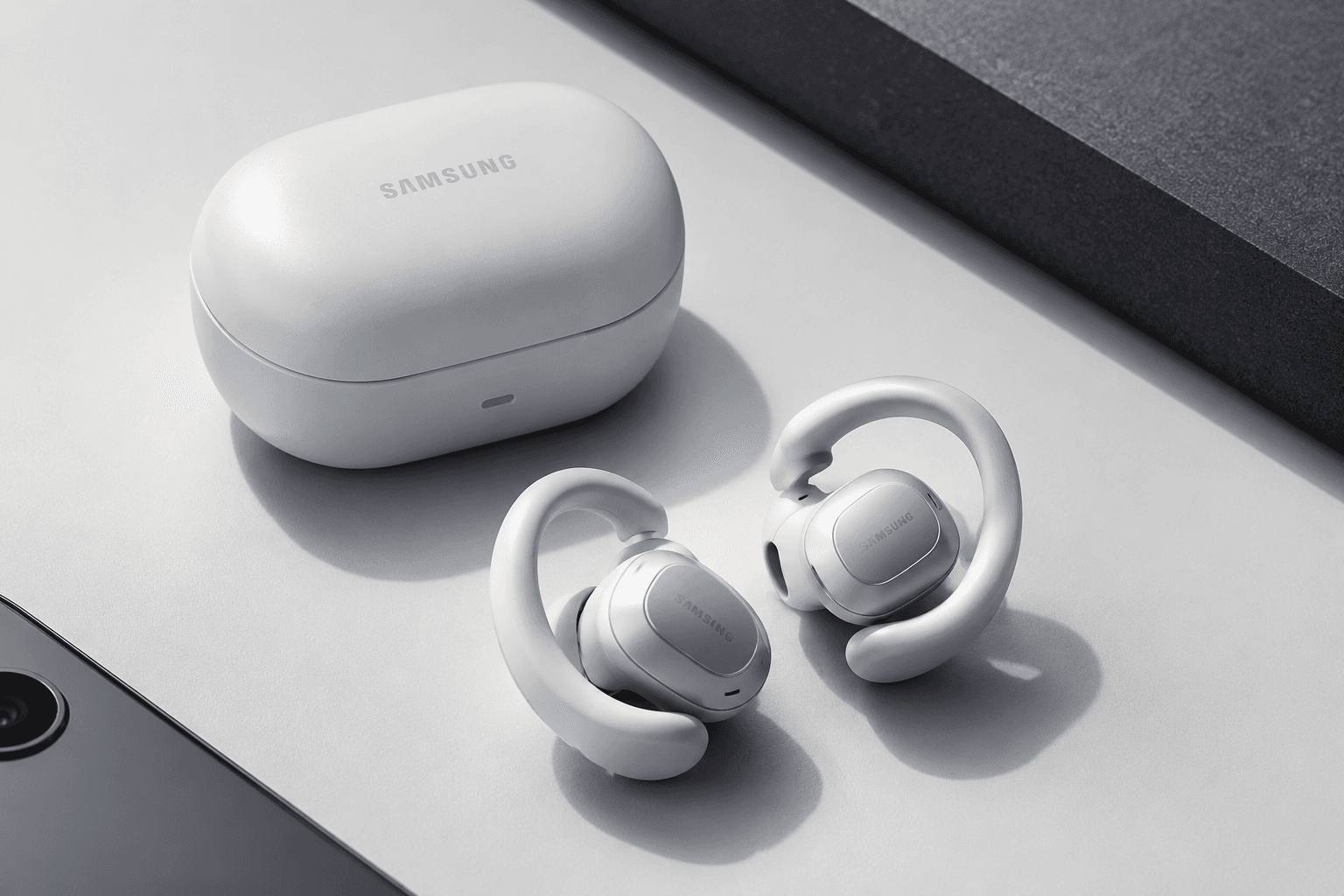
The hesitant partners are shown visibly impressed by three devices: the Galaxy Z Fold 8's design, the Fold 8 Ultra's multitasking screen space, and the Galaxy S26 Ultra's Privacy Display.
The ad closes with a voiceover asking, with all your switching problems solved, why won't you switch to a better phone.
The Fold 8 is currently being pushed at $1,599 with a free Galaxy Watch attached, so the campaign sits on top of active promotion rather than running in isolation.
Why Now
The timing is not subtle. Apple launched the iPhone Duo, its first foldable, and Samsung has spent the weeks since pressing comparisons against its own Fold line — including one that reportedly drew acknowledgment from Tim Cook.
Samsung has also reportedly been weighing an earlier release for the Galaxy Z TriFold 2 in response to the Duo's reception.
After years of having the foldable category largely to itself, Samsung suddenly has Apple competing in it with far more mainstream attention. Converting iPhone users becomes more urgent when the thing keeping them on iPhone is now a folding phone too.
The Long Tradition
Samsung trolling Apple is not new. The company has targeted the iPhone X notch, the removal of the headphone jack, dongles, stylus support, camera comparisons, and at various points has simply called iPhones boring.
The 2017 "Growing Up" spot followed a man buying Apple products for a decade before defecting on the eve of the iPhone X launch, walking past the queue — including a man with a notch-shaped haircut.
Most of those ads are no longer online, which tells its own story about how well they worked.
The Credibility Question
There is a persistent problem with Samsung's celebrity approach that the "Switchers" format does not escape.
The company has faced repeated embarrassment when sponsored celebrities were caught using iPhones once their contracts ended. Multiple K-pop figures previously partnered with Samsung have done exactly that, and each instance chips at the premise that these people genuinely prefer the product.
The structural issue is that an ad built on personal testimony only works if the testimony is believable. When audiences assume the endorsement expires with the cheque, the format loses its force regardless of how good the phone is.
Samsung's devices are not the weak point here. Its global marketing credibility is.
Does the Argument Land
Setting aside the messengers, the underlying case is stronger than it has been.
Transfer genuinely works better now. RCS genuinely closed most of the messaging gap. The remaining lock-in is ecosystem depth — Watch, AirPods pairing, iMessage on Mac, purchased media, Find My — and the ad does not really engage with that.
That is the honest gap in the pitch. The barriers Samsung solves are the ones that were mostly already solved. The barrier it does not address is the one that actually keeps people where they are.
Sources
Related Articles