 TEKZARO
Software
Two paths to grow Apple's Services revenue emerge in recent reports, with only one finding favor
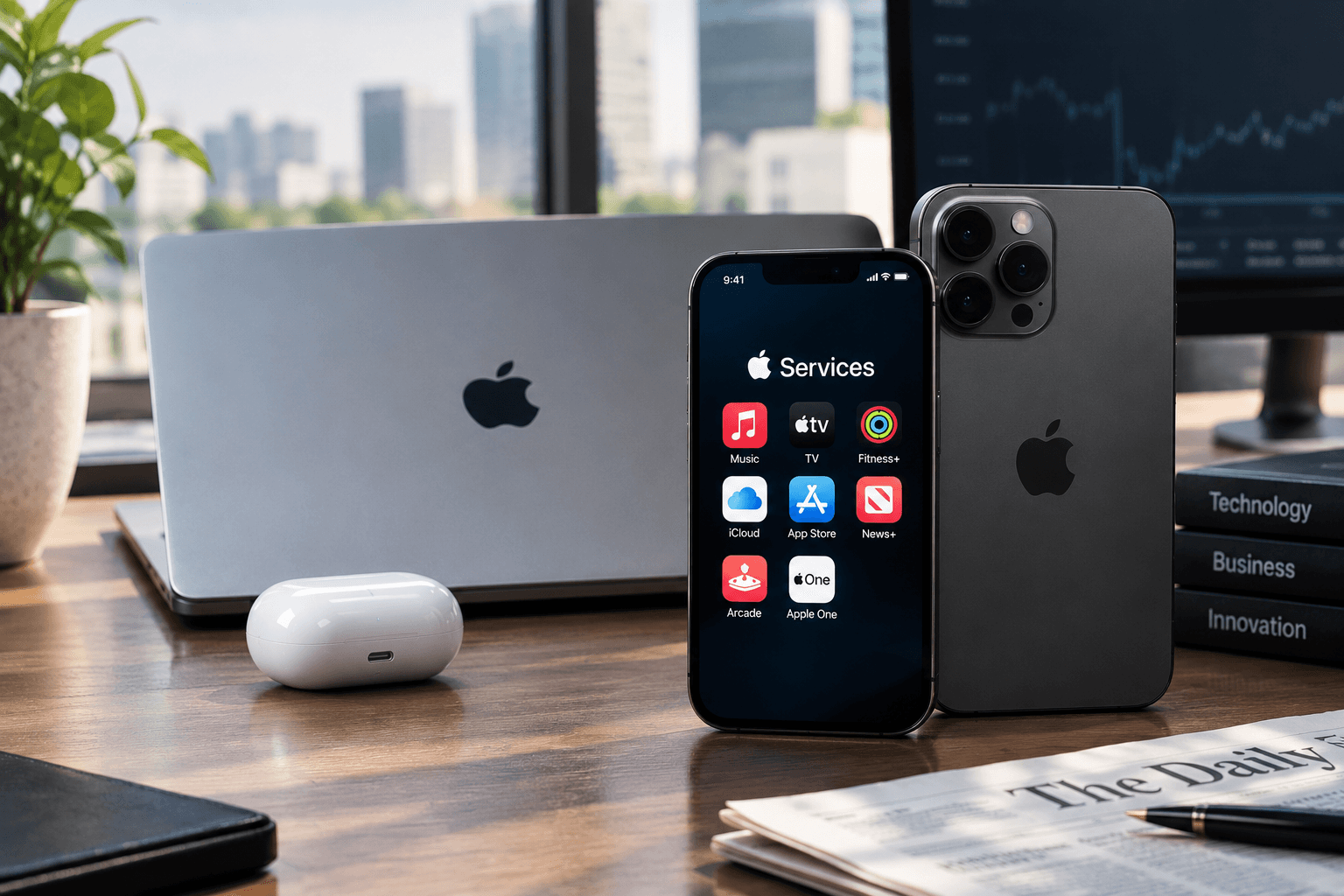
Apple faces a strategic inflection point on Services revenue growth, with two distinctly different approaches emerging from recent company statements, analyst reports, and market performance data. One path emphasizes aggressive revenue extraction through App Store commission increases and tighter developer controls. The other prioritizes organic growth through service expansion, subscription diversification, and ecosystem integration. Recent developments suggest the market and investors favor the organic approach, while the aggressive extraction strategy faces mounting resistance.
The Two Paths Diverge
Path One: Aggressive Revenue Extraction — Under leadership from CEO John Ternus and Services SVP Eddy Cue, Apple is pursuing what internal sources describe as efforts to "squeeze additional recurring revenue from the App Store" and "raise margins" through higher commissions, mandatory fees, advertising requirements, and expanded control mechanisms. This approach seeks to extract more value from existing developer activity and App Store traffic.
Path Two: Organic Services Expansion — An alternative strategy focuses on growing Services revenue through expanding the breadth of service offerings, deepening subscription penetration, entering new markets with existing services, and leveraging Apple's 2.5 billion active device installed base to create multiple touchpoints for recurring revenue. This path emphasizes growth through new subscriber acquisition and expanded service adoption rather than margin expansion.
The fundamental difference is stark: extraction strategy prioritizes maximizing revenue from existing developers and transactions, while organic strategy prioritizes expanding the total addressable market and the breadth of services that customers subscribe to.
Market and Investor Sentiment: Organic Path Gaining Support
Recent financial performance and analyst commentary suggest investors are losing patience with aggressive App Store optimization, while warming to organic Services expansion.
Apple's Services revenue growth has decelerated notably in 2026. Q3 2026 Services revenue reached $30.7 billion, a record for a fiscal third quarter, but growth slowed to 12% year-over-year—the weakest Services growth rate since Q2 2025 and the segment's first sequential quarter-over-quarter decline since 2022.
CFO Kevan Parekh attributed the slowdown explicitly to "factors that impacted the performance of the App Store," directly linking the deceleration to App Store-specific challenges. Those challenges include regulatory pressures forcing alternative payment methods, developer resistance to aggressive fee structures, and consumer spending caution in light of App Store policy changes.
Notably, other Services categories showed more resilience. Analyst commentary has highlighted strong performance in advertising, Apple Music, iCloud, and AppleCare—services that grow through organic expansion and subscription adoption rather than commission extraction.
The Regulatory Headwind to Extraction Strategy
The aggressive extraction path faces a fundamental problem: regulators worldwide are constraining Apple's ability to control App Store economics.
The ongoing Epic Games lawsuit, European Digital Markets Act compliance requirements, Brazilian regulatory changes, and Japanese App Store regulations have all reduced Apple's pricing power. Appfigures data shows Apple's U.S. commission revenue has declined 18% since the start of 2026, directly undermining the extraction strategy.
By contrast, the organic growth path is less vulnerable to regulatory interference. Expanding subscription services, launching new offerings, and growing service adoption rates face no regulatory headwinds comparable to App Store commission disputes.
This regulatory asymmetry is crucial. Apple can control its own ability to launch new services, expand marketing efforts, and grow subscriptions. It cannot control whether regulators allow aggressive App Store fee increases.
Phil Schiller's Departure: A Symbolic Moment
The departure of Phil Schiller from day-to-day App Store oversight represents a clear signal that the aggressive extraction strategy is controversial even within Apple's executive leadership.
Schiller, who architected the App Store in 2008, stepped down from operational oversight rather than oversee the new revenue extraction initiatives. His departure was explicitly tied to his belief that aggressive fee increases and margin squeezing would "irk developers and governments."
The move suggests internal disagreement about strategy—with Schiller representing the more measured, long-term ecosystem view, while Ternus and Cue represent a more aggressive financial optimization approach. The fact that Schiller chose to step aside rather than support the direction sends a clear message: even longtime Apple executives view this extraction strategy as problematic.
Financial Reality: Services Already Highly Profitable
An underexplored aspect of this strategic tension is that Services already generates extraordinary profit margins. At 75.4% gross margin in fiscal 2025, Services is already among the highest-margin business segments in the entire technology industry.
This raises a strategic question: does Apple need to extract more margin from existing App Store transactions, or should it focus on growing the total Services base to complement already-exceptional profitability?
The organic strategy essentially argues that 75% gross margins at larger scale is better than 80% gross margins at smaller, constrained scale. It prioritizes revenue growth and installed base expansion over margin percentage maximization.
Market sentiment appears aligned with this logic: investors typically reward revenue growth more generously than margin expansion in services businesses, particularly when margin expansion requires navigating regulatory hostility.
The Organic Path's Momentum
Several factors support the momentum behind organic Services growth:
AI-Powered Services Integration — Apple's announced AI features arriving in 2027 software releases will expand the value of services for users, making subscriptions more attractive and stickier. These features create organic service adoption incentives.
Subscription Diversification — Beyond App Store, Apple is expanding subscriptions across Apple Music, Apple TV+, Apple Fitness+, iCloud+, Apple News+, and Apple Arcade. Multiple subscription points create revenue resilience against regulatory pressure on any single category.
Enterprise Services Growth — Management highlighted growing enterprise adoption of Apple devices for AI development and productivity. Enterprise IT services represent a growing segment less dependent on App Store economics.
Global Market Expansion — Emerging markets with growing iPhone adoption provide greenfield opportunities for Services penetration. India, Southeast Asia, and Latin America represent significant untapped Services markets.
Installed Base Growth — With 2.5 billion active devices and conservative estimates suggesting years of continued growth, the raw base of potential Services subscribers continues expanding.
These organic drivers are largely under Apple's control and less vulnerable to regulatory interference than App Store commission optimization.
What Comes Next
The divergence between the two strategies appears to be resolving in favor of the organic approach. Recent executive changes, regulatory pressures, financial performance patterns, and analyst commentary all point toward prioritization of Services expansion over aggressive App Store margin extraction.
However, this doesn't mean Apple is abandoning profitability optimization entirely. Rather, it suggests the company is recognizing that reasonable App Store margins (30% commissions on digital transactions) coupled with massive growth in Services breadth and adoption generates better financial outcomes than maximized margins coupled with regulatory pressures and developer friction.
For investors and observers, the strategic implication is significant: Apple's Services growth story going forward will be driven less by App Store control dynamics and more by subscription adoption rates, service expansion, and ecosystem deepening—factors more aligned with long-term value creation and less vulnerable to regulatory disruption.
The company that once obsessively controlled app distribution is learning that an expanded, diverse, subscription-first Services business may create more durable profit growth than attempts to extract maximum value from existing gatekeeping power.
Whether Ternus and Cue ultimately align with this organic growth philosophy, or whether continued pressure for margin optimization creates further internal friction, will define Apple's Services strategy trajectory through the remainder of 2026 and into 2027.
For now, the market's judgment is clear: expand Services organically, not through aggressive App Store exploitation. That message appears to be resonating with Apple's leadership—even if the journey toward that strategic consensus has been contentious and costly to relationships with longtime executives.
Sources
Related Articles
![iOS 27 code shows you may be able to replace Siri AI with Claude or ChatGPT [Poll]](/_next/image?url=https%3A%2F%2Fpub-28e5ac88747a4149bb39f4a8436dd8c0.r2.dev%2Fuploads%2F2026%2F09%2Fe95ca334-00e1-4bd8-85a3-d33c10f584fa.jpg&w=1920&q=75)