 TEKZARO
Startups
Hear why Neuralink co-founder Max Hodak says the screen era is ending at TechCrunch Disrupt 2026
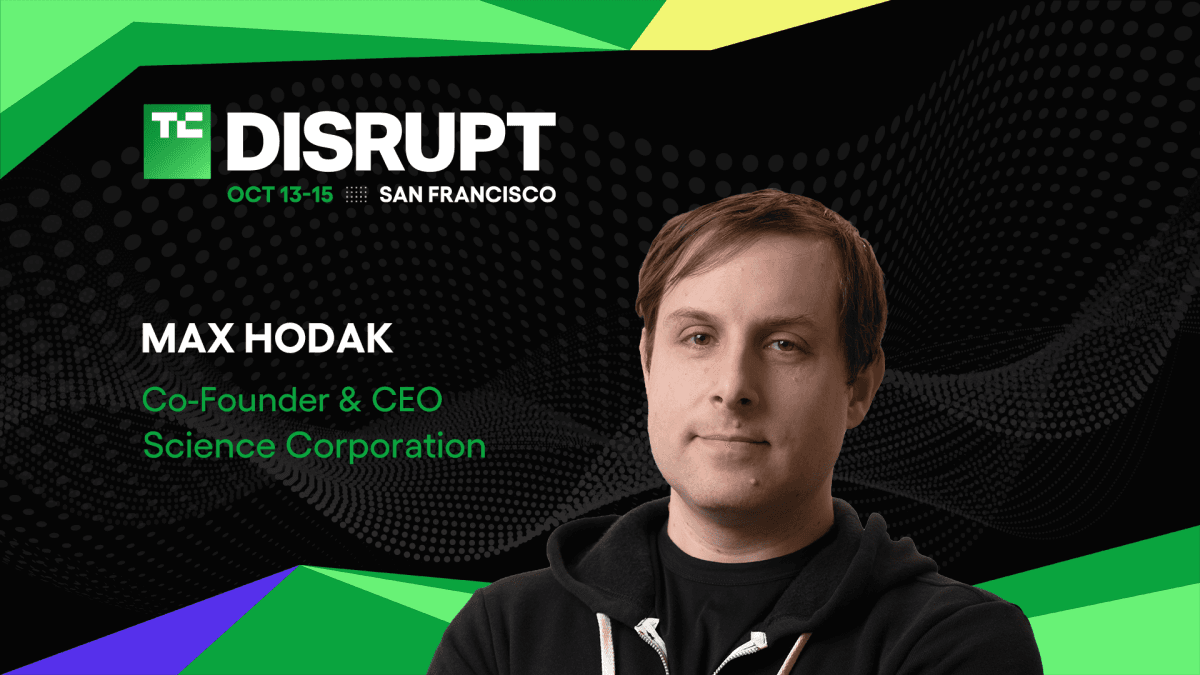
Max Hodak, who co-founded Neuralink and now runs Science Corporation, will argue at TechCrunch Disrupt 2026 that the era of interacting with computers through screens is drawing to a close.
His session, titled Beyond Screens, takes place on the Disrupt Stage when the conference returns to Moscone West in San Francisco from October 13 to 15.
The Argument
When most people picture working with a computer, they picture keyboards, clicks, or typing on a phone. Hodak's case is that the next era of technology will be built on a different kind of interface — one that adapts to us rather than the reverse, using brain-computer interaction to create new ways of engaging with machines.
It is a claim that would be easy to dismiss as conference-stage futurism if his company had not already shipped something that works.
Science Corp Has Shipped
Science Corporation's PRIMA implant has restored eyesight in people with severe vision loss. That is not a trial result being spun optimistically — it is the achievement the company is built on.
The company has raised $230 million at a $1.5 billion valuation, and has enlisted a prominent neurobiologist to lead the first US human trials of its biohybrid brain-computer interface.
Hodak has also pointed toward applications well beyond vision: regenerating damaged brain cells, providing early warning of seizures, and treating conditions such as Parkinson's disease. Science Corp's focus is explicitly on vision, cognition and mobility — helping people who have lost capability, rather than augmenting people who have not.
That distinction matters for how seriously to take the screens argument. A company whose near-term revenue depends on restoring sight has reason to build technology that actually works, which is a different incentive structure than a consumer neurotech pitch.
The Path Here
Hodak's career reads as a sustained bet that the human-machine interface has room to improve.
He started programming at six, studied biomedical engineering at Duke's Pratt School of Engineering, and worked his way into Miguel Nicolelis's brain-computer interface lab — an unusually direct line from student to the field's foundational research.
He first co-founded Transcriptic, a robotic cloud laboratory for the life sciences. In 2016 he co-founded Neuralink and served as its initial president, helping build the company that put brain implants into public consciousness.
He left, and in 2021 founded Science Corporation to pursue advanced neural engineering on his own terms.
What to Be Sceptical About
The "screen era is ending" framing is doing a lot of work, and it is worth separating the two claims inside it.
The medical claim is well supported. Implants that restore vision or manage neurological conditions are real, are working in patients, and represent genuine progress with clear beneficiaries.
The consumer interface claim is speculative in a different category. Replacing screens for people whose vision and mobility are intact requires an implant with a risk-benefit profile that surgical procedures currently cannot offer for convenience alone. Nothing in Science Corp's disclosed work suggests that threshold is near.
Those two things get conflated frequently in brain-computer interface coverage, and separating them is the difference between reporting and cheerleading.
Timelines in this field have also historically been optimistic. Neuralink's own public projections have repeatedly slipped.
The Wider Context
Disrupt 2026 brings more than 10,000 founders, investors and startup community members across more than 250 sessions, with OpenAI, Anthropic and Replit among the companies taking over six industry stages.
The Beyond Screens track sits alongside that AI programming, which is not accidental. As models get more capable, the constraint on what they can do for a person increasingly becomes the bandwidth of the interface between them. Typing is slow. Voice is faster but ambiguous. Direct neural interaction is the theoretical ceiling.
Whether that ceiling is reachable outside medical applications in any useful timeframe is the question Hodak will be arguing about on stage.
Registration before September 25 saves up to $200 on a pass.
Sources
Related Articles