 TEKZARO
Startups
SK Hynix bargains for chip equipment exports to its China facility in return for building a factory in US
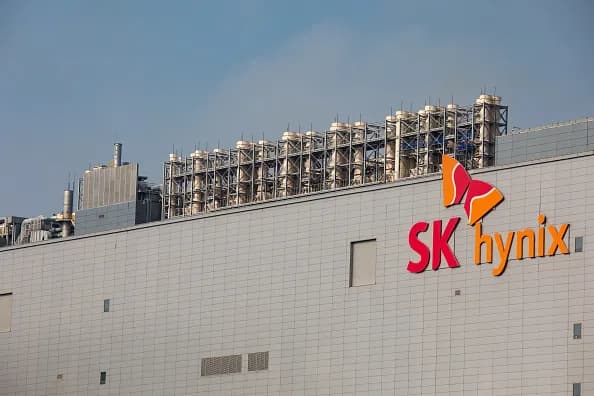
SK Hynix Seeks U.S. Chip Equipment Approval for China Plant as It Weighs New American Factory
South Korean semiconductor manufacturer SK Hynix is seeking U.S. government approval to bring additional American-made chipmaking equipment into its facility in Dalian, China, while tying that request to plans for a new NAND memory-chip factory in the United States, according to a Reuters report published on October 15, 2026.
The proposal highlights the challenges facing global chipmakers as they navigate U.S. export restrictions on China while responding to surging demand for memory chips used in artificial intelligence infrastructure and data centres.
SK Hynix’s U.S. subsidiary, Solidigm, wants to install additional equipment in an unfinished section of the Dalian facility. According to people familiar with the discussions cited by Reuters, increased production in China could help finance the proposed American factory.
Neither the export approval nor the new U.S. factory should be treated as a completed deal.
What SK Hynix Is Seeking
The reported negotiations centre on two connected objectives: securing permission to bring more U.S.-made semiconductor equipment into China and developing additional NAND memory manufacturing capacity in the United States.
Key details include:
- Company: SK Hynix, a South Korean semiconductor manufacturer.
- U.S. subsidiary: Solidigm, which focuses on NAND flash memory and storage products.
- Chinese facility: SK Hynix’s NAND manufacturing site in Dalian.
- Equipment request: Additional U.S.-made chipmaking tools for an underutilised production area.
- U.S. investment: A proposed new NAND factory, with the project still under consideration.
- Regulatory hurdle: Approval from the U.S. government for additional equipment shipments to China.
Reuters reported that Solidigm has applied for additional export licences. The company is reportedly making its U.S. factory plans contingent on obtaining the requested approval.
The arrangement would give SK Hynix a potential route to increase production at its existing Chinese site while building a larger manufacturing presence in the American market.
Why the Dalian Facility Matters
The proposed equipment installation concerns a production area known as Mod B at the Dalian facility. The space was completed in 2023, but its equipment installation was not finished during the downturn in the memory-chip market.
Some manufacturing tools are already in place, while additional space remains available for more equipment.
SK Hynix told Reuters that the installation of equipment in Mod B was proceeding in close consultation with, and under authorisation from, the U.S. government. The company also said it was not seeking to expand the facility’s production capacity.
That statement is important because the reported request concerns additional equipment, while Washington's export-control framework distinguishes between supporting existing operations and permitting capacity expansion or technological upgrades.
The precise scope of the requested licence and its eventual conditions will determine what equipment can be installed and how the facility can be used.
Why Washington's Approval Is a Major Hurdle
The United States has imposed restrictions on exports of semiconductor manufacturing equipment to China as part of its effort to limit Beijing’s access to technologies considered important for advanced computing, artificial intelligence and military applications.
The rules also affect South Korean chipmakers operating manufacturing facilities in China.
In 2025, the U.S. Department of Commerce revoked special authorisations that had allowed SK Hynix and Samsung Electronics to bring certain American-made equipment into their Chinese facilities without seeking individual licences. Washington subsequently moved towards a licensing framework intended to support existing operations while restricting equipment used to expand capacity or upgrade technology.
According to Reuters, SK Hynix received a licence covering equipment for its Dalian site in 2026, but the authorisation limited the quantity of equipment allowed.
The company is now seeking additional approval for equipment intended for Mod B. Reuters reported that a licence covering further U.S.-made equipment and technology for 2027 had not yet been issued at the time of publication.
The decision could affect the company's plans for the Dalian site and the timing of its proposed investment in the United States.
Why SK Hynix Wants to Build a Factory in the U.S.
The proposed American factory would add NAND flash memory manufacturing capacity in a market increasingly shaped by demand for data-centre storage.
NAND flash memory is used in solid-state drives (SSDs), which store operating systems, applications and data in computers, enterprise servers and AI infrastructure.
As AI data centres expand, demand for storage and other memory products has increased. The resulting pressure on supply has also strengthened the commercial case for investment in additional manufacturing capacity.
Reuters previously reported in September that Solidigm was considering a NAND factory in the United States, with upstate New York emerging as a potential location.
The proposed project remains separate from SK Hynix's discussions with Intel about leasing part of Intel's planned chipmaking facility in Ohio. SK Hynix is also building an advanced packaging facility for high-bandwidth memory in Indiana.
These projects reflect different parts of the semiconductor manufacturing process: NAND production supports storage, while high-bandwidth memory is particularly important for AI accelerators and other high-performance computing systems.
How the China Facility Could Help Finance U.S. Expansion
According to sources cited by Reuters, increasing production at the Dalian facility could help Solidigm generate the funding needed for its proposed American factory.
The logic is straightforward: additional output could allow the company to benefit from current demand for NAND products while developing a manufacturing base in the United States.
Reuters also reported that Solidigm was considering an initial public offering as early as 2027. Such an offering could provide another potential source of funding, although no completed offering or final financing plan had been announced in the report.
Semiconductor fabrication facilities require substantial investment and can take years to build. Securing funding, equipment and regulatory approvals is therefore central to determining whether the proposed factory moves forward.
What the NAND Market Has to Do With It
The timing of the proposal coincides with a stronger memory market following an earlier downturn.
Reuters cited Walt Coon, a memory industry expert at TechInsights, as saying NAND prices had increased sevenfold since mid-2023. The report also described expectations that the market would remain tight over the following years.
Higher prices and strong demand can improve the financial incentives for chipmakers to increase output. However, market conditions can change, and elevated prices alone do not guarantee that a large manufacturing investment will deliver its expected returns.
For SK Hynix, the challenge is to balance the cost of expanding manufacturing with uncertainty over export controls, future demand and competition from other memory producers.
What the Negotiations Mean for the Semiconductor Industry
The reported proposal illustrates the tension between two objectives in the global chip industry.
Expanding U.S. manufacturing: Washington wants foreign semiconductor companies to invest in American production facilities, supporting domestic manufacturing capacity and employment.
Restricting sensitive technology transfers: U.S. export controls limit the movement of certain semiconductor equipment into China, particularly where the technology could support advanced computing or military applications.
SK Hynix's reported approach attempts to connect these priorities through a potential investment arrangement. But the company cannot assume that a promise to build a factory in the United States will automatically secure permission to ship additional equipment to China.
Any approval would depend on the U.S. government's licensing decision and the conditions attached to it.
The negotiations also demonstrate why semiconductor supply chains remain difficult to separate by country. A single manufacturer's operations can involve equipment designed in the United States, manufacturing facilities in China, corporate operations in South Korea and customers around the world.
What Happens Next?
Several developments will determine whether the reported proposal advances:
- Export licence decision: Whether Washington approves additional American-made equipment for the Dalian facility.
- Factory planning: Whether Solidigm confirms a new U.S. NAND factory and identifies its location, cost and construction schedule.
- Financing: Whether the project is funded through operating revenue, a potential public offering or other sources.
- Market conditions: Whether NAND demand and pricing remain strong enough to support additional manufacturing investment.
For now, the proposal remains a reported negotiation rather than a final agreement.
The bottom line: SK Hynix is seeking a way to expand its manufacturing options in the United States while obtaining greater flexibility for its Chinese operations. Whether the strategy succeeds will depend on U.S. export-control decisions, financing and the economics of the global memory-chip market.
Sources
Related Articles