 TEKZARO
Startups
Mecka AI nears $500M valuation in Sequoia-led deal amid rush for robot training data
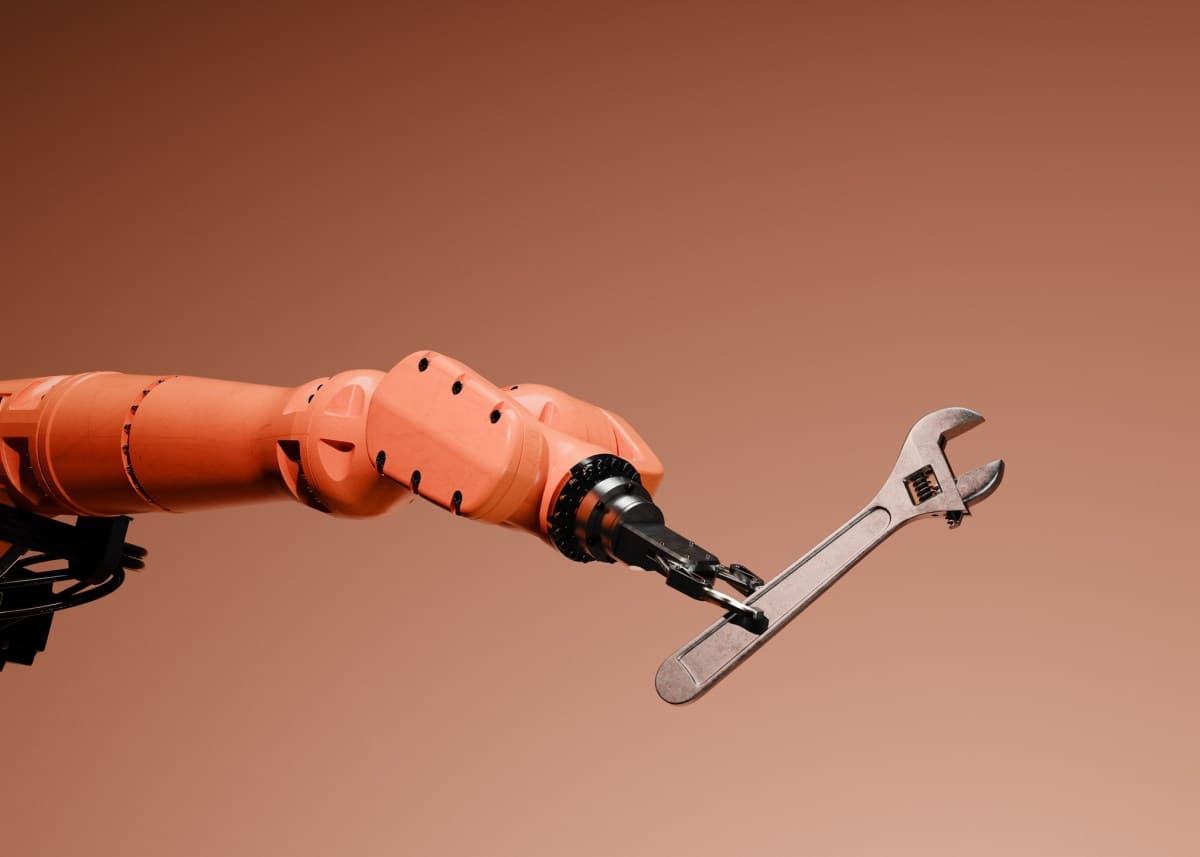
Mecka AI, a startup that collects and analyses human motion data to train humanoid robots, is nearing a funding round led by Sequoia Capital at a valuation of around $500 million, according to two people with knowledge of the deal.
The round comes just three months after Mecka announced a $60 million raise led by Framework Ventures, with participation from Menlo Ventures, SV Angel and Kindred Ventures.
That is roughly an 8x valuation increase in 90 days.
What Is and Is Not Confirmed
Worth being precise here, because the story is thinner than the headline number suggests.
The round size has not been disclosed. Terms are not final and could still change. Mecka AI did not respond to a request for comment, and Sequoia declined to comment. The entire report rests on two unnamed sources.
Everything else in the coverage — the company's method, its funding history, the competitive landscape — was already on the record from June. What is new is the valuation figure and Sequoia's involvement.
The Business
Mecka's model is unusually simple for a company at this valuation.
It pays people to record themselves performing everyday tasks using body sensors and smartphones. Making coffee. Automotive repair. Ordinary physical activity, captured from a first-person perspective.
That footage becomes egocentric training data, which flows to robotics labs and AI companies building general-purpose embodied systems.
The company was co-founded in 2024 by four entrepreneurs: Canadians Josh Gao and Mogen Cheng, who previously built a restaurant fintech startup, Jason Chong, who joined Coinbase after it acquired his crypto exchange, and Duy Nguyen.
None of them has a robotics background. What they identified was a supply problem rather than a technical one.
Why Investors Care About This Now
The thesis behind the valuation is that physical-world data has become the binding constraint in robotics.
Language models had the opposite problem. Text was abundant, essentially free, and already digitised — the internet had done the collection work before anyone needed it. Humanoid robots have no equivalent corpus. There is no pre-existing archive of first-person footage showing humans performing ordinary manual tasks, because nobody was recording it.
Teleoperation and robot fleet data are the alternatives, but both are expensive and both produce data that reflects how robots move rather than how humans do. Mecka's bet is that what people naturally do in the physical world is useful material for teaching machines to operate in it.
Sequoia leading the round signals a view that data infrastructure in robotics commands higher multiples than the model layer does — a reversal of how the LLM market valued the same positions.
The Competition
Mecka is not alone, and it is not the highest-valued player in this space.
XDOF was reported last week to be nearing a round at a $1.2 billion valuation, also for real-world robot training data. Scale AI and Micro1 are expanding their human-data platforms beyond language models into the same territory.
The comparison investors are reaching for is Scale AI, which became critical infrastructure for LLM training by positioning itself between model builders and the data they needed. Whether robotics produces an equivalent chokepoint is the open question.
The Gaps
Several things limit how much can be read into this.
Mecka has not disclosed its customer list, which makes independent validation of demand difficult. Unit economics are opaque. The round size is unknown, so the actual capital going in — and therefore the dilution and the runway it buys — cannot be assessed.
There is also a structural question about the moat. Paying crowdworkers to record video is not technically difficult to replicate. What would make Mecka defensible is either exclusive data volume, proprietary annotation and processing, or contractual lock-in with major robotics labs. None of those has been publicly demonstrated.
A compressed timeline between rounds usually means fluid terms. The documentation may shift before close, and the $500 million figure is a reported number rather than a signed one.
Sources
Related Articles