 TEKZARO
Space
Launch costs to orbit have dropped 96% since 1960 — and a new study argues they could fall another 90% by 2040
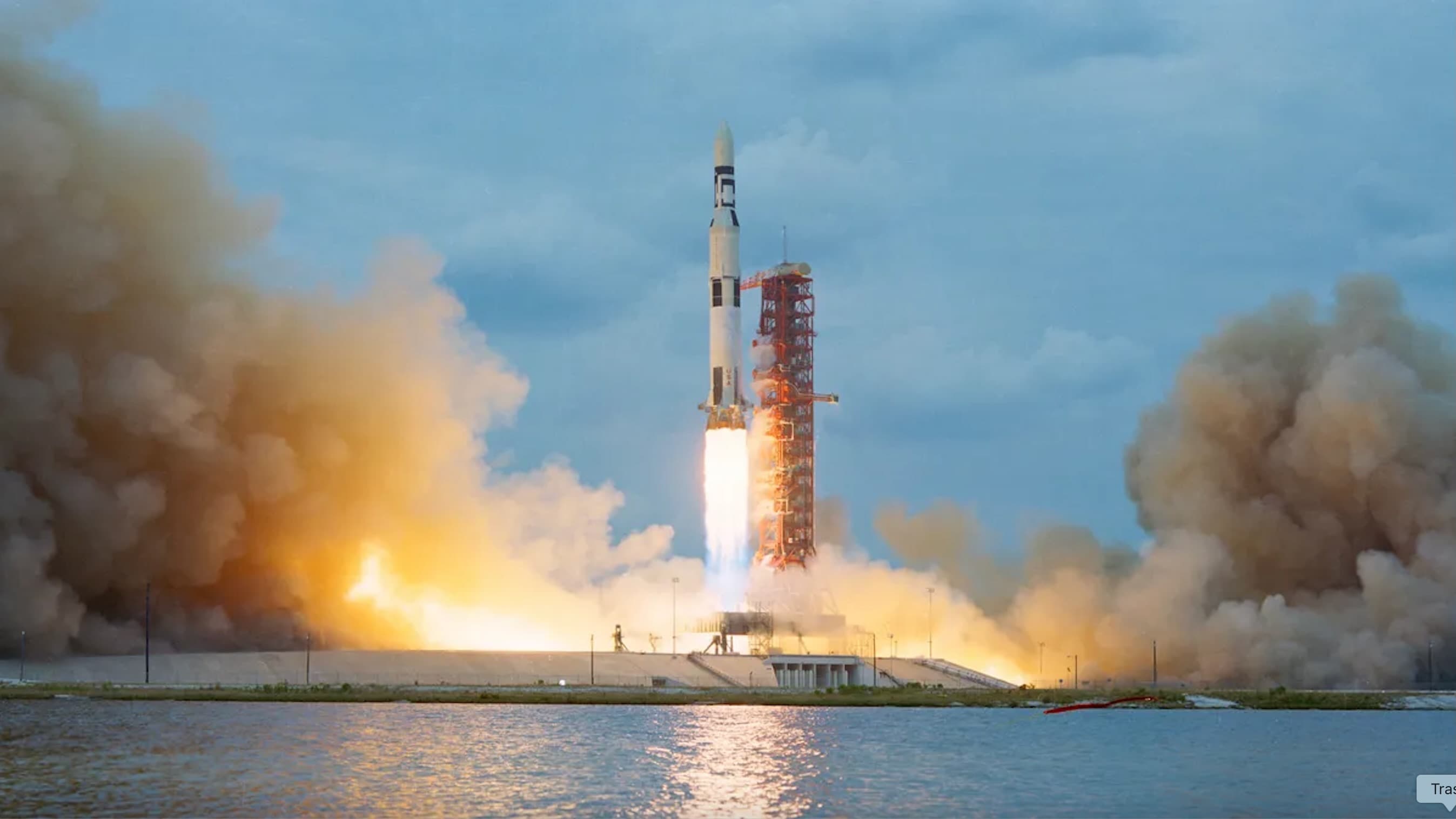
Putting a kilogram into orbit cost about $87,000 in 1960. By 2025 the average had fallen to under $4,000 — a drop of roughly 96% across 65 years of spaceflight, according to a new analysis published in the journal PNAS Nexus. The study, first reported by Space.com and summarised on the EurekAlert press distribution service, draws on what its authors describe as the largest dataset of rocket launches ever assembled, covering 4,405 launches between 1960 and 2025 across more than 330 rocket configurations developed in twelve spacefaring nations.
Authors Alessio Terzi of the University of Cambridge and Francesco Nicoli of the Politecnico di Torino argue that the industry has been learning faster than almost any other in modern history. Each time the cumulative payload launched to orbit has doubled, they calculate, the cost per kilogram has fallen by 21.2%. That learning rate, according to Space.com's reporting, exceeds the benchmark set by solar panels during their early adoption — a technology widely cited as the gold standard for cost reduction.
The two researchers attribute the trajectory to two inflection points. The first followed the end of the Cold War, when the shift toward commercial "New Space" use forced operators to drive down costs rather than subsidise them through national budgets. The second came with SpaceX's Falcon 9 and the introduction of reusable launch hardware at scale, which accelerated cost declines further. According to Space.com, Terzi said the data shows a measurable steepening of the learning curve from the Falcon 9 era onward.
Where the cost curve could go next
If the same relationship holds, the authors project the average cost per kilogram reaching about $1,600 by 2030 and roughly $300 by 2040. In the nearer term, Space.com reports that SpaceX's Starship could push costs below $1,000 per kilogram — provided the vehicle achieves the launch cadence needed to validate its economics. Terzi told the outlet that "there is still significant scope for further cost reductions going forward," though he cautioned that forecasting at moments of structural change is inherently uncertain.
Three forces that could slow the decline
The researchers identify three risks that could blunt or even reverse the trend. The first is space debris: fragments orbiting at roughly 27,000 km/h can damage operational satellites and trigger cascading collisions known as Kessler syndrome, raising costs and insurance premia across the industry. The second is market concentration. Space.com reports that SpaceX currently accounts for roughly 75% of total payload sent to orbit, and the authors argue a would-be monopolist has strong incentives to raise prices, which would reduce launch volume and slow the learning effect. The third is geopolitics: as governments grow wary of depending on a single American provider, they may resurrect national launch programmes at higher cost, fragmenting the global market.
What the methodology actually measures
Earlier studies of launch cost trends, Nicoli told the outlet, typically priced rockets without accounting for how much payload they delivered across their lifetimes — a distortion that made historical costs look worse than they were. The new analysis standardises every launch to a per-kilogram figure in 2024 US dollars, then fits an experience curve across the entire 65-year window. The approach lets the researchers compare apples to apples across programmes as different as the early expendable launchers of the 1960s and today's partially reusable commercial vehicles.
What remains uncertain
The 2030 and 2040 projections are extrapolations from a historical pattern, not predictions underwritten by a verified engineering roadmap. Starship's per-kilogram economics, in particular, depend on assumptions about reusability, cadence and refuelling that have not yet been independently benchmarked at scale. The full paper, behind the figures reported by Space.com and summarised by EurekAlert, was published in PNAS Nexus on 14 July; TEKZARO has not independently examined the underlying dataset and is reporting the findings as presented in those secondary outlets.
Sources
Related Articles