 TEKZARO
Space
Pakistan’s First Astronaut Set for Space Mission on November 25, Minister Says
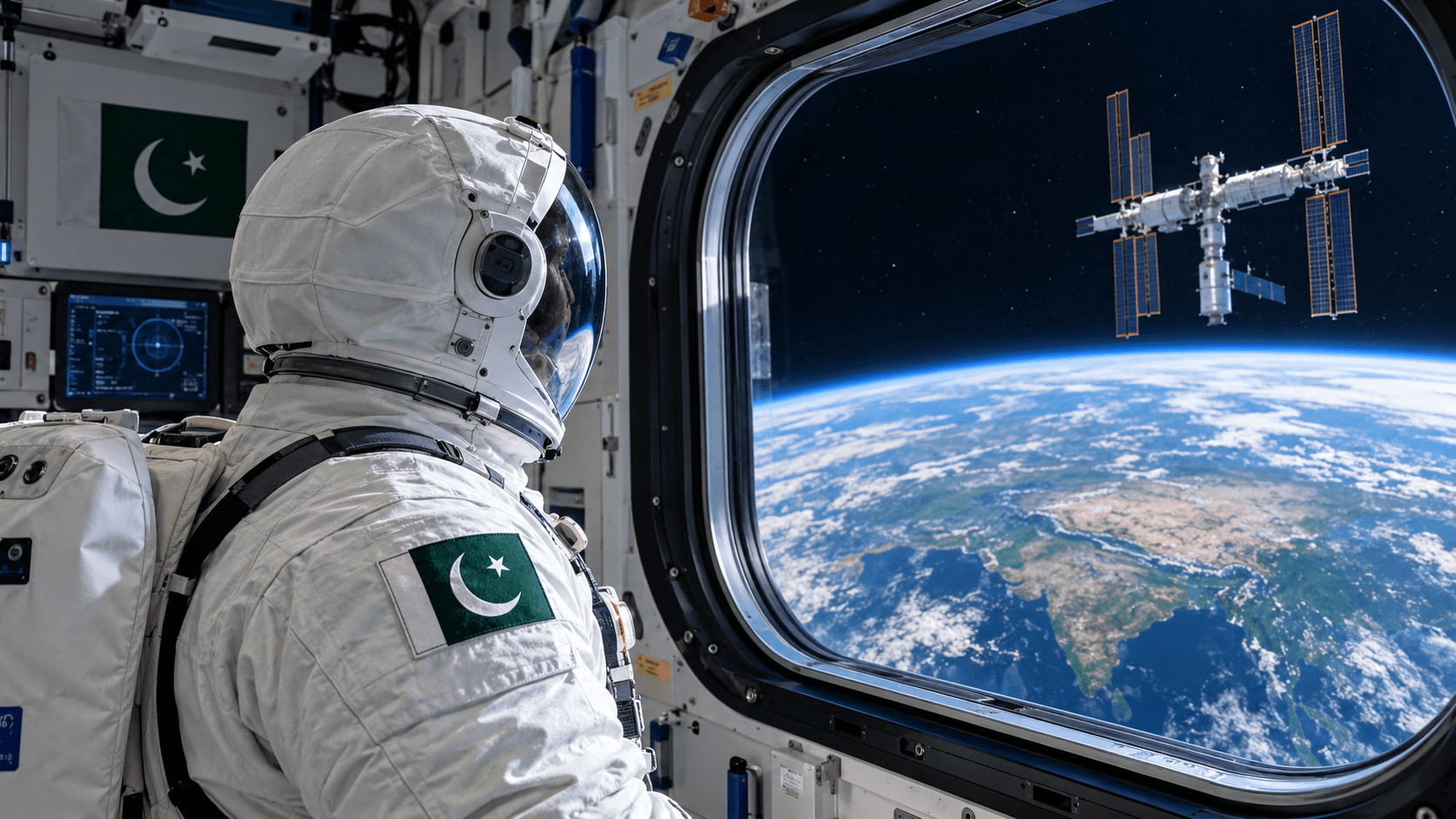
Pakistan’s first astronaut is scheduled to embark on a space mission from China on November 25, 2026, Planning Minister Ahsan Iqbal announced on October 18, marking a major milestone in the country’s human spaceflight programme.
Speaking at the concluding ceremony of World Space Week in Narowal, Iqbal said cooperation with China would help Pakistan advance its ambitions in space exploration. The announcement was also reported by Pakistan’s Press Information Department and state broadcaster Radio Pakistan.
The announcement did not identify the astronaut by name in the official statement reviewed for this report.
Pakistan’s First Human Spaceflight Mission
Pakistan’s planned mission is part of its growing space cooperation with China. The country does not currently have its own independent crewed spacecraft or launch system, making Chinese space infrastructure central to the planned flight.
A September report by Reuters identified two Pakistani pilot candidates, Zeeshan Ali and Khurram Daud, who had been undergoing training in China. According to that report, the selected individual is expected to serve as a payload specialist, carrying out scientific experiments rather than piloting the spacecraft.
The mission is planned to involve China’s Tiangong space station. The final astronaut’s identity and operational details should be confirmed through an official announcement.
Scientific Research on the Mission
The planned flight is intended to create opportunities for Pakistani scientific research in orbit.
Reuters reported in September that four biotechnology experiments had been selected from proposals submitted by Pakistani universities. The experiments were described as relevant to research challenges including food insecurity and climate change.
Conducting experiments in the space environment can help researchers study biological processes under conditions that differ from those on Earth. The results and practical applications of the selected experiments will depend on their design, execution and subsequent analysis.
Further details about the final scientific payload and mission schedule remain subject to official confirmation.
Pakistan Announces a Lunar Landing Goal for 2035
During the same World Space Week address, Iqbal said Pakistan aims to achieve a lunar landing by 2035 and expressed confidence that cooperation with China could support the country’s space ambitions.
The statement outlines a future goal, rather than a confirmed lunar mission date or a guarantee that a landing will take place by that year.
Pakistan is also pursuing robotic lunar exploration. Its Jinnah-1 lunar rover has been associated with a planned Chinese lunar mission, a separate programme from the upcoming human spaceflight mission. The two initiatives should not be confused: sending an astronaut to an orbital space station is different from landing a spacecraft on the Moon.
Pakistan Plans Its First Space Museum
Iqbal also announced plans to establish Pakistan’s first Space Museum at the University of Narowal.
The proposed museum is intended to promote scientific awareness and encourage young people to explore space science and technology. The announcement came during World Space Week 2026 celebrations held in collaboration with the Space and Upper Atmosphere Research Commission (SUPARCO).
A dedicated museum could provide educational opportunities for students and visitors, although details such as its opening date, funding and planned exhibits were not specified in the announcement.
What the Mission Could Mean for Pakistan
A successful mission could provide Pakistani researchers with opportunities to conduct experiments in orbit and build experience in human spaceflight operations. It could also increase public interest in science, engineering and space-related careers.
The broader benefits will depend on how the experience is used to strengthen research capacity, develop scientific expertise and support future projects. Continued cooperation with China will remain important to the programme because Pakistan does not yet operate an independent crewed launch system.
TEKZARO Takeaway: Pakistan’s first astronaut is scheduled to begin a space mission from China on November 25, 2026, according to Planning Minister Ahsan Iqbal. The announcement also highlighted a 2035 lunar-landing goal and plans for a Space Museum in Narowal. The astronaut’s identity and final mission details await further official confirmation.
Frequently asked questions
When is Pakistan’s first astronaut expected to go into space?
Planning Minister Ahsan Iqbal announced November 25, 2026, as the scheduled date.
Who will be Pakistan’s first astronaut?
The official announcement reviewed for this article did not name the astronaut. A September Reuters report identified Zeeshan Ali and Khurram Daud as the two candidates undergoing training in China.
Where will the mission take place?
The mission is planned to launch from China. Reuters previously reported that the astronaut would travel to China’s Tiangong space station.
Is Pakistan planning to land on the Moon?
Yes. The planning minister announced a goal of achieving a lunar landing by 2035. This is an ambition, not a confirmed landing date.
What is Pakistan’s Space Museum plan?
The government has announced plans for a Space Museum at the University of Narowal to promote public understanding of space science and technology.
Sources
Related Articles