 TEKZARO
Space
SpaceX Competitor Achieves First-Ever Launch, Calls for More Industry Capacity
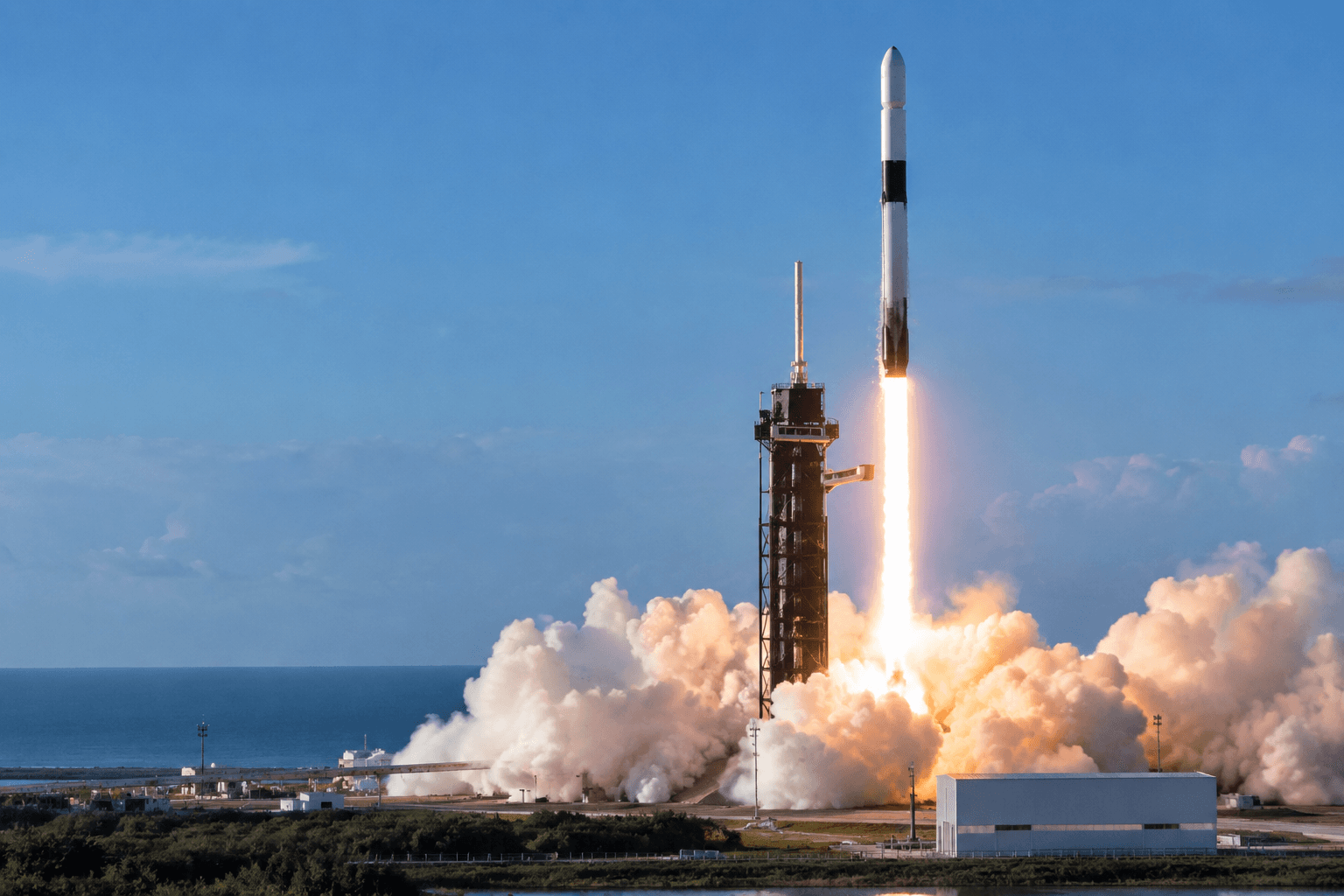
SpaceX Rival Launches Rocket in Historic First, Calls for More Industry Capacity
German rocket maker Isar Aerospace successfully reached orbit for the first time on Saturday, September 5, 2026, marking a watershed moment for Europe's commercial space industry and validating the startup's mission to create an independent European launch capability independent of U.S. providers. The achievement came on only the company's second test flight—a remarkable feat of engineering recovery after a catastrophic March 2025 failure—and sparked immediate calls from Isar leadership for expanded industry launch capacity to meet what they describe as desperate, financed demand for satellite launches.
The Spectrum rocket lifted off from Andoya Spaceport in northern Norway and successfully deployed six payloads into low Earth orbit: five cubesats (shoebox-sized satellites) and one experiment. The milestone made Isar Aerospace the first commercial space company from continental Europe to deliver satellites to orbit, a symbolic and strategic achievement for a continent seeking to reduce dependence on SpaceX and U.S. launch infrastructure.
A Remarkable Recovery
The magnitude of Isar's achievement is sharpened by context. In March 2025, the company's debut flight ended catastrophically just 30 seconds after liftoff when a vent valve opened prematurely, causing the rocket to lose attitude control and crash. The failure was public, dramatic, and raised serious questions about whether the startup could recover.
Eighteen months later, Isar not only recovered but succeeded on only the second attempt—a trajectory suggesting either extraordinary competence in failure analysis and correction, or remarkable luck, or more likely some combination of both.
The mission, designated "Onward and Upward," represents validation of Isar's engineering approach and gives the company credibility heading into a critical scaling phase.
The Pipeline and Market Demand
Chief Commercial Officer Stella Guillen told CNBC on Monday that the space industry was "desperate" for additional launch capacity. She cited Isar's pipeline at more than €10 billion ($11.6 billion)—an enormous figure that speaks to the sheer scale of satellite launch demand that has emerged from constellation operators, new space companies, and government agencies.
Notably, Isar did not clarify how much of that pipeline represents signed, contracted orders versus preliminary interest. This distinction matters significantly for valuation and company credibility. A €10 billion pipeline of genuine contracts is transformative. A €10 billion pipeline of "serious interest" is encouraging but considerably less binding.
Guillen's language suggested the former: "The demand is so big. There's a lot of new constellations and new projects that have come out, and actually they're financed." The phrase "actually they're financed" implies that customers have the funding to execute their satellite deployment plans—suggesting demand is not theoretical but backed by actual capital.
The Capacity Bottleneck Problem
Guillen's emphasis on launch capacity being "desperate" reflects a genuine market reality. Despite SpaceX's extraordinary launch cadence (approximately 100 Falcon 9 launches per year), demand for satellite launches vastly exceeds available capacity.
Reuters reported in August 2026 that at least seven spacecraft companies had been told that SpaceX's Falcon 9 is fully booked through 2028 or 2029. This backlog exists despite SpaceX being the world's most prolific launch provider by an enormous margin. The bottleneck reflects how dramatically demand for launch services has expanded.
The surge comes from multiple sources: constellation operators building out their satellite networks, government agencies requiring dedicated launch capacity for national security missions, research institutions deploying scientific payloads, and commercial ventures launching communication, Earth observation, and other specialized satellites.
For companies unable to access SpaceX capacity, alternatives have been limited. Blue Origin's New Glenn is just beginning operations. Rocket Lab serves the small-satellite market but remains below the scale required for major constellation deployments. European launch providers like Arianespace have been oriented toward government missions rather than commercial satellite launches.
Isar Aerospace enters this context as a potential capacity relief. The company targets the small-satellite market (up to 1,000 kilograms), which is substantial but doesn't match Falcon 9's capabilities. However, even small-satellite launch capacity is in deficit.
European Strategic Importance
Germany's Chancellor Friedrich Merz immediately recognized the geopolitical significance of Isar's success: "This marks the beginning of a new era," Merz said Sunday. European Union defense and space commissioner Andrius Kubilius added: "Europe's independent access to space just got a major boost."
This political response reflects recognition that launch capacity is strategic infrastructure. The EU and individual European governments have long viewed dependence on U.S. launch providers (particularly SpaceX) as a geopolitical vulnerability. While SpaceX has been reliable, questions about export controls, national security restrictions, and long-term availability create incentive for European independence.
Isar's success represents progress toward that independence. A German company launching from Norwegian territory and serving European constellation operators and government missions strengthens Europe's autonomous space capabilities.
Isar's Position in Global Competitive Landscape
While Isar's achievement is genuine and significant, the startup's scale remains dwarfed by SpaceX. The Munich-based company has achieved two orbital flights. SpaceX has completed over 620 orbital launches. The Spectrum rocket carries up to 1,000 kilograms. Falcon 9 carries 23,000+ kilograms to low Earth orbit when expendable, and maintains reusability that dramatically reduces per-launch costs.
Isar is not in a position to compete directly with SpaceX on capacity or price. Instead, the company is filling a niche: responsive launch capability for small satellites from European territory, without dependence on U.S. infrastructure or export control approval.
This niche positioning is strategically sound. The company is not trying to out-SpaceX SpaceX. Instead, it's building a European launch provider serving European and allied customers with dedicated capacity and geographic/geopolitical independence.
Infrastructure Challenges Ahead
Guillen warned that Europe's launch infrastructure would need to expand to support industry growth. This represents an important caveat to the optimism surrounding Isar's success.
Launching a rocket is fundamentally different from building a scalable launch business. Isar's achievement on one Norwegian launchpad is impressive. Scaling to multiple launches per month requires:
Additional launch facilities — More pads in multiple locations to spread launches across the calendar.
Ground support infrastructure — Facilities for assembly, integration, testing, and mission control.
Supply chain capabilities — Manufacturing capacity for rocket components, avionics, and engines at production rates matching launch cadence.
Regulatory environment — Streamlined approval processes for frequent launches.
Workforce expansion — Engineers, technicians, and support personnel to manage growing operations.
Europe has historically struggled with launch infrastructure development, particularly the regulatory environment. Launch approvals in European countries require navigating national regulations, environmental assessments, and coordination across national boundaries. SpaceX operates in a more streamlined regulatory environment in the U.S., which has contributed to its launch cadence.
If Isar is serious about scaling to multiple launches per month, European governments will need to accelerate infrastructure development and regulatory streamlining. Guillen's warning signals awareness of this constraint.
Timing: SpaceX IPO and Market Dynamics
Isar's success announcement arrived precisely as SpaceX completed its IPO and began public trading—providing an interesting market narrative contrast. SpaceX shares closed Friday at $147.95 (prior to the IPO), and Isar's European achievement is unlikely to move SpaceX stock significantly given the vast scale difference.
However, the parallel timing underscores a broader market dynamic: the global space industry is expanding rapidly enough to support multiple competitors simultaneously. SpaceX's dominance in launch services (approximately 60% of global commercial launch mass by SpaceX's own estimates, and even higher by other metrics) does not preclude smaller providers from building successful, profitable niche businesses.
Isar's €10 billion pipeline suggests the company is positioned to capture meaningful market share in the small-satellite launch niche. Whether that translates to profitability and scale matching the company's ambitions remains to be seen.
What Comes Next
Isar's immediate focus is increasing production and launch frequency. The company will need to:
Execute additional flights successfully — Demonstrating reliability and consistency with multiple launches over the coming quarters.
Build customer relationships — Converting the €10 billion pipeline into executed contracts and recurring launch agreements.
Expand infrastructure — Developing additional launch capacity in Europe to match demand and frequency goals.
Raise capital — Funding manufacturing scale-up and facility expansion.
Maintain political support — Ensuring European governments continue prioritizing launch infrastructure investment.
Success on these fronts would validate Isar's business model and establish Germany/Europe as a genuine commercial launch competitor. Failure would relegate the startup to a single-shot achievement without follow-through.
The Broader Message
Isar Aerospace's success carries symbolic and strategic importance beyond the company itself. It demonstrates that:
SpaceX is not insurmountable — Competitors can build functional orbital launch capability with modern engineering and focused execution.
Launch capacity is genuinely constrained — Industry demand vastly exceeds available supply, creating opportunity for additional providers.
Geopolitical independence matters — Governments and companies are willing to support alternative launch providers for strategic autonomy.
Europe can compete — A European startup can achieve orbital success and position itself as a credible alternative to U.S. providers.
These lessons extend beyond Isar. Other European startups (Axiom Space, Relativity), non-European competitors (Indian, Japanese, Chinese providers), and traditional aerospace giants (Arianespace modernization) are all advancing launch capabilities.
The age of SpaceX monopoly in commercial launch is definitively over. Whether SpaceX's dominance erodes significantly or whether it maintains leadership despite growing competition remains an open question. What is certain is that Isar's Saturday launch marked a genuine inflection point for Europe's independent space ambitions.
Sources
Related Articles