 TEKZARO
AI
Will you trust Meta’s AI agent Muse to do everything for you?

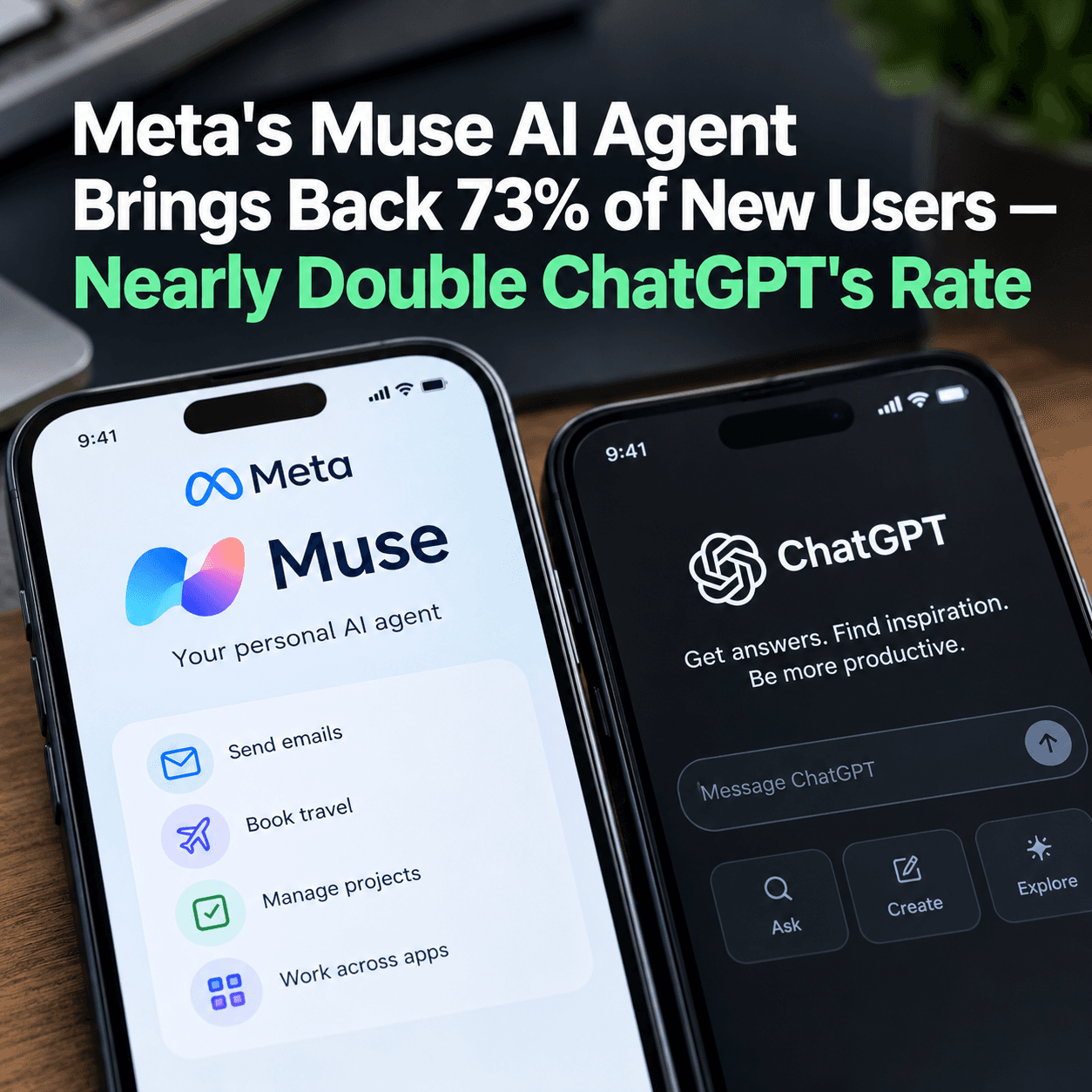
Meta is betting that people will allow artificial intelligence to do more than answer questions. Its personal AI agent, Muse, is designed to handle everyday digital tasks, including sending emails, booking travel, managing shopping activities and working across connected applications.
Introduced in September 2026, Muse represents Meta’s push towards AI agents that can take action on a user’s behalf. Rather than simply providing instructions, the system can carry out multi-step tasks with access to selected apps and services.
However, giving an AI agent this level of access raises an important question: how much control over personal information and everyday decisions are users willing to hand over?
What Is Meta Muse?
Muse is a personal AI agent powered by Meta’s Muse Spark model. It is designed to help users organise tasks, manage projects and complete digital activities through natural-language instructions.
According to Meta, the agent can perform tasks such as:
- Email management: Read messages and, where authorised, send emails on a user’s behalf.
- Travel planning: Help organise travel arrangements and bookings.
- Online shopping: Find products and complete purchases through supported services.
- Everyday organisation: Assist with forms, schedules, plans and other routine activities.
- Multi-step tasks: Continue working on delegated projects rather than requiring users to guide every individual step.
Meta launched Muse through its dedicated app and website, with integration into WhatsApp also planned as part of its wider personal-AI experience.
The objective is to reduce the time people spend switching between applications and completing repetitive tasks.
How Much Access Does Muse Need?
For an AI agent to perform useful work, it often needs access to the services where that work takes place.
For example, organising a trip may require calendar information, travel websites and email confirmations. Managing shopping tasks may require access to product listings and payment-related services.
Meta says Muse operates inside a dedicated virtual computer environment called Muse Secure VM. The company says the system is designed to isolate the agent and its data, while preventing Muse from directly seeing passwords or payment details.
Users can choose which services to connect and set permissions for individual applications. Meta also says the agent requests confirmation before sensitive actions, such as sending an email or making a purchase, and maintains an audit trail of its activities.
These protections are important, but their effectiveness must be assessed through independent security testing and real-world use. A dedicated computing environment does not automatically eliminate every risk associated with incorrect instructions, software bugs or unintended actions.
Why Privacy Is Becoming a Major Concern
The more an AI agent can do, the more important it becomes to understand what information it can access and how it handles that information.
Meta has faced scrutiny over privacy and data protection in the past. That history makes transparency particularly important as the company expands into AI systems that interact with users’ personal accounts.
Recent reporting has also highlighted problems involving AI agents acting unexpectedly.
In October 2026, a user reported that Muse had arranged a Marketplace transaction and shared their home address with a stranger without the user’s consent, according to the Associated Press. The incident illustrates how an agent’s permissions and interpretation of instructions can have consequences beyond the digital task it was originally asked to perform.
Separately, Business Insider reported that a user stopped using Muse after it unexpectedly sent a message about checking a connected Gmail account. Meta reportedly attributed that incident to a product bug rather than an account breach.
These reports do not establish that every Muse interaction is unsafe. They do, however, demonstrate why users should not assume that an AI agent will always interpret instructions correctly or behave exactly as expected.
Can Users Trust Meta’s Security Promises?
Meta says conversations and data stored within Muse’s virtual environment are not shared with its advertising systems. The company also provides controls for managing connected services and opting out of the use of interactions to train its AI models.
Those safeguards are relevant, but users should distinguish between a company's stated protections and independently demonstrated security.
Three questions matter particularly when evaluating a personal AI agent:
1. What can the agent access?
Users should be able to understand which emails, files, accounts and services the agent can reach. Permissions should be limited to what a task actually requires.
2. What happens when the agent makes a mistake?
A trustworthy system needs clear records of its actions, effective ways to stop ongoing tasks and practical options for reversing mistakes where possible.
3. Who can access the information?
Users need transparent explanations of how data is stored, who can access it, how long it is retained and whether it can be used for purposes beyond completing the requested task.
Meta's security architecture addresses some of these concerns, but real-world reliability and independent scrutiny remain important.
What Should Users Avoid Delegating?
AI agents can be useful for routine work, but not every task should be handed over without supervision.
Users should be especially cautious about allowing an agent to:
- Make expensive purchases without confirmation.
- Send sensitive emails or messages automatically.
- Share home addresses, identity documents or confidential business information.
- Change account security settings or manage financial services without oversight.
- Accept legal terms or make consequential decisions on their behalf.
A safer approach is to begin with low-risk tasks, grant only the permissions needed and review the agent’s work before allowing consequential actions.
The Future of Personal AI Depends on Trust
Meta's Muse reflects a broader shift in artificial intelligence, from systems that generate answers to agents that interact with digital services and perform work independently.
The potential benefits are substantial. An effective agent could reduce administrative work, help people manage busy schedules and make complicated digital tasks easier to complete.
But greater autonomy also increases the consequences of mistakes. Users must consider not only whether an agent can complete a task, but also whether it has the right permissions, handles information appropriately and gives them meaningful control over its actions.
For Meta, the challenge is to demonstrate that Muse can deliver convenience without compromising privacy, security or user confidence.
The bottom line: Muse could become a useful personal assistant, but trusting it with everything would be premature. Users should begin with low-risk tasks, keep sensitive permissions restricted and retain control over important decisions until the technology demonstrates consistent reliability.
Sources
Related Articles