 TEKZARO
Gadgets
OpenAI's first consumer device will be a screen-less, portable smart speaker, per Bloomberg report
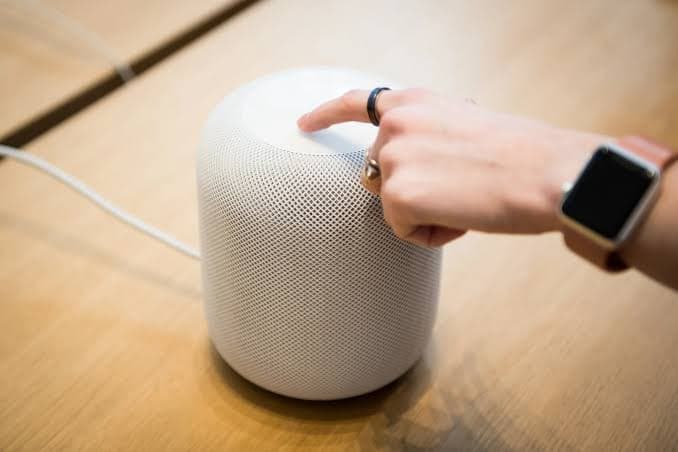
OpenAI is preparing its first consumer hardware product: a screen-less, battery-powered smart speaker designed to live inside the home, according to a Bloomberg report by Mark Gurman summarised by GSMArena and CNET. The device, which is still in development, is expected to handle the usual speaker tasks — answering questions, playing media, controlling smart-home appliances and fielding messages — but with ChatGPT and a more conversational version of its voice mode built in.
What separates it from an Echo or a HomePod, according to the Bloomberg reporting, is personality. GSMArena, citing Gurman, says OpenAI sees the device's main selling point as its ability to "connect on a humanlike level with users." The speaker is described as incorporating mechanical elements that move on their own to create the impression that it is alive rather than a static object reacting to commands — what Bloomberg's report, as quoted by CNET, calls "a new type of computer for the AI era" and "a humanlike AI companion that lives in the home."
The reporting also describes a layer of physical sensors. GSMArena says the speaker carries a camera along with "other sensors that help it understand a user's surroundings and context," feeding a model that OpenAI reportedly wants to grow more personalised and proactive over time — eventually anticipating what a user needs and surfacing information before being asked. That direction is described by Bloomberg's sources rather than demonstrated: OpenAI has not published benchmarks, on-device capability figures, or independent evaluations of how the voice mode will behave in the home.
Jony Ive's studio and the road from the iPhone to a speaker
The speaker will be the first product to emerge from OpenAI's acquisition of Jony Ive's io Products, with Ive's design firm LoveFrom involved and a team drawn heavily from former Apple designers and engineers who worked on the iPhone and Mac, GSMArena reports. The involvement of a hardware designer known for shaping Apple's most recognisable devices is the clearest signal yet that OpenAI intends to treat consumer hardware as a serious category rather than a peripheral accessory to its chatbot.
CNET's account widens the lens. It notes that OpenAI has separately been linked to AI earbuds for later this year or early 2027, and to a smartphone project reportedly in partnership with component suppliers MediaTek, Qualcomm and Luxshare. Earlier rumours, also cited by CNET, have suggested a lineup that could reach as many as five devices by the end of 2028 — though none of those plans have been confirmed by OpenAI.
The Apple lawsuit hanging over the launch
The leak lands in the middle of an active legal fight. CNET reports that Apple sued OpenAI days before the speaker details emerged, alleging a "pattern of theft of Apple trade secrets by OpenAI employees who were formerly at Apple" and calling those instances "the tip of the iceberg." According to anonymous sources familiar with OpenAI's plans, the company believes its device "veers significantly" from any current Apple product and is "unlikely" to infringe Apple's trade secrets — a defence that has not yet been tested in court. OpenAI did not respond to a request for comment from CNET.
What is known, what is not, and what is not yet real
GSMArena reports the speaker is expected to be unveiled later this year and released in 2027. Nothing about pricing, regional availability, supported languages, subscription requirements, or privacy controls has been disclosed. Every specification in the Bloomberg reporting — the camera, the moving parts, the proactive personalisation, the on-device context awareness — comes from sources described as knowledgeable of OpenAI's plans, not from OpenAI itself, and none has been independently verified.
Reader commentary on GSMArena's thread, captured in the comments, raises the same questions that any always-listening home device now invites: how audio and video are stored, who has access, and whether on-device processing can keep conversations from leaving the room. Those answers will determine whether the "physical manifestation of ChatGPT" that OpenAI reportedly wants to ship is treated as a companion or as another always-on sensor in the home.
According to Bloomberg's Mark Gurman, as reported by GSMArena and CNET. The two outlets' accounts are consistent on every shared detail; the underlying Bloomberg report itself was not available for direct verification. OpenAI declined to comment, and no independent testing of the device exists.
Sources
Related Articles