 TEKZARO
Computing
U.S. and UK navies successfully launch 3,700-pound submarine-sinking torpedo from robotic drone submarine in historic first
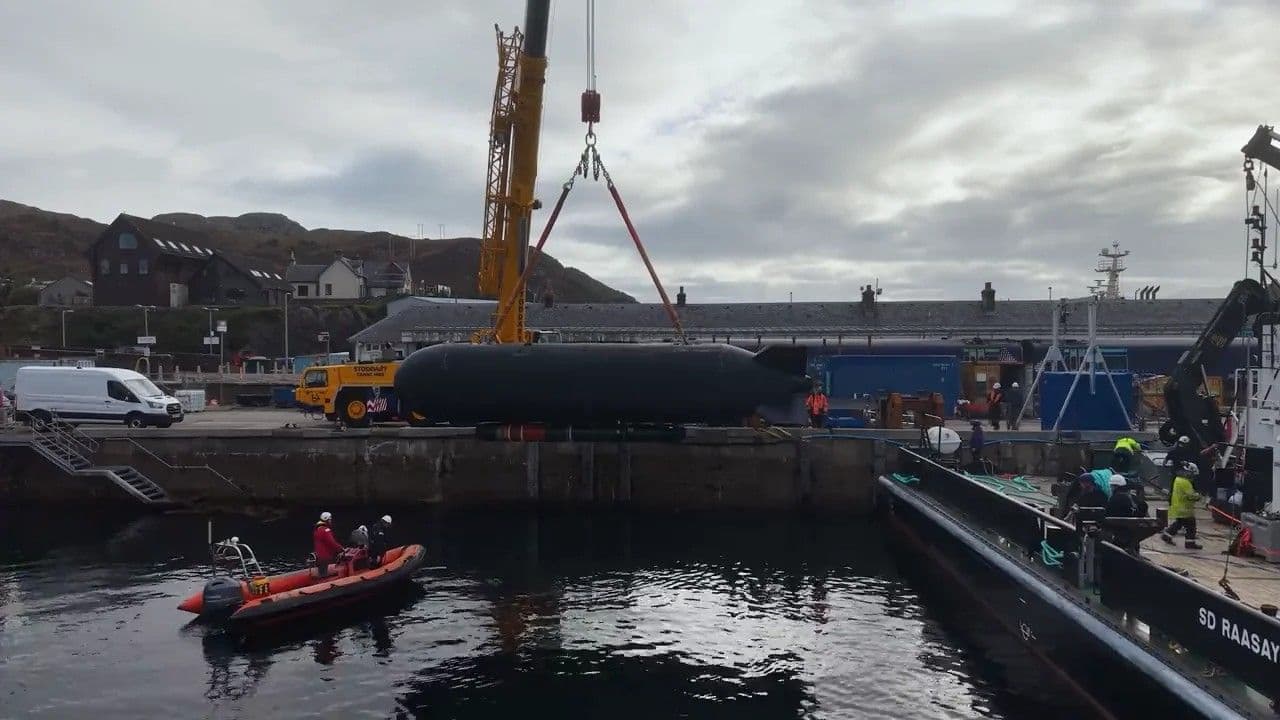
The U.S. Navy and the British Royal Navy test-fired an American Mk 48 heavyweight torpedo from the Royal Navy's uncrewed drone submarine XV Excalibur on September 13, 2026, at the British Underwater Test and Evaluation Center in Scotland — the first time a heavyweight torpedo has ever been launched from an autonomous, crewless underwater vehicle.
The test was conducted under Project Broadsword and its associated Trial Iron, carried out as part of AUKUS Pillar 2. It was approved by the Department of the Navy Rapid Capabilities Office in February 2026 and completed in under seven months.
The Weapon
The Mk 48 is the U.S. Navy's standard heavyweight anti-submarine and anti-surface torpedo. It entered service in 1972 and was designed specifically to counter Soviet deep-diving, high-speed submarines like the Alfa class, which carried titanium hulls that made them particularly difficult to kill.
At 3,744 pounds and 19 feet long, it carries a 645-pound PBXN-103 high-explosive warhead and can sustain speeds above 55 knots. Typically launched from crewed attack submarines with crews of 100 to 140 sailors, the weapon is among the most powerful conventional torpedoes in allied arsenals. September 13 was the first time it has been fired from a platform with no crew aboard.
The Launch Platform
XV Excalibur is the Royal Navy's Extra-Large Uncrewed Underwater Vehicle, built by Plymouth-based MSubs under the Project Cetus programme. It is 12 metres long, weighs approximately 19 tonnes, and was handed over to the Royal Navy on May 15, 2025 following three years of development and two years of sea trials.
The XLUUV is designed to operate autonomously or via remote control. In August 2025, the Royal Navy demonstrated remote control of Excalibur in UK waters from a remote operating centre in Australia during exercise Talisman Sabre — an early proof of the long-range command architecture the platform is built around.
For the Project Broadsword demonstration, the Mk 48 was strapped to Excalibur's underside and released underwater. The navies have not disclosed whether the torpedo was guided at a target or how Excalibur was controlled during the launch sequence.
What Was Proved
The test validated the mechanical, electrical and software integration of a U.S. kinetic payload onto an allied autonomous vessel. The architecture used was modular, software-defined and open-systems — deliberately designed to combine allied hardware with commercial technology rather than building a single bespoke weapons platform from scratch.
That approach matters for the timeline. Seven months from approval to successful firing is unusually fast for a defence programme of this significance, and the open-systems design is the reason. Rather than building new hardware end-to-end, the teams integrated existing components across a common software framework.
Chief of Naval Operations Admiral Daryl Caudle described it as proving true interchangeability — the ability to mount any allied nation's weapon on any allied platform without custom engineering for each combination.
The Strategic Argument
The significance is less about this single test and more about what it demonstrates at scale.
A crewed submarine is expensive, scarce and requires human crews who take years to train. An XLUUV carrying a heavyweight torpedo and operating autonomously or under remote command from thousands of miles away multiplies the number of threat vectors an adversary has to account for, without multiplying crew numbers or submarine procurement budgets.
The combination of Pillar 1 — which will provide Australia with nuclear-powered attack submarines — and Pillar 2's interoperability programme is designed to give AUKUS partners a layered undersea capability that draws on each nation's strengths while reducing single points of failure.
Vice Admiral Robert Gaucher, Director of Submarine Programs, described the demonstration as an early step toward adding strike capabilities to autonomous undersea systems. That framing — early step — is doing important work. XV Excalibur is a prototype. A mature fleet of weapon-capable XLUUVs deployable across the Indo-Pacific is a significantly longer programme.
The Immediate Context
The test was conducted in a period of elevated undersea competition. China has been expanding its submarine fleet and developing its own unmanned undersea capabilities. Russia's submarine activity in the North Atlantic and Baltic Sea has increased. Both nations watched the Excalibur test closely.
The involvement of the Defense Innovation Unit and Naval Undersea Warfare Center Keyport alongside DONRCO and industry partners reflects a deliberate push to bring commercial technology development speed into a domain that has traditionally moved on decades-long procurement cycles.
Sources: Tom's Hardware, Stars and Stripes, USNI News, New Atlas, ABC News Australia, The Defense News
Sources
Related Articles