 TEKZARO
Enterprise
Apple Mac Mini M5 Pro review: Serious power, for the right users
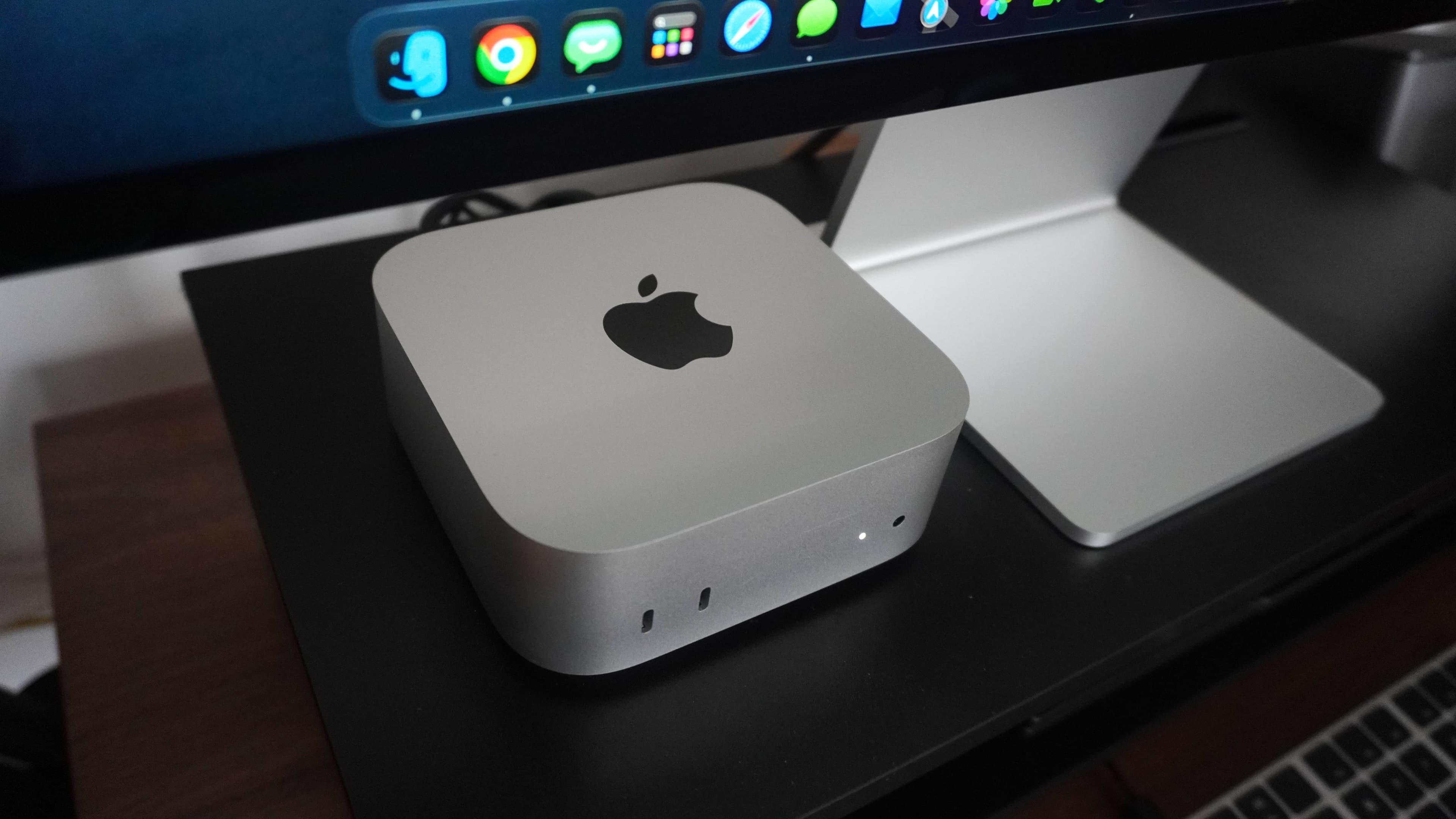
The 2026 Mac mini with M5 Pro is a genuinely impressive machine in a specific, narrow sense. It is fast, capable, and runs cool and quiet under sustained load. It is also an oddly positioned product in a lineup where the cheaper model now has a newer chip, and it starts at $1,699 at a time when Apple's pricing across the Mac range has become harder to defend.
The Unusual Lineup Structure
Before getting to performance, the chip situation needs explaining because it is legitimately confusing.
The 2026 Mac mini lineup pairs the M6 — Apple's newest chip — in the entry-level model starting at $899, while the M5 Pro sits in the higher-end model starting at $1,699. This is the same approach Apple used with the MacBook Pro in 2025, where the newest-generation chip went into the base model and an older Pro chip powered the premium tier.
M5 Pro is a previous-generation chip relative to M6, but it is not a slower one. Pro chips carry more CPU and GPU cores, higher memory bandwidth, support for more unified memory, Thunderbolt 5 connectivity and additional display outputs. The M5 Pro with 15 CPU cores, 24GB RAM and 512GB storage costs $1,699. Push it to 18 CPU cores, 20 GPU cores, 64GB RAM, 8TB SSD and 10GbE and you reach $6,599.
The M6, by contrast, maxes out at 32GB RAM and costs $2,399 fully loaded with 32GB, 2TB and 10GbE. Anyone who needs more than 32GB — and plenty of professional workflows do — has to move up to the M5 Pro tier.
Performance
Apple claims the M5 Pro delivers up to 4x faster LLM processing, 1.4x faster Blender ray-tracing and 1.5x faster Affinity image processing compared to the M4 Pro it replaces.
In practice, the machine handles anything a professional throws at it without complaint. Multi-core CPU performance is strong. The 20-core GPU variant is competitive with contemporary discrete GPUs on creator workloads. Storage is now PCIe 5.0 and measurably faster than the previous generation. The machine runs cool and quiet even under sustained heavy load — a consistent advantage of Apple silicon over competing designs.
The M5 Pro's 307GB/s memory bandwidth is what makes it genuinely valuable for large-model inference, video work and memory-intensive creative tasks. If you are running local AI models with Ollama or MLX, this bandwidth matters more than any single benchmark score.
The Price Problem
Tom's Hardware's review is direct about this: the Mac mini is "losing its grip on value."
The base M4 Mac mini launched at $599 in 2024. June 2026 price increases pushed that to $799. The new base M6 model launches at $899 — another $100 increase. Apple attributed the broader Mac price hike to rising component costs, particularly RAM.
The M5 Pro tier has always been priced for professional users, but at $1,699 for the base configuration it is harder to position against the M6's genuine capability improvements for mainstream work. The M6 has the newer chip, the dual Neural Engine, and costs $800 less — making the M5 Pro choice only clearly correct when you specifically need more than 32GB unified memory, Thunderbolt 5, or the additional GPU cores.
Connectivity
The physical design is unchanged from the October 2024 redesign — a five-by-five-inch aluminium square with two front USB-C ports and a headphone jack, three Thunderbolt ports, HDMI and Ethernet on the rear. The M5 Pro model gets Thunderbolt 5 ports, a meaningful upgrade over the M6's Thunderbolt 4, especially for high-bandwidth external storage and display connections.
Wi-Fi 7, Bluetooth 6, and 2.5Gb Ethernet are standard across both 2026 models, with a 10GbE port available as a $100 option.
Who Should Buy It
The right user for the M5 Pro Mac mini is genuinely specific.
If you need more than 32GB unified memory — for video work, machine learning, large local models, high-resolution photo processing or complex 3D rendering — this is your only Mac mini option. If you need Thunderbolt 5 bandwidth for fast external storage or multiple high-resolution displays, same answer.
If your work stays within 32GB and you do not specifically require Thunderbolt 5, the M6 at $899 does more with Apple's newest architecture at nearly half the price of the base M5 Pro configuration. The M6 is the better value for everyone except the users who hit its ceiling.
The M5 Pro Mac mini sits between the M6 mini and the Mac Studio, and its justification is strongest when the Studio's $2,499 starting price is too much and the M6's 32GB ceiling is not enough.
Sources: Tom's Hardware, Macworld, MacRumors
Sources
Related Articles