 TEKZARO
Enterprise
MIT Technology Review examines how memory and storage architectures must evolve for AI inference workloads
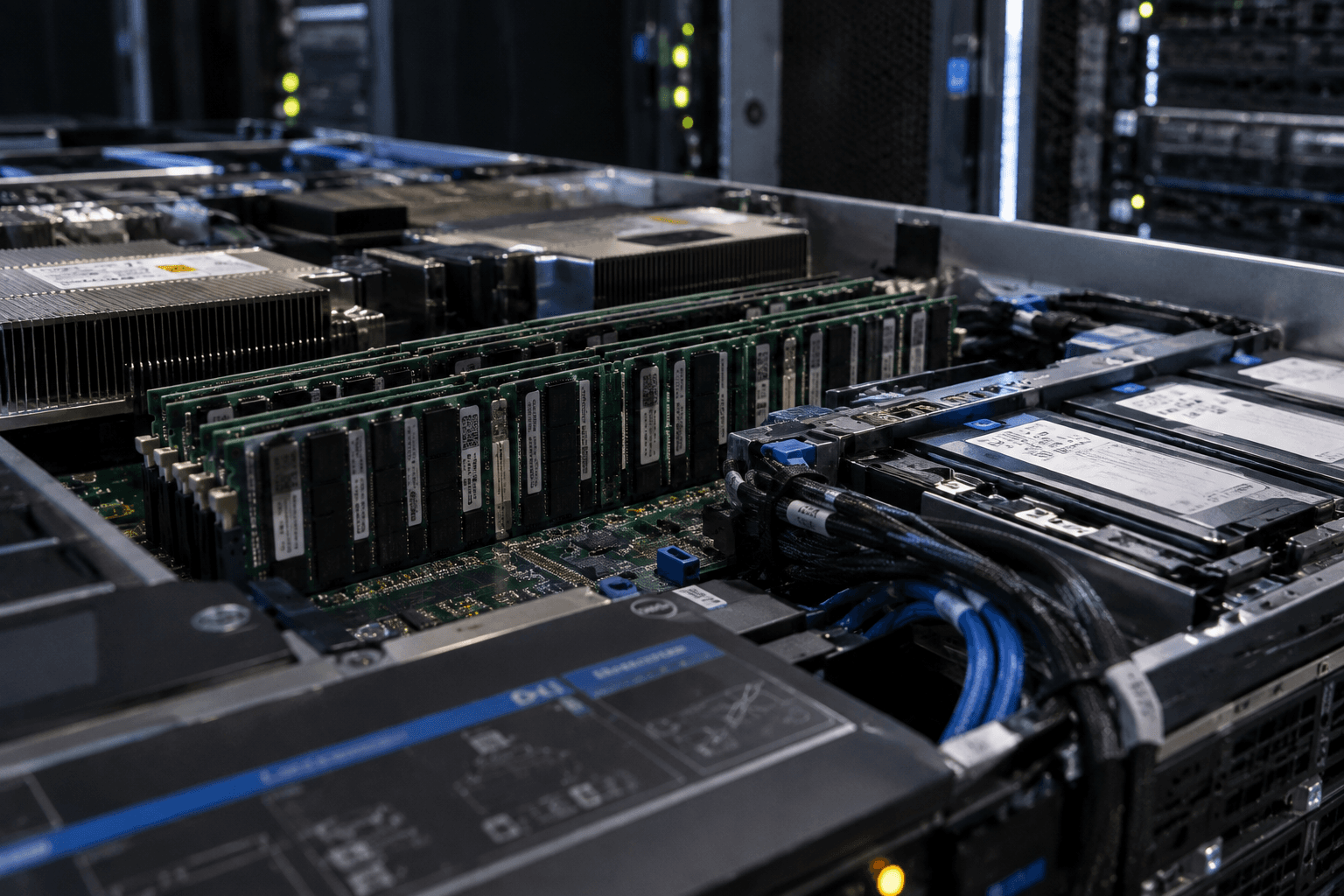
MIT Technology Review has published a piece titled 'Architecting memory and storage in the AI era' that argues the industry's centre of gravity is shifting from training large models to serving them. According to the outlet, the article frames inference as the workload that will dictate how data centres, edge systems and devices are built over the coming years, because the economics of running a model continuously for millions of users differ sharply from those of training it once.
The summary circulating from the outlet sketches use cases — including real-time analysis of healthcare data and high-concurrency customer-service assistants — to illustrate the kind of always-on demand that modern AI services place on underlying infrastructure. MIT Technology Review's preview text describes this as 'continuous intelligence,' language that the publication itself uses to position memory and storage rather than compute as the binding constraint.
No primary source text from MIT Technology Review's full article, and no underlying vendor research, whitepaper or benchmark, was available to verify. The technical arguments summarised here should therefore be read as the outlet's framing of the discussion, not as established technical consensus, and the use cases are presented as illustrative rather than as documented deployments.
Why inference reshapes the memory question
Training a frontier model is dominated by raw compute — large batches of data moved through thousands of accelerators, with the model's weights shuffled between GPUs and high-bandwidth memory. Inference, the piece's argument goes, behaves differently. Each user request is a small, latency-sensitive job that still requires the full model in memory, and many such jobs arrive in parallel. That shifts the engineering focus toward how quickly weights can be read, how much of the model can sit close to the processor, and how context (the conversation history, retrieved documents, or sensor data) is fed in without stalling the request.
The storage layer comes back into view
If memory determines how fast a model can answer, storage determines how much knowledge a system can draw on. According to the preview text, MIT Technology Review treats vector databases, retrieval-augmented generation pipelines and caching tiers as part of the same architectural problem. The outlet suggests that separating 'hot' data — embeddings and conversation state that must be sub-millisecond accessible — from colder reference corpora reshapes the traditional storage hierarchy, with implications for the kind of drives, interconnects and tiering software that AI deployments will demand.
What the summary does — and does not — establish
Where the reporting stands
TEKZARO has only the headline and a marketing-flavoured preview from MIT Technology Review. No primary source text was located, and no independent secondary source has been consulted. The claims above are attributed to MIT Technology Review's preview and should be treated as unverified until the full article and any referenced technical material can be read directly.
Sources
Related Articles