 TEKZARO
Gadgets
Claude comes for Gemini with its own take on Docs and Slides
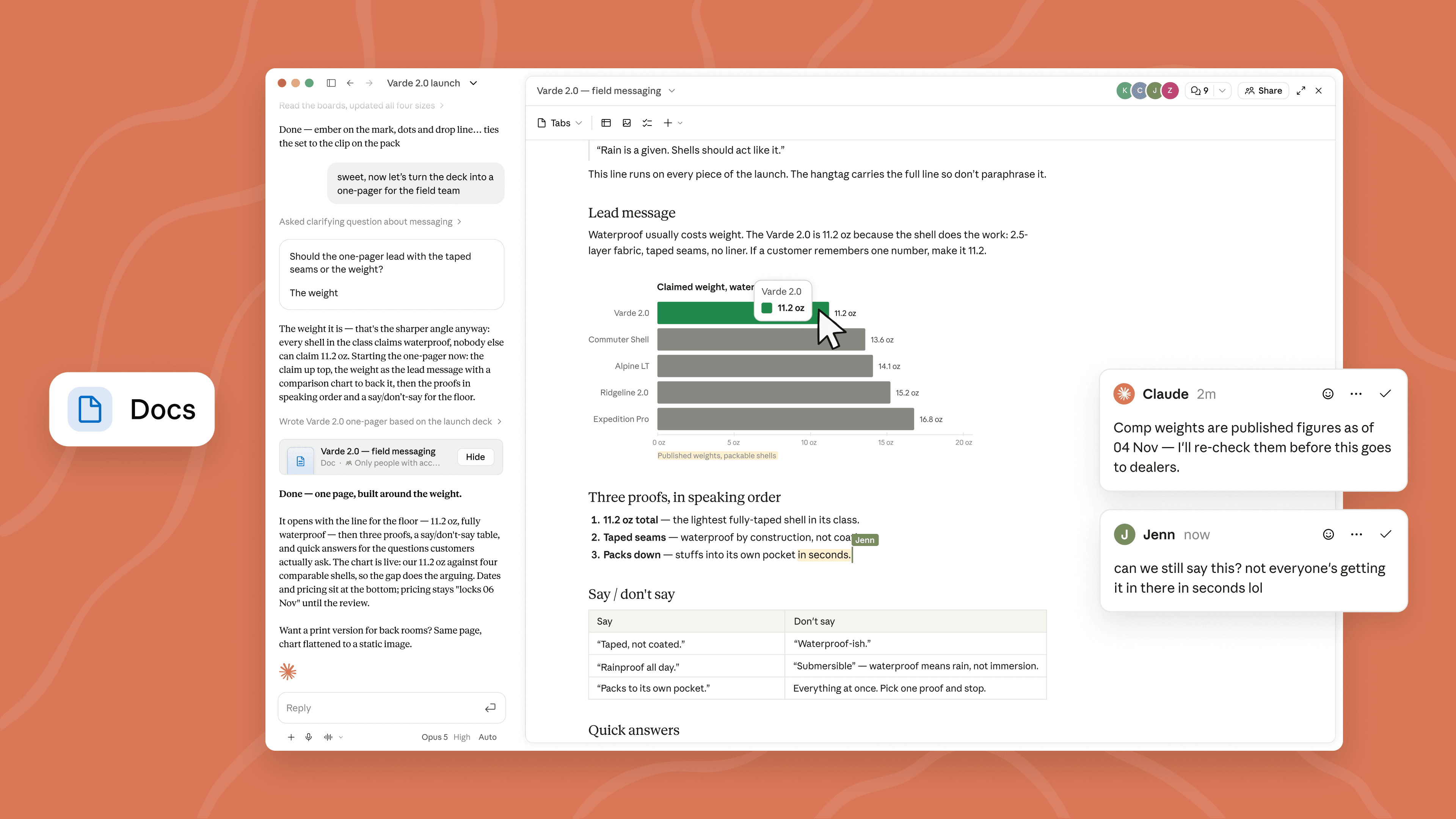
Anthropic has launched Claude Docs and Claude Slides in beta, moving its AI assistant directly into territory Google has occupied for two decades.
The launch arrived alongside a larger structural change: Claude Cowork and Claude chat are merging into a single product. Announced September 16, the unified experience rolls out to Pro and Max plans over the coming weeks, with other plans to follow.
What the New Tools Do
Ask for a document and you write it together with Claude. Ask for a presentation and Claude drafts the slides. You can edit directly, present straight from Claude, or download as PowerPoint or PDF.
Claude Docs operates on a model closely resembling Google Docs. Documents start private, and users can grant access to others for simultaneous editing. Co-authors and Claude can both leave comments in the familiar Google Docs style.
Anything produced through Claude Design, Slides or Docs is reachable through a single sharing link that opens on a phone.
The output formats matter more than they might appear. Spreadsheets come with working formulas. Presentations open in PowerPoint. These are files that leave the platform intact, not previews that need rebuilding elsewhere.
The Mode Problem It Solves
The merge is arguably the more interesting half of the announcement.
Anthropic had built Cowork as a separate place for larger work and Claude Design as a separate place for visual work. According to the company, users reported that the frustrating part was deciding where a task belonged — work started in one product did not carry into the other.
In the merged experience there is no mode to choose. You describe what you need, and Claude determines which tool to use: answering a quick question, or taking on research, reports, spreadsheets and presentations and returning finished, editable files.
Claude decides using available context, skills and connectors.
That is a meaningful admission about product design. Splitting an assistant into specialised surfaces looks tidy on an org chart and creates friction for the person actually working, who does not know in advance whether a question will turn into a document.
How It Got Here
The pieces have been assembling for months.
Cowork reached general availability on macOS and Windows on April 9, 2026. Claude Design followed on April 17 as an Anthropic Labs product for visual outputs — designs, prototypes, slides and one-pagers. Cowork arrived on web and mobile on July 7, when chat and Cowork began sharing one home. Memory started working across chat and Cowork in the cloud on August 25.
Docs and Slides launched on the same day as the merge, with Claude Design now working inside conversations.
All three are in beta on paid plans. Enterprise administrators choose when to enable them for their organisations.
The Google Comparison
The framing writes itself, and The Verge's assessment is that Claude's new tools narrow the gap between Anthropic's platform and Google's office suite.
Google has been moving in the opposite direction — adding Gemini chat inside Docs, along with document creation and editing and presentation generation. Google is putting AI into its productivity apps. Anthropic is putting productivity apps into its AI.
Whether that distinction favours either side depends on where the work actually starts. For anyone whose workflow begins with a conversation rather than a blank document, Anthropic's version removes a step. For anyone embedded in Workspace with shared drives, permissions and a decade of existing files, Google's version requires changing nothing.
There is also a timing observation worth noting. Anthropic added file creation in September 2025; OpenAI had been generating Excel and PowerPoint files from prompts since July 2025. Google shipped inline Docs, Sheets and Slides generation in April 2026 — several months behind both. The gap being narrowed here runs in more than one direction.
What It Does Not Have
Collaboration depth is the obvious question. Google Docs represents twenty years of accumulated handling for version history, offline editing, granular permissions, comment threading, suggestion mode and integration with an entire organisation's file system.
Claude Docs has simultaneous editing and comments. That is the foundation, not the finished product.
Enterprise adoption also faces the practical reality that documents live where the rest of an organisation's documents live. A beta tool on paid plans, gated behind admin approval, is not a Workspace replacement — and Anthropic has not claimed it is.
Who This Is Actually For
The most likely user is someone already working in Claude who currently exports to finish a task elsewhere. Removing that handoff is a real improvement even if nothing about the document editor is better than Google's.
The broader bet is that the assistant becomes the interface and the documents become an output of it, rather than the documents being the workspace and the assistant being a feature inside them.
That is a genuine architectural argument about how knowledge work gets done. It is also, notably, a bet Google is hedging against by building the same capability from the other direction.
Sources
Related Articles