 TEKZARO
Computing
Micron offers Taiwan employees $31,650 cash bonus as unions threaten strike over AI windfall — workers reject record payout package, demand 15% profit-sharing plan
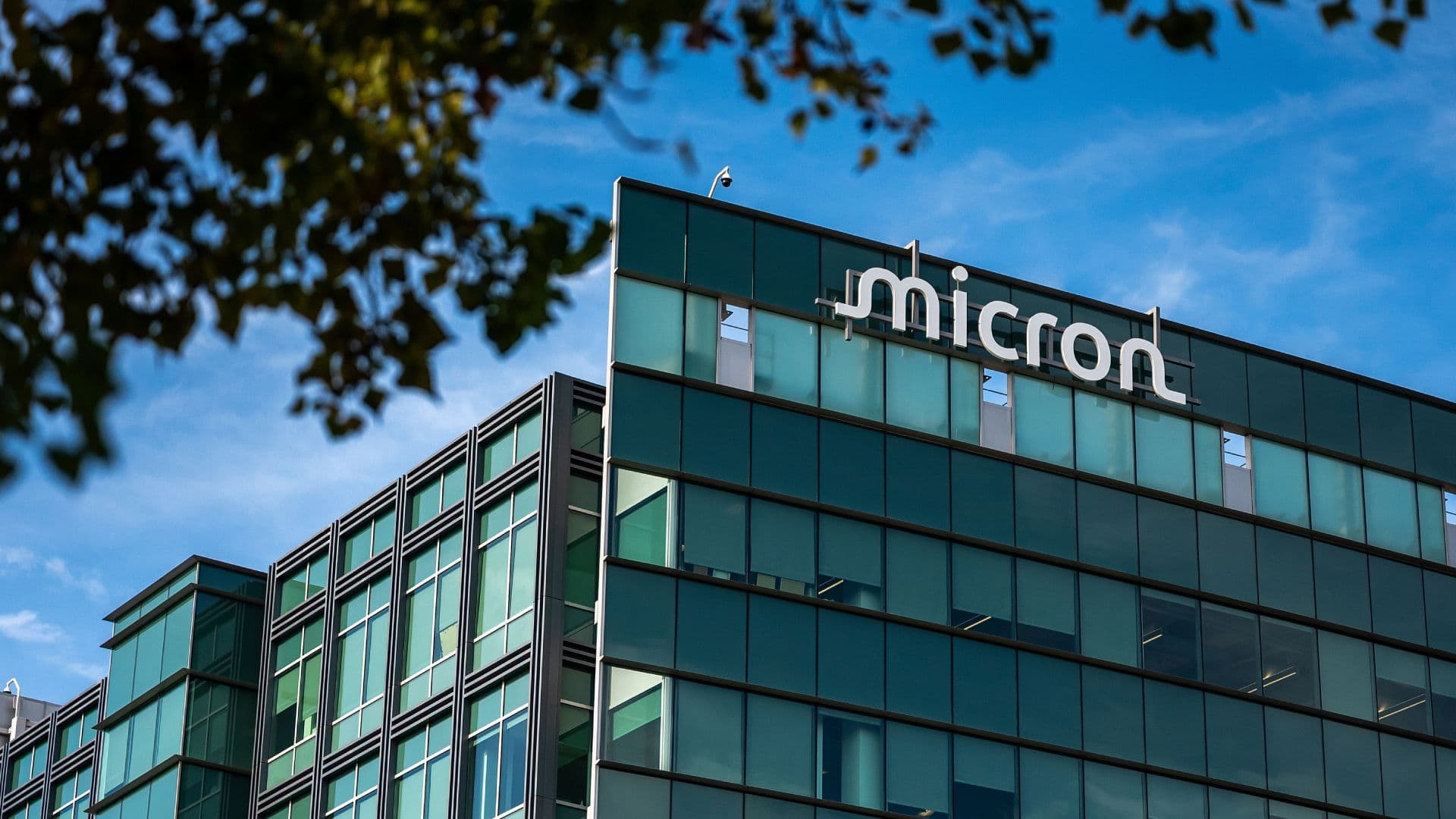
Micron Offers Taiwan Employees $31,650 Cash Bonus as Unions Threaten Strike Over AI Windfall
Micron has announced its largest bonus package in company history — a minimum NT$1 million cash payment, roughly $31,650, to every employee in Taiwan, with senior staff eligible for rewards worth up to 68 months of pay.
The unions rejected it.
What Micron Put on the Table
The package covers more than 60,000 Micron workers worldwide and includes an annual equity grant for every employee on top of the cash component.
For Taiwan specifically, applying the NT$1 million floor across roughly 15,000 local workers implies a minimum cost of around NT$25.5 billion, or approximately $808 million — before accounting for larger payouts to senior staff or the equity grants.
Micron framed it as thanks to employees following record profits, and said this year's performance bonus payout would be the highest in the company's history. Final bonus terms are due to be confirmed in October.
By any ordinary standard, this is an enormous payout. That it failed to settle the dispute tells you the dispute was never really about the size of this year's cheque.
What the Unions Actually Want
The Micron Wafer Union and Micron Memory Union, covering roughly 10,000 workers across the Taoyuan and Taichung sites, are asking for two things.
First, a one-time bonus for fiscal 2026 equivalent to roughly 83 months of salary — meaningfully above Micron's 68-month ceiling.
Second, and more importantly, institutionalised profit-sharing set at 15 percent of operating profit from fiscal 2027 onward.
The Taoyuan union's statement after Micron's announcement was direct: no consensus had been reached, and if the company does not respond to the profit-sharing demand, the union will continue moving toward a strike. The unions said the package sidestepped the real discussion about a transparent bonus system.
That is the crux. A one-off bonus is a discretionary gift the company can decline to repeat next year. A defined percentage of operating profit is a structural entitlement that scales automatically with the AI boom.
Why the Current System Is the Problem
Micron's Incentive Pay Plan caps annual performance bonuses in Taiwan at 200 percent of target — roughly five months of salary. Actual payouts have averaged around 2.6 months.
Set that against the comparison the unions are making. Samsung's semiconductor division allocates 10.5 percent of profits to employee bonuses under the deal that averted an 18-day strike by up to 48,000 union members in May. SK hynix allocates 10 percent of annual operating profit. Samsung employees have seen bonuses exceeding $300,000, with some foundry workers reaching as high as $400,000.
Micron's Taiwanese unions argue those arrangements have widened the gap between them and their South Korean counterparts, and that the IPP is both less transparent and substantially less generous.
The 15 percent demand is deliberately above both Korean benchmarks. That is a negotiating position, not a final number.
The Numbers Behind the Dispute
Micron's fiscal Q3 2026 results explain the timing.
Revenue reached $41.46 billion, up 346 percent year on year. Net income came in at $28.24 billion for the quarter alone. The Cloud Memory Business Unit, which supplies high-bandwidth memory to data centre customers, accounted for more than a third of total revenue.
A 68 percent net margin is not a normal semiconductor outcome. It is what happens when AI infrastructure demand collides with constrained memory supply, and workers watching those numbers have a straightforward argument: the windfall is real, and the mechanism for sharing it was designed for a different market.
How It Got Here
The unions began threatening a strike on September 1, with more than 80 percent of members who took part in an internal survey backing industrial action.
The Taiwanese government stepped in to force mediation, which is a legal prerequisite before a formal strike vote can be held. Talks collapsed on September 4 without agreement. Micron announced the NT$1 million package a week later.
That sequence matters. The Samsung dispute in South Korea also involved government intervention, and there the intervention worked. Here it did not.
A strike involving semiconductor workers would be unusual in Taiwan. Fab operations depend on highly specialised staff who cannot be replaced at short notice, which gives the unions genuine leverage and gives Micron powerful reasons to settle.
The Wider Pattern
This is not isolated. SK hynix union members narrowly rejected a tentative wage agreement on August 25 that included a 6.3 percent increase and changes to the profit-sharing scheme, with some workers objecting to a proposal to pay 60 percent of bonuses in company shares given stock price volatility.
Across the memory sector, the same argument is playing out: extraordinary AI-driven profits meeting compensation structures built for a cyclical commodity business.
Micron has invested more than NT$1.6 trillion in Taiwan, one of its most important manufacturing hubs, and is separately lifting US spending to $250 billion. It is not short of capital.
Whether it concedes the structural demand is the question. Agreeing to 15 percent of operating profit in Taiwan would immediately raise the same expectation across its global workforce — which is precisely why a very large one-time payment was the offer, and precisely why the unions turned it down.
Sources
Related Articles