 TEKZARO
Smartphones
Oppo A7 Pro with an 8,000mAh battery is launching next week
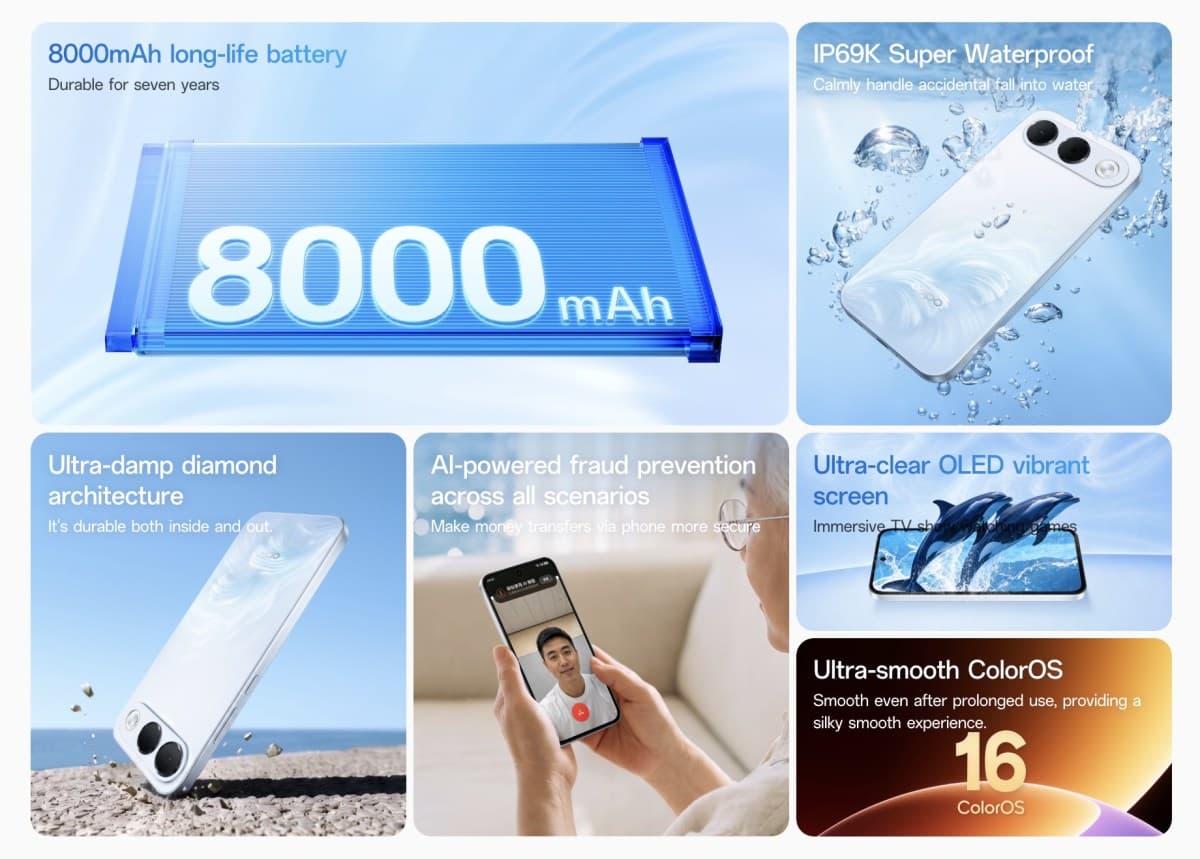
Oppo is bringing the standard A7 Pro to market on September 11, 2026, just weeks after launching the larger A7 Pro Max with a 10,000mAh battery. The new A7 Pro delivers a massive 8,000mAh battery—the kind of capacity you'd normally find in a power bank—packed into a mid-range phone targeting users who prioritize battery life over thinness. The device goes on sale in China on September 11 at 10:00 AM local time, with pre-orders or direct sales following immediately. While international availability has not been officially confirmed, regulatory certifications in Brazil, Malaysia, and Thailand suggest a broader rollout could follow.
A Battery Built to Last Seven Years
Oppo's headline claim for the A7 Pro is ambitious: the 8,000mAh battery is designed to deliver reliable performance for up to seven years, according to the company. This targeting of long-term durability reflects a shift in how phone makers are marketing their devices—away from flagships that demand annual upgrades and toward mid-range phones that users keep for years. The battery supports 80W wired fast charging, meaning the massive capacity can be refilled in a reasonable timeframe. While charging speed details remain incomplete, 80W should bring the phone from flat to full in well under an hour.
Display and Design: Practical Over Flashy
The A7 Pro features a 6.57-inch OLED display with 1080p resolution and a 120Hz refresh rate—solid specifications for a phone expected to cost under 2,000 Yuan (roughly $300). The AMOLED panel supports 1.07 billion colors and integrates an in-display fingerprint sensor. The design departures from recent Oppo trends. Rather than the vertical camera arrangement or centered module common in recent phones, the A7 Pro features a horizontal, pill-shaped camera module housing the sensors and LED flash. The rear panel carries a subtle wave-like pattern, creating visual interest without excessive ornamentation. The phone weighs 204 grams and measures 8.8mm in thickness—not slim by modern standards, but reasonable given the battery capacity. The trade-off is clear: battery life over slimness, which aligns with market feedback showing users increasingly rejecting ultra-thin phones that sacrifice performance.
Durability and Ruggedness
Oppo has confirmed an IP69K rating for dust and water resistance, a specification that goes beyond the common IP68 standard. IP69K means the device can withstand high-pressure water jets and is fully protected against dust ingress—a meaningful durability claim for a mid-range device that users might carry through years of daily use. The A7 Pro runs ColorOS 16 out of the box, Oppo's customized Android interface. The company emphasizes that ColorOS 16 will maintain smooth performance even after prolonged usage, a claim aimed at addressing common complaints about Android phones slowing down over time.
Photography and Processing Power
The camera setup consists of a 50-megapixel primary sensor on the rear paired with an 8-megapixel front camera for selfies. This mirrors the configuration of the A7 Pro Max, suggesting Oppo sees the camera as table-stakes rather than a differentiator in this segment. Processing power comes from a Snapdragon 4 Gen 5 chipset (though some regulatory listings reference a Dimensity 6300 series processor), paired with 8GB of RAM and storage options ranging from 128GB to 512GB depending on region. These specifications position the A7 Pro squarely in the practical mid-range category—sufficient for everyday tasks, content consumption, and light gaming, without the price or power draw of flagship performance.
Context: The A7 Series Pushes Battery Boundaries
The A7 Pro launches in the shadow of its higher-capacity sibling, the A7 Pro Max, which debuted last month with a 10,000mAh battery at a starting price of 2,199 Yuan (roughly $330). By launching a standard A7 Pro with 8,000mAh, Oppo is signaling that extreme battery capacity is moving down the price ladder. Just a few years ago, 5,000mAh was considered generous for a mid-range phone. Now 8,000mAh is showing up in devices under $300, raising the bar across the entire segment. Competitors like Redmi, Realme, and Samsung's A series will face pressure to match these battery specifications or offer compelling alternatives. The A7 series also reflects broader market trends: consumers are pushing back against the "thin at all costs" philosophy that dominated phone design for over a decade. Users increasingly value battery life, durability, and repairability over extreme thinness. Oppo is betting that this shift is permanent enough to justify an entire product line built around it.
Pricing and Availability
Official pricing for the A7 Pro has not been announced, but Oppo's lineup architecture makes the math straightforward. The A7 Pro Max starts at 2,199 Yuan. The standard A7 Pro will almost certainly land below that, likely in the 1,500-1,800 Yuan range (roughly $225-$270). This positions it competitively against Redmi Note, Realme number, and Samsung Galaxy A series phones in Southeast Asia and beyond. For the Chinese market, sales begin on September 11 at 10:00 AM. International launches through certification bodies and early import-export activity suggest Pakistan, Brazil, Malaysia, and Thailand could see the device within weeks to months. Oppo has not provided a formal international roadmap, but the breadth of regulatory approvals suggests plans for a meaningful rollout outside China.
What This Means for the Mid-Range
The A7 Pro represents a recalibration of what mid-range phones prioritize. Five years ago, the mid-range chase was all about pushing processor performance and camera megapixels. Now, with processors mature enough for most tasks and camera quality plateaued, the differentiation has shifted to practical concerns: battery life, durability, and long-term software support. Oppo's claim that the battery will perform reliably for seven years is a bet that consumers care about phones lasting longer, not getting upgraded more often. If that bet proves correct, it could reshape how the industry markets and positions mid-range devices. The A7 Pro launches on September 11, positioning Oppo to capture users frustrated with phones that lose half their battery by dinner time. At a price under $300 with a battery that could realistically last two days or more, the pitch is direct: reliability and longevity over premium specs and razor-thin bezels.
Sources
Related Articles