 TEKZARO
Smartphones
Huawei Unveils New Foldable Smartphone as Xiaomi and Apple Prep Their Own
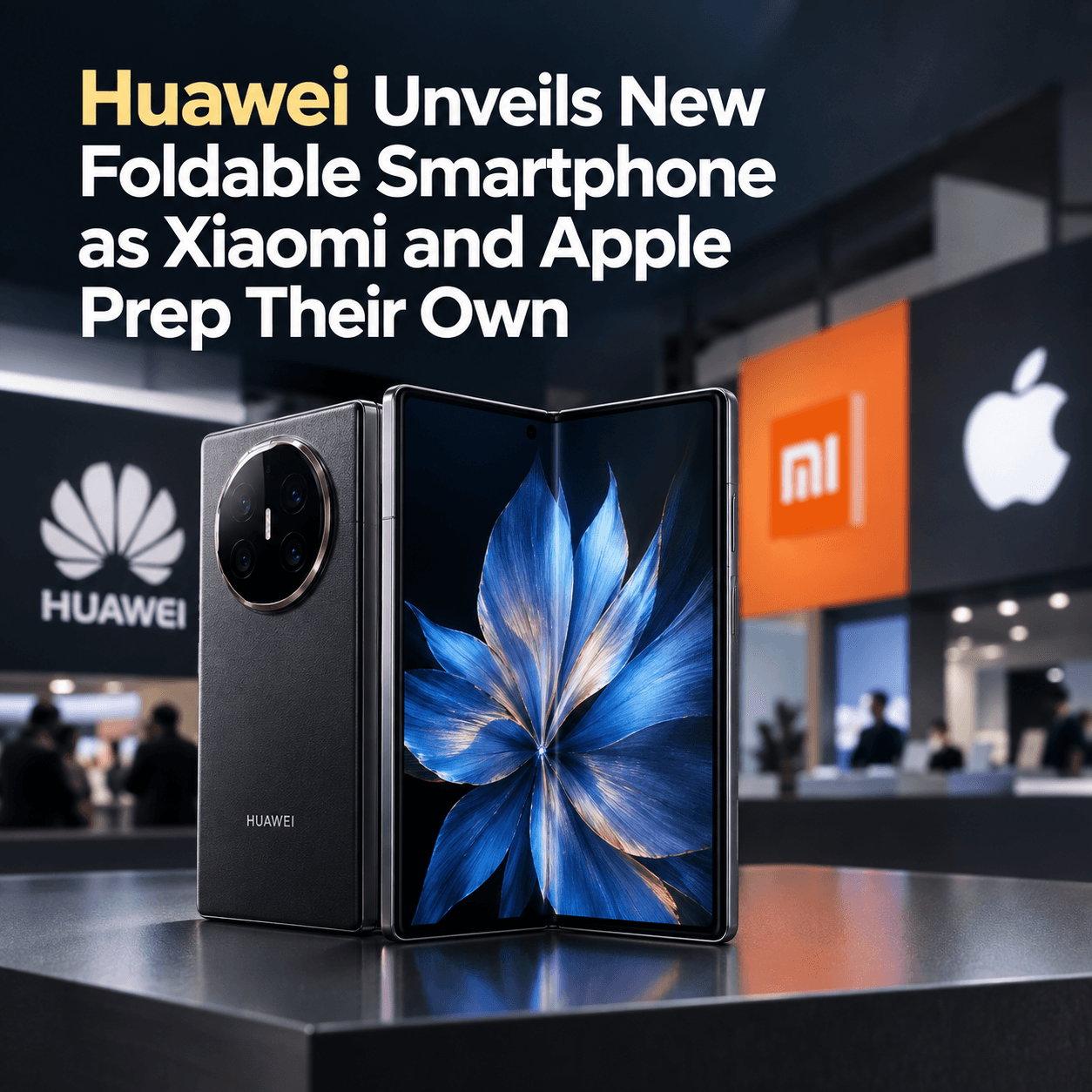
Huawei Launches New Foldable Smartphone, Xiaomi and Apple Set to Follow
Huawei launched its flagship Mate XT2 foldable smartphone on Monday, September 7, 2026, as the company seeks to defend its lead in China's premium smartphone market against intensifying competition from both Xiaomi and Apple. The triple-fold device, which unfolds twice to reveal a tablet-sized screen, represents the latest iteration of Huawei's ultra-premium foldable strategy and marks the opening salvo in an unprecedented three-way foldable phone showdown unfolding across just 72 hours.
The timing transforms this week into a critical moment for the foldable smartphone category. With Xiaomi launching a rival foldable on the same day as Huawei and Apple widely expected to unveil its first-ever foldable iPhone on Wednesday, the industry is delivering a concentrated test of whether foldable phones can finally graduate from niche premium products to mainstream category drivers.
The Mate XT2: Advanced Engineering at Ultra-Premium Pricing
The Mate XT2 builds on the foundation of its predecessor with significant engineering advances. The device features a redesigned folding mechanism, improved water resistance, and an optional privacy screen that prevents people nearby from viewing the display—a practical feature for users handling sensitive information in public.
Camera upgrades and improved thermal management complement the hardware redesign. Huawei claims 42% better overall performance compared to its predecessor based on internal testing.
The most significant technological advancement is the new Kirin 9050 Pro chip. Huawei says the processor's design delivers more computing power while using less electricity than previous generations—a crucial capability for a company operating under sustained US sanctions that restrict access to advanced semiconductor technology.
According to Huawei Executive Director Richard Yu: "The chip's design allows it to deliver more computing power while using less electricity, helping the company overcome US restrictions on access to advanced technology."
Ambitious Pricing in a Constrained Market
The Mate XT2 launches at premium pricing. The base model starts at 19,999 yuan (approximately $2,980), with the top configuration reaching 24,999 yuan (approximately $3,725). Sales begin September 12, 2026.
These prices reflect the cost pressures facing foldable manufacturers. During the press conference, Richard Yu acknowledged: "Pricing right now is a real challenge, because memory costs have risen sharply. We adopted a lot of new technology, and the cost pressure has been enormous."
The pricing strategy reveals a fundamental constraint in the foldable market: advanced engineering, complex folding mechanisms, premium materials, and expensive components (particularly memory) create cost structures that limit addressable market size significantly.
Market Position and Chinese Dominance
Despite pricing challenges, Huawei maintains commanding market position in China. According to consultancy IDC, Huawei holds 22.6% of the Chinese smartphone market in Q2 2026, ahead of Apple's 18.1% and Xiaomi's 12.4%. In the foldable category specifically, Huawei leads decisively.
This market leadership creates strategic importance around foldable positioning. If Apple successfully enters the foldable category and captures significant share, it could reshape China's premium smartphone landscape and challenge Huawei's dominant position in this ultra-high-margin segment.
The Xiaomi Announcement
Xiaomi launches its own foldable rival on the same day as Huawei, bringing a different technological approach. Unlike Huawei's trifold design, Xiaomi is reportedly adopting a wider book-style format—a different engineering philosophy that prioritizes usability and familiar form factor over maximum screen expansion.
Xiaomi's entry into the foldable market represents a significant competitive threat. The company has been absent from the book-style foldable category since 2024's Mix Fold 4, but industry information suggests internally developed components including custom hinge mechanisms and camera lenses, positioning Xiaomi as a serious challenger.
Apple's Anticipated Entry
Apple is expected to unveil new products on Wednesday, September 9, 2026, with widespread industry expectations that the company will debut its first foldable iPhone. Unlike Huawei's trifold complexity or Xiaomi's book-style design, Apple's approach remains unconfirmed—but its entry into the category carries massive significance.
IDC's forecasts cited in industry materials suggest Apple could capture 29.4% of global foldable shipments in 2026 and 34.9% in 2027, assuming successful launch, adequate component supply, and market conversion. These estimates underscore how Apple's entry could reshape the entire foldable market.
The timing of Apple's announcement just 48 hours after Huawei and Xiaomi launches creates an unusual dynamic: three major manufacturers revealing competing visions for foldable phones within a 72-hour window, each making different engineering and design bets about what consumers want.
The Category Inflection Point
This concentrated launch week represents a potential inflection point for foldable smartphones. For years, the category remained niche—impressive engineering achievements with limited market adoption and high prices restricting addressable audiences.
Market forecasts suggest the category is approaching critical mass. Omdia projects global foldable shipments of 17.7 million units in 2025 and 33.7 million in 2027. While substantial growth, these figures represent only a small percentage of total smartphone shipments globally—suggesting foldables remain premium devices rather than mainstream category staples.
However, Apple's entry changes this calculation. The company's market influence, retail reach, and ability to drive category adoption could accelerate mainstream foldable adoption in ways that Huawei's premium positioning and Xiaomi's regional focus cannot alone achieve.
Strategic Implications
For Huawei, the Mate XT2 launch represents a defensive move against Apple's anticipated entry. By demonstrating advanced tri-fold engineering, improved performance, and refined design, Huawei establishes a strong foundation for defending market position against Apple's inevitable foldable offering.
For Xiaomi, the book-style format represents a different bet—prioritizing practicality and familiar user experience over maximum screen expansion. If Xiaomi can deliver a compelling book-style device at more accessible pricing than Huawei's ultra-premium Mate XT2, it could capture market share from users who want foldable technology but find Huawei's pricing prohibitive.
For Apple, the entry into foldables completes its portfolio across premium device categories. An Apple foldable legitimizes the category in ways that established players cannot, potentially accelerating mainstream adoption through brand halo, retail presence, and ecosystem integration.
Market Challenges and Constraints
Despite the optimism, foldable phones face persistent challenges. Durability concerns remain—despite improvements, foldable screens remain more vulnerable to damage than conventional displays. Repairability remains complex and expensive. Software optimization for large, unconventional screens continues to be a work-in-progress.
Most significantly, the category remains price-constrained. At $2,980+ starting price, the Mate XT2 addresses only the ultra-premium segment. Even Apple's entry at potentially lower pricing will target the premium smartphone segment rather than mass market.
The three-way launch this week will clarify market demand, technical viability, and commercial viability of foldable phones as a category. The results will determine whether foldables become a permanent feature of flagship smartphone lineups or remain a premium curiosity.
What Comes Next
The immediate focus falls on Apple's announcement Wednesday and the market's response to three different foldable visions presented within 72 hours. If Apple's foldable achieves strong pre-order demand or sells successfully at launch, the category will gain critical validation.
Beyond this week, the real test arrives in subsequent quarters as shipment data, customer satisfaction, and repeat purchase rates become measurable. The foldable category's future depends not on engineering impressiveness—which all three manufacturers will demonstrate—but on whether consumers actually prefer folding phones to conventional devices, or whether foldables remain a premium novelty.
For now, September 7-9, 2026, represents the foldable phone market's most concentrated moment of competitive intensity. How these launches perform will reshape smartphone strategy across the industry for years to come.
Sources
Related Articles