 TEKZARO
Pakistan Tech
Other Provinces Threaten Punjab: Maryam Nawaz
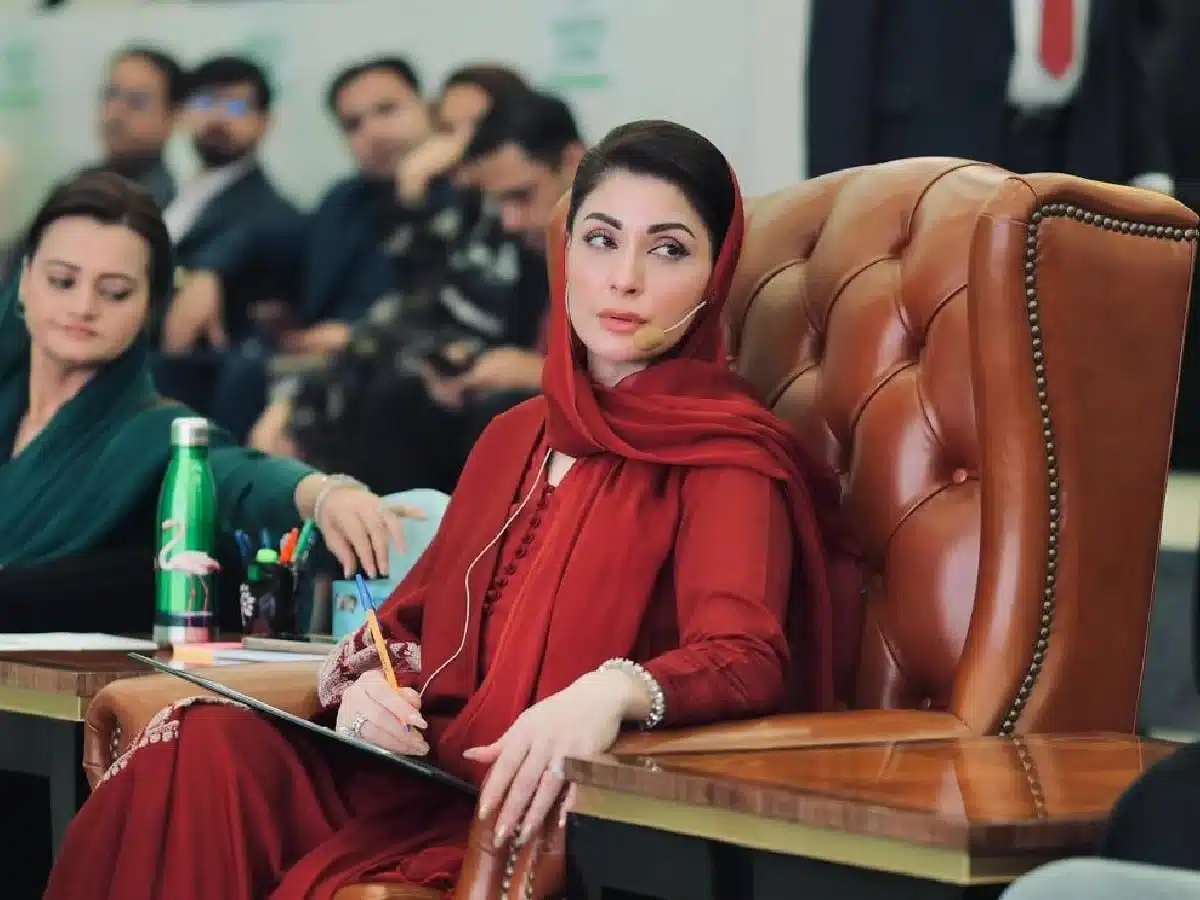
Punjab Chief Minister Maryam Nawaz sparked widespread controversy on Saturday when she declared that the province faced greater security threats from neighboring provinces than from neighboring countries, specifically citing terrorism and organized crime flowing through provincial borders and tri-border areas. The remarks, made during the e-launch of an Artificial Intelligence Hub in Lahore, immediately drew sharp criticism from opposition leaders who accused her of making divisive, chauvinistic statements that pit Pakistani provinces against one another.
The Statement and Context
Speaking at the AI technology event, Maryam said Punjab faced security challenges from multiple directions: organized crime, ethnic and religious tensions, drug trafficking, and terrorism. However, she emphasized that the most significant threat came through provincial borders rather than international ones. "Terrorism enters Punjab from there. Everyone has their eyes on Punjab, but, thank God, Punjab is a safe province. The kind of threats we face come from all our provincial borders," she said. "The unfortunate thing is that the threat Punjab faces comes less from my neighbouring countries and more from my neighbouring provinces." The chief minister specifically referenced the tri-border area as a particular concern, noting that when she took office, she discovered that terrorists possessed more advanced technology than the government—including night-vision cameras and sophisticated planning capabilities. Her government has responded by deploying thermal imaging cameras, drones, bulletproof cameras, and other technological security measures in border checkposts and katcha (riverine) areas. She claimed that crime in Punjab had fallen by 70 percent since she took office in February 2024, and that law and order had improved considerably. She also highlighted the government's use of artificial intelligence in the province's security apparatus.
Immediate Backlash
The statement triggered rapid criticism from opposition figures, particularly from Khyber Pakhtunkhwa, which borders Punjab and has borne the brunt of terrorism for years. National Assembly Speaker and senior Pakistan Tehreek-e-Insaf (PTI) leader Asad Qaisar condemned the remarks as insulting to Khyber Pakhtunkhwa, calling them "deeply shameful and deserving of unequivocal condemnation." "The people of Khyber Pakhtunkhwa continue to suffer the consequences of the flawed and failed policies pursued by the current federal government led by her uncle, as well as the previous governments of Nawaz Sharif," Qaisar said in a statement, referencing that Prime Minister Shehbaz Sharif (Maryam's uncle) leads the federal government. Bushra Gohar, a former parliamentarian and founding member of the National Democratic Movement, characterized the remarks as "shameful" in a post on social media. She challenged the premise that Khyber Pakhtunkhwa—which she described as a victim of terrorism—should be blamed for terrorism in Punjab. "Shameful to blame #Pakhtunkhwa, victim of terrorism, for terrorism in #Punjab while deliberately shutting eyes to the death, destruction & mass displacement inflicted on the province by the State's anti-#Pashtun policies," Gohar wrote. Other opposition figures took to social media calling for Maryam to withdraw the remarks and apologize for statements they characterized as divisive and insulting to provinces that have suffered disproportionately from terrorist attacks.
What Comes Next
The controversy remains active, with opposition figures continuing to call for an apology and withdrawal of the remarks. Maryam's government has not issued a clarification or retraction as of Saturday evening, maintaining the position that the statement accurately reflects security challenges facing Punjab. The incident highlights the delicate balance required when discussing security threats in a federal system where provinces have different experiences with terrorism and different political allegiances. For a province claiming to be the most technologically advanced and secure, the resulting controversy demonstrates that security claims alone cannot overcome the political sensitivity of provincial divisions. Whether the remarks will impact federal-provincial coordination on border security and counterterrorism operations remains to be seen. For now, the statement that was meant to showcase Punjab's security improvements has instead become a flashpoint in ongoing debates about provincial equity and the burden-sharing of counterterrorism efforts across Pakistan.
Sponsored

Sources
Related Articles