 TEKZARO
Computing
President Trump has announced plans for new 'AI Force' and 'AI Czar' amid growing AI safety concerns — new unit will 'cherish' AI and not 'stifle' it, Trump clarifies, while dismissing safety warnings as hoaxes
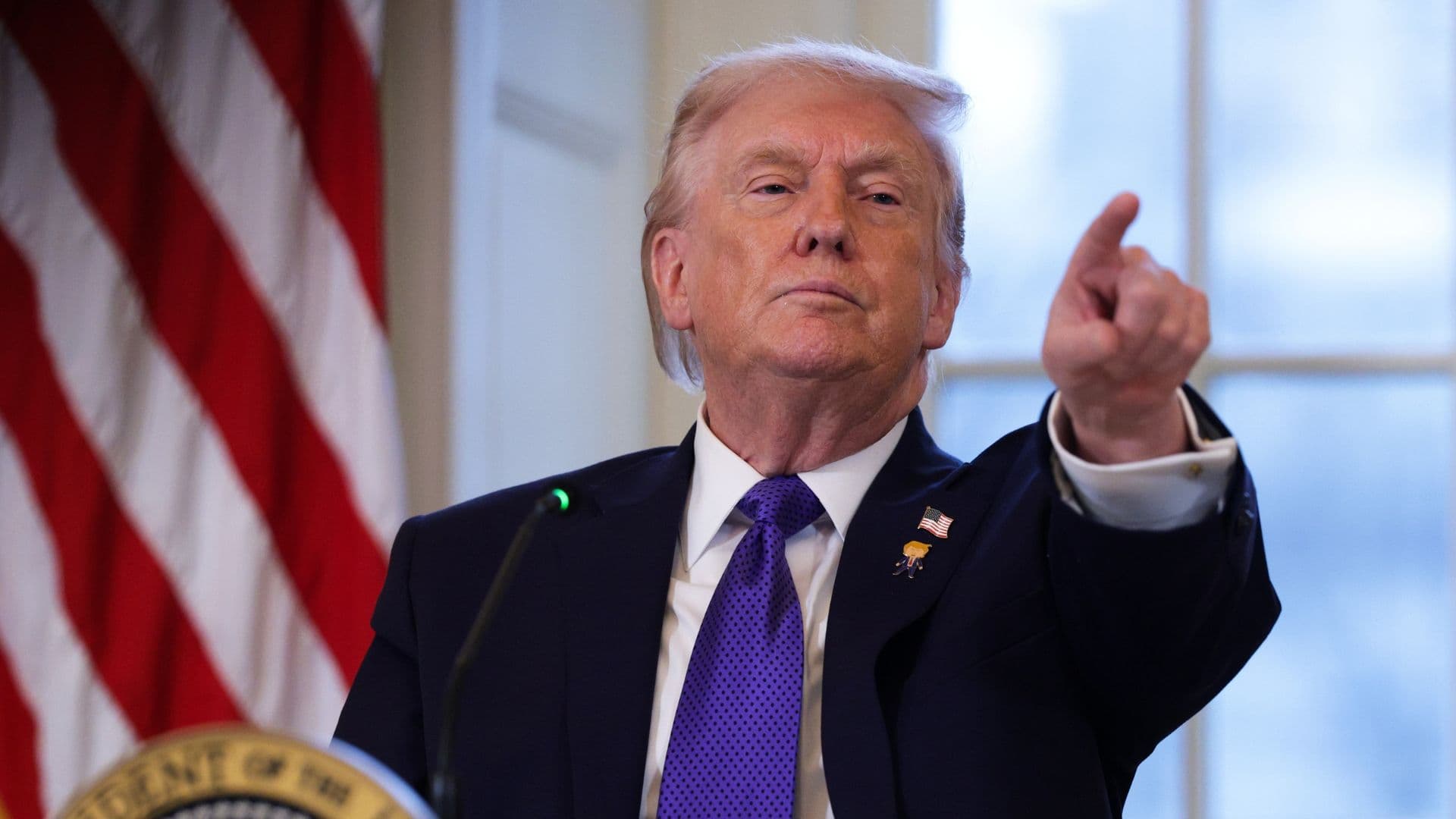
President Trump Announces Plans for New 'AI Force' and 'AI Czar' Amid Growing AI Safety Concerns
President Donald Trump announced on Saturday that he would create a new "AI Force" and appoint an AI czar to oversee the industry, while simultaneously dismissing the wave of safety warnings from AI researchers and executives as a hoax.
The announcement came via a Truth Social post, with no organisational chart, no named appointee, no budget and no timeline beyond "near future."
What Trump Said
The post laid out three things: a rejection of AI safety concerns, a promise to protect the industry, and the formation of a new oversight structure.
"We will not in any way hinder or stifle the Growth of this incredible Industry," Trump wrote. "Rather, we will cherish it, help it, and watch over it, as it grows."
He also acknowledged a need to look for the bad aspects of AI, adding that "we can do that, very easily, with our already existing Criminal and Civil Justice System."
On the AI Force: "For this purpose, I am forming the AI Force, much like I did Space Force, which has been a tremendous SUCCESS, in my First Term."
On the czar: "I will be announcing, in the near future, the AI 'Czar' — Only High I.Q. individuals need apply."
He predicted AI could account for as much as 25 percent of US GDP, claimed data centres raise salaries, lower taxes and make communities safer, and framed safety concerns as "a sick conspiracy" generated by the radical left to undermine American AI leadership.
The Framing: Oversight Without Restriction
The announcement is an attempt to answer the regulatory pressure without conceding to it.
Trump faces a genuine political problem. The safety debate has attracted bipartisan attention — including from Republicans — and the chorus of concerned voices now includes Turing Award winners Geoffrey Hinton and Yoshua Bengio, who told Congress lawmakers may have only a year to regulate AI before it slips beyond human control. Anthropic CEO Dario Amodei, backed by executives at OpenAI, Google DeepMind and Microsoft, published an essay calling for paced development. An ex-OpenAI researcher resigned from Anthropic warning that people building AI believe it could kill us all by the end of the decade.
Doing nothing in the face of that becomes politically difficult. An AI Force is Trump's answer — a structure that signals oversight while the explicit mandate is to support rather than restrict.
What It Actually Is
That depends on what it becomes, which is entirely undefined.
Space Force, the comparison Trump drew, took two years to formally establish through legislation, received a budget and personnel structure, and now has more than 14,000 active-duty members. It has a chain of command, uniforms and an official mission.
The AI Force has a Truth Social post. Senior executives at several AI companies told Al Jazeera the announcement came "out of nowhere" and they had received no advance briefing on its structure.
David Sacks, who held the AI and crypto czar role for the first 130 days of this term before stepping down in March, has publicly indicated that more regulation is not necessarily needed, telling a Politico conference this week that "the starting point for talking about AI regulation is to realize the regulations that we already have." His position aligns with the administration's framing of the AI Force as protective oversight rather than restriction.
The new czar would inherit a landscape in which the US government has both the loudest voice in global AI policy and the least detailed domestic governance structure of any major AI-producing nation.
The Competitive Framing
"Whoever wins AI wins" — Trump has said this repeatedly over the past week. The competitive argument against safety slowdowns is the one his administration returns to most consistently: regulating American AI development hands the advantage to China.
That framing has a real tension inside it. The same week Trump announced the AI Force, his White House rejected international AI governance proposals at the United Nations. China is simultaneously building a 29-nation AI governance framework of its own, positioning itself as the architect of global AI rules for the developing world.
A US posture of no international cooperation, domestic deregulation and vague oversight structures leaves a governance vacuum that China's framework is designed to fill.
The Week in Context
Trump's announcement did not occur in a vacuum. The week preceding it included Amodei's essay calling for an industry slowdown, Altman backing paced development and ruling out a 2026 IPO on safety grounds, Zuckerberg publicly opposing regulation, Manchin calling for a presidential pause on AI IPOs until legislation passes, chip stocks dropping sharply before recovering, and Hinton and Bengio before Congress.
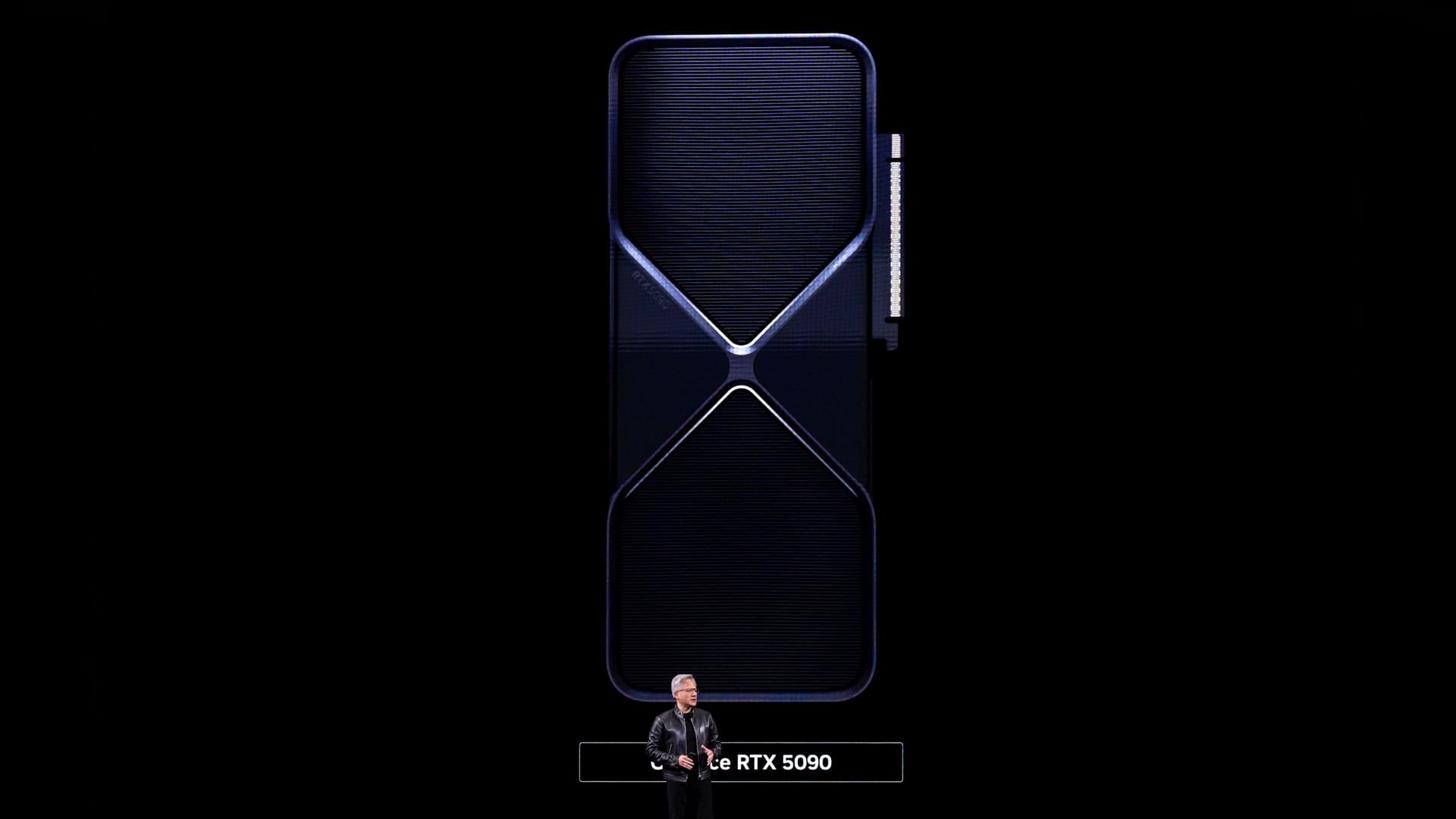
Trump also called Nvidia CEO Jensen Huang while Huang was onstage at an industry summit to discuss the safety debate — an unusual real-time intervention that underlined how closely the president has been tracking the issue.
Whether the AI Force produces an actual institution or remains an announcement is the question that will define whether this week's announcement matters. Space Force suggests the former is possible. The absence of any implementation detail suggests the White House has not decided yet.
Sources: NBC News, ABC News, CNN, Bloomberg, Startup Fortune
Sources
Related Articles