 TEKZARO
Computing
Stripped-down Windows 11 for AI developers demands 64GB RAM and insane 250 GB/s bandwidth — Project Zenith will debut on AMD's flagship Ryzen AI Halo platform
Microsoft announced Project Zenith on September 4, 2026, a radically reimagined Windows 11 experience designed from the ground up for AI developers. The platform addresses a critical pain point in modern development: the exploding cost of cloud-based AI inference. By providing a preconfigured, distraction-free Windows environment optimized for running 30-billion-plus-parameter AI models locally, Project Zenith lets developers train and test AI workloads on their desks without metering every token sent to a cloud service. But there's a catch. Project Zenith demands hardware that's extraordinarily expensive: systems with a minimum of 64GB of unified memory and 250GB/s of memory bandwidth. The first hardware available—AMD's Ryzen AI Halo and compatible devices from OEMs like Lenovo—will start at $3,699 and climb sharply from there.
What Project Zenith Actually Is
Project Zenith is not a separate edition of Windows 11. It's a hardware-specific software bundle that combines preconfigured Windows settings, developer-oriented tools, and platform features optimized for local AI workloads. Think of it as the antithesis of a consumer Windows installation—every feature that distracts or slows down development has been stripped away. The out-of-the-box setup includes Visual Studio Code, GitHub Copilot, Windows Terminal, PowerToys, Git, GitHub CLI, Azure CLI, Python 3.14+, Node.js 24+, WSL 2+ Ubuntu, .NET 10, and a curated selection of other developer tools pinned to the taskbar and ready to use immediately. Windows settings are aggressively optimized for developers. File Explorer displays file extensions, hidden files, and full file paths by default. The Details pane is enabled. Support for long file paths is active. All the distracting elements of standard Windows—recent files recommendations, sync provider tips, Start menu tips, account notifications—are disabled to create a clean, focused environment. The interface aspires to feel more like Linux than traditional Windows: clutter-free, configuration-driven, and purpose-built for command-line and development work.
The Hardware Floor: 64GB and 250GB/s
Project Zenith's defining hardware requirement is staggering: 64GB of unified memory minimum and 250GB/s of memory bandwidth. These are not mainstream specifications. They're flagship tier. Unified memory—where the processor and graphics hardware share the same memory pool—is critical to the AI inference performance that Project Zenith promises. Traditional systems separate CPU memory and GPU memory, creating bottlenecks when data moves between the two. Unified memory eliminates that bottleneck, allowing AI models to access massive datasets at the speed the GPU requires. The 250GB/s bandwidth requirement ensures that data can flow fast enough to feed modern GPU compute without stalling. For context, typical laptop memory bandwidth sits in the 40-60GB/s range. Project Zenith demands more than four times that throughput. These specifications aren't arbitrary. Microsoft claims that systems meeting these thresholds can run 30-billion-parameter AI models locally without requiring cloud services. That's a massive claim with important caveats. Actual performance depends heavily on model architecture. A 30-billion-parameter mixture-of-experts model might achieve 70-100 tokens per second. A dense 70-billion-parameter model might manage only 5 tokens per second. For many development tasks, even 5 tokens per second is fast enough and costs nothing, eliminating the need to pay cloud AI providers for inference.
AMD Ryzen AI Halo: The Launch Platform
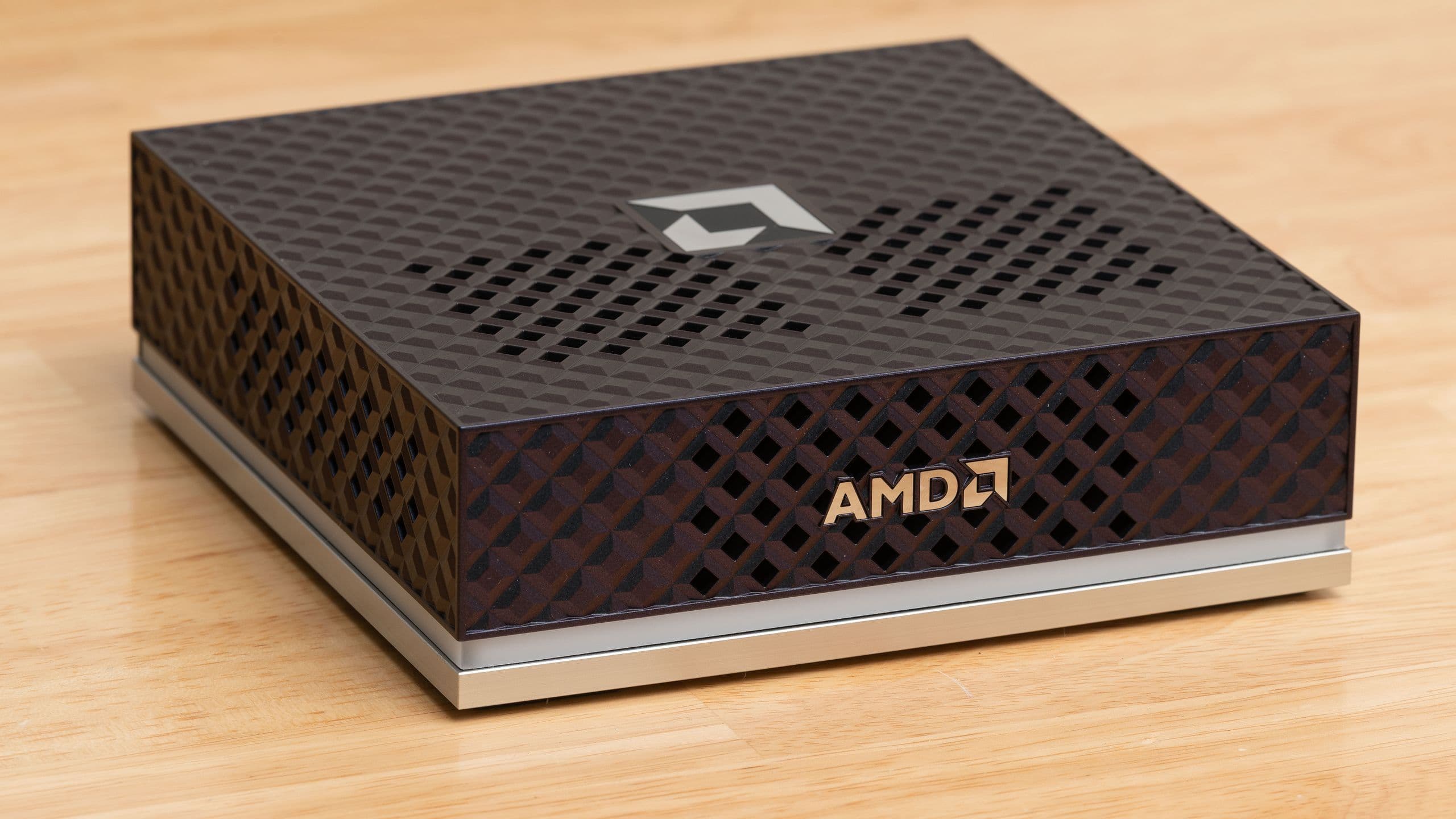
Project Zenith debuts on AMD's Ryzen AI Halo, Team Red's flagship AI-focused platform for developers and high-performance users. Halo configurations include the Ryzen AI Max+ 395 processor, 128GB of LPDDR5x-8000 RAM, integrated Radeon 8060S graphics, and up to 2TB SSD storage. AMD showed its own Ryzen AI Halo mini-PC at IFA 2026 without announcing pricing. Lenovo's ThinkCentre X Ultra, featuring similar specifications, starts at $3,699 and ships in November 2026. That price tag immediately illustrates Project Zenith's market: not mainstream users, but professional developers and AI researchers willing to pay premium prices for the ability to run large models locally. The 128GB memory configuration on the base Halo platform significantly exceeds Microsoft's 64GB minimum, providing substantial headroom for running even larger models or multiple models simultaneously.
The Cloud Cost Crisis Driving the Initiative
Project Zenith's timing reflects a critical inflection point in AI economics. Cloud-based API access to frontier AI models—through providers like OpenAI, Anthropic, and others—has become expensive at scale. Developers running inference-heavy workloads face rapidly escalating cloud bills. The token-metered pricing model incentivizes users to minimize API calls. By enabling local model inference on sufficiently powerful hardware, Project Zenith creates an alternative economics equation: pay once for hardware, then run inference for free. For developers spending thousands monthly on cloud tokens, a $3,699-$5,000+ hardware investment breaks even within months. This shift also addresses a strategic concern among developers and organizations: dependency on cloud providers. Running models locally provides data privacy, execution control, and independence from cloud provider rate increases or API changes.
The Pricing Challenge and Market Positioning
The $3,699+ entry price creates a fundamental market segmentation. Project Zenith is not for hobbyist developers or casual AI experimentation. It's for professional developers whose time is valuable enough that the hardware investment pays for itself through saved cloud token costs. That positioning is deliberate. Microsoft is not attempting to democratize local AI inference. It's serving developers and organizations for whom the economics of local inference are compelling: research teams, enterprise AI labs, and professional AI developers running inference-heavy workloads. The certification model—requiring specific hardware to meet the 64GB/250GB/s floor—also protects the Project Zenith brand. By maintaining clear hardware requirements, Microsoft avoids creating a "Project Zenith" experience that varies wildly depending on what hardware users buy. A Zenith device delivers a minimum standard of AI performance because the hardware class itself guarantees that performance.
What Comes Next
Microsoft has not announced complete pricing, exact specifications for all OEM devices, or a shipping date beyond Lenovo's November 2026 target. As hardware partners reveal their systems and pricing stabilizes, the broader market will assess whether Project Zenith's value proposition justifies the premium hardware cost. For developers currently spending thousands monthly on cloud AI inference, Project Zenith will likely deliver compelling ROI. For others, the calculus will depend on specific workloads and usage patterns. The broader significance is clear: Project Zenith represents the next phase of AI developer infrastructure, where local inference on consumer-accessible (if expensive) hardware is becoming standard. That shift has massive implications for cloud AI provider economics, developer workflows, and the hardware market. Microsoft is betting that developers will choose to own their compute and data rather than remain dependent on cloud providers. If that bet is correct, Project Zenith will become a category-defining platform. If it's wrong, Project Zenith will become another specialized offering serving a narrow slice of the market. For now, though, the message is clear: Microsoft wants developers running AI models on Windows, and it's willing to define an entirely new hardware class and preconfigured operating system experience to make that possible.
Sources
Related Articles