 TEKZARO
AI
3 AI Chip Stocks Retail Investors Are Watching After US China Trade Talks
3 AI Chip Stocks Retail Investors Are Watching After US-China Trade Talks
A Trump-Xi summit scheduled for September 24 in Washington has pulled AI chip stocks back into focus. The meeting is expected to cover tariff reductions, agricultural trade and, critically for the semiconductor sector, the AI and chip export control framework that has kept significant revenue locked out of China's market for the past two years.
US Treasury Secretary Scott Bessent and Chinese Vice Premier He Lifeng are separately launching bilateral talks on AI, trade and critical minerals ahead of the summit. China's CSI Integrated Circuits Index surged 5 percent and its CSI AI Index gained about 3 percent on Friday in anticipation.
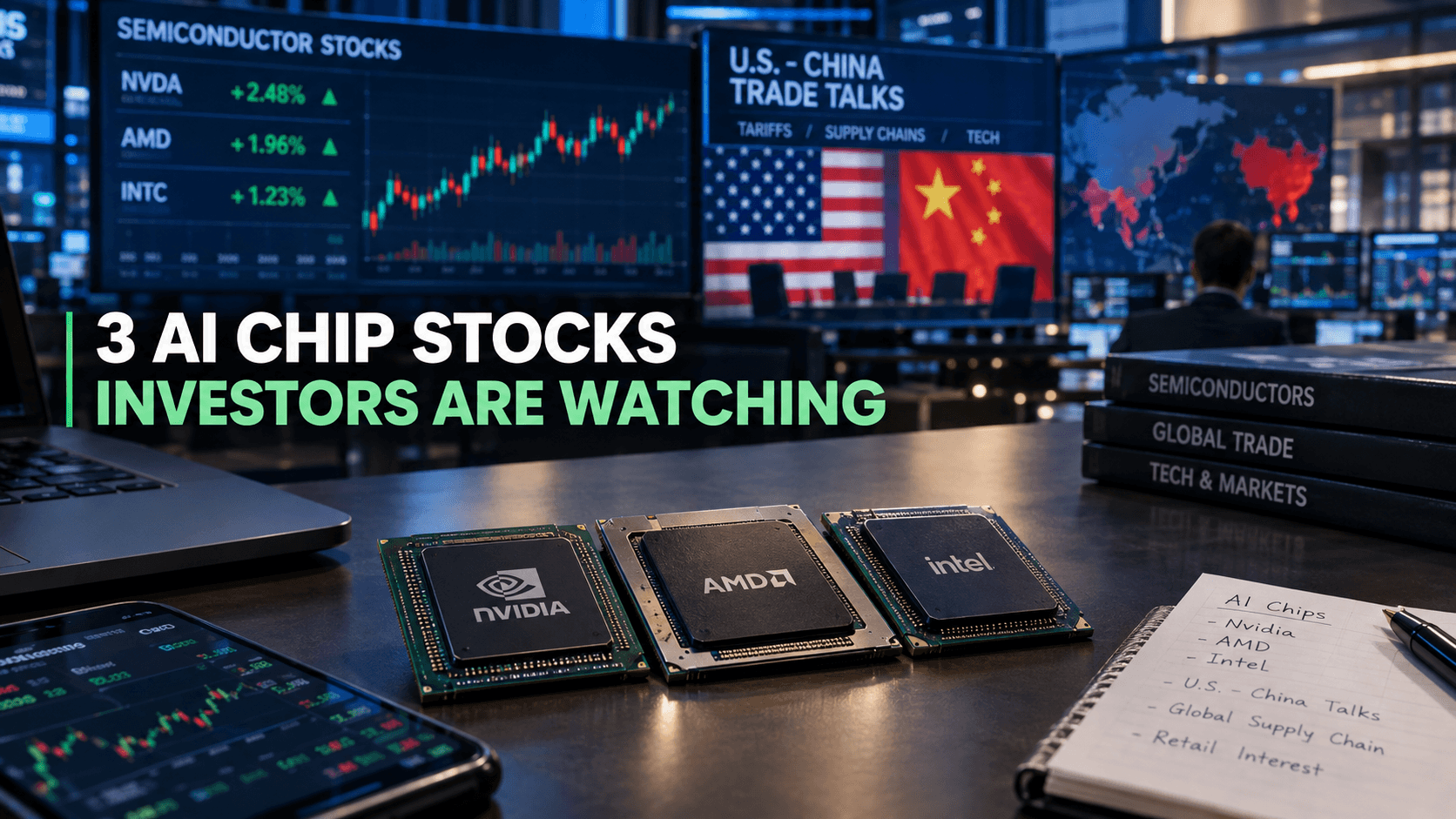
Here are three stocks retail investors have been tracking most closely.
Nvidia (NVDA)
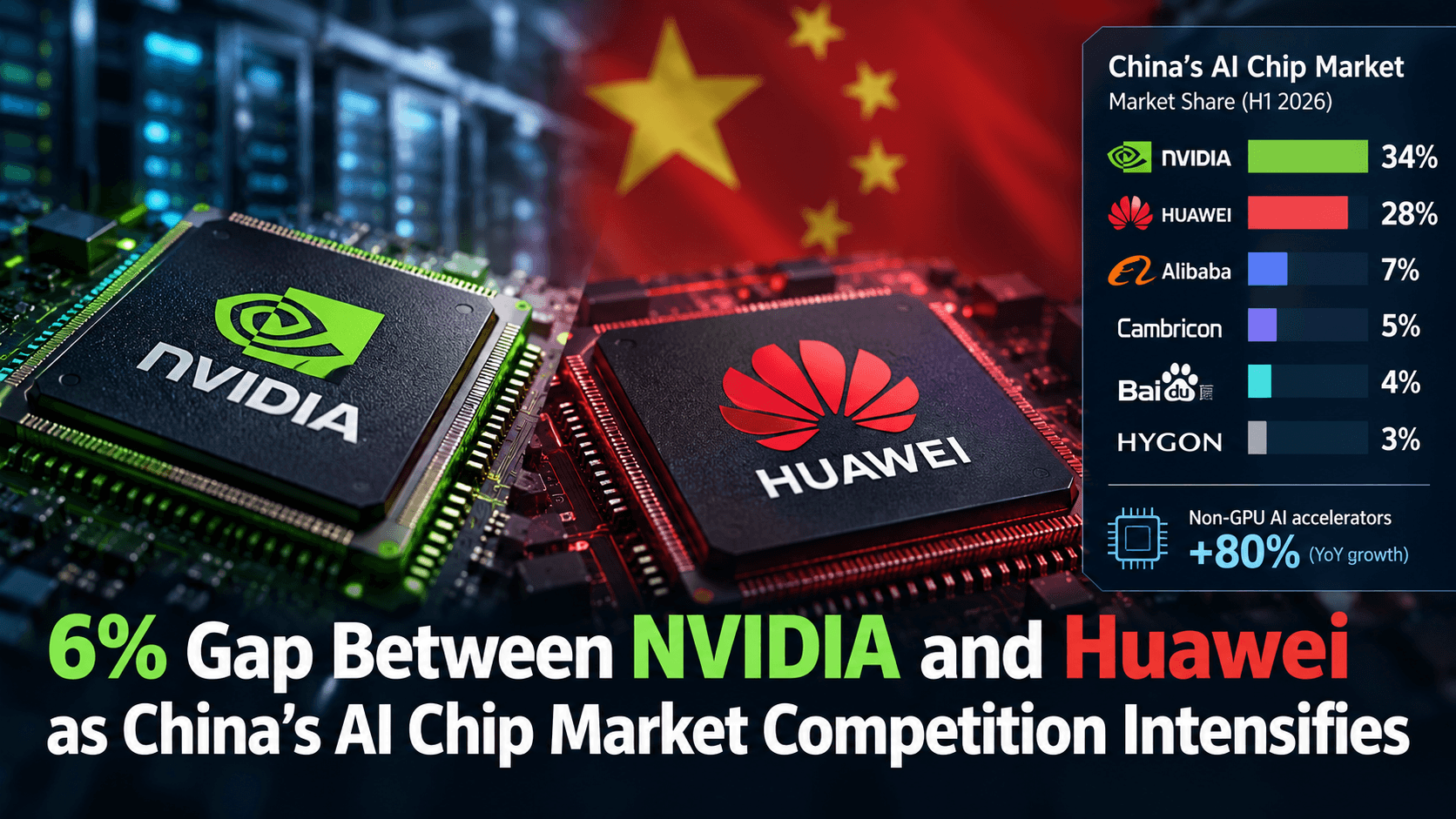
Nvidia is the centrepiece of every version of this conversation, and for straightforward reasons. China was roughly 17 percent of Nvidia's revenue before export controls, and the H20 chip — designed to comply with earlier restrictions — was subsequently blocked, triggering a $5.5 billion charge.
What the market is watching: whether the summit produces an export licence framework that allows Nvidia to sell in China again. Wedbush analyst Dan Ives, who has been among the most vocal on this, described a potential deal as removing "a significant growth barrier for the next 12 to 18 months," noting that talks have centred on a structure involving US AI chip exports to China in exchange for a 15 percent profit share arrangement. Nothing is confirmed, but the stock's reaction to summit progress or disappointment will be immediate and large.
Nvidia is running a $250 billion data centre build with OpenAI on its books, which creates headline pressure of its own. Apple overtook it as the world's most valuable company during the July sell-off. The PHLX Semiconductor Index has fallen roughly 20 percent from its June peak, and Nvidia has moved with it.
AMD (AMD)
AMD faces the same export control dynamic as Nvidia but from a smaller China revenue base, and it has benefited from any environment where buyers are looking for alternatives. The MI300X accelerator has gained data centre design wins precisely because of periods when Nvidia supply was constrained or restricted.
What the market is watching: AMD gained 2.7 percent last Monday as trade sentiment improved. Beyond the summit, the second-half server upgrade cycle is the underlying driver. Wall Street has been positive on AMD's positioning for the transition to 48V power architectures in data centres, where its AI training and inference chips are competing more directly with Nvidia than they were a year ago.
AMD also has more flexibility than Nvidia in responding to export rule changes, since its China exposure is more concentrated in categories that have been restricted and could therefore see proportionally larger revenue recovery if controls are lifted.
Monolithic Power Systems (MPWR)
Less well-known than Nvidia or AMD, Monolithic Power Systems is the name that comes up repeatedly in more granular analysis of this trade story.
The company makes power management chips — the components that sit inside the servers Nvidia and AMD are fighting to keep shipping into China. MPS generates roughly $3.3 billion from semiconductors, with meaningful sales across China, Taiwan, South Korea and US customers.
The logic for retail attention: when export rules tighten, orders for the entire server supply chain fall, not just the GPU orders. Conversely, any breathing room on chip sales ripples through to demand for MPS components. The company has design wins with major AI ASIC platforms and is positioned for the industry-wide server transition to 48V and 800V power architectures, which is the next significant hardware cycle in data centres.
Wedbush and other analysts have flagged that investor optimism around MPS is anchored in accelerating AI adoption in data centres — which means the stock is as exposed to trade uncertainty as any GPU maker, just one step removed.
The Broader Picture
The semiconductor sell-off that began in earnest in July has several causes and the summit only addresses one of them.
AI safety debate dented sentiment. Questions about how AI infrastructure financing works — whether spending at this scale is sustainable — removed confidence from the growth story. Chinese domestic competition, most visibly CXMT's Shanghai debut at a $487 billion valuation in Asia's largest IPO of 2026, raised the stakes around what market share US chipmakers will retain even if export controls ease.
Bessent said on Friday the US remains the leader in AI and is open to discussions on avoiding shared risks and avoiding bifurcation of the two systems, specifically mentioning both open and closed-weight models. The mention of open-weight models is notable — Chinese open-weight models are already competitive with US closed-weight offerings on price, and US companies have been using them, which complicates the framing of this as a one-sided negotiation.
What a retail investor should hold clearly: the summit on September 24 is a catalyst event. The chip stocks with the most direct China revenue exposure will move the most on whatever the headline outcome is. That is also exactly when moves are fastest and hardest to trade ahead of reliably.
This is market context, not investment advice.
Sources: Yahoo Finance/Simply Wall St, Reuters/Investing.com, TradingKey, NewsBytes
Sources
Related Articles