 TEKZARO
AI
Amazon blocks Meta's Muse AI agent from shopping
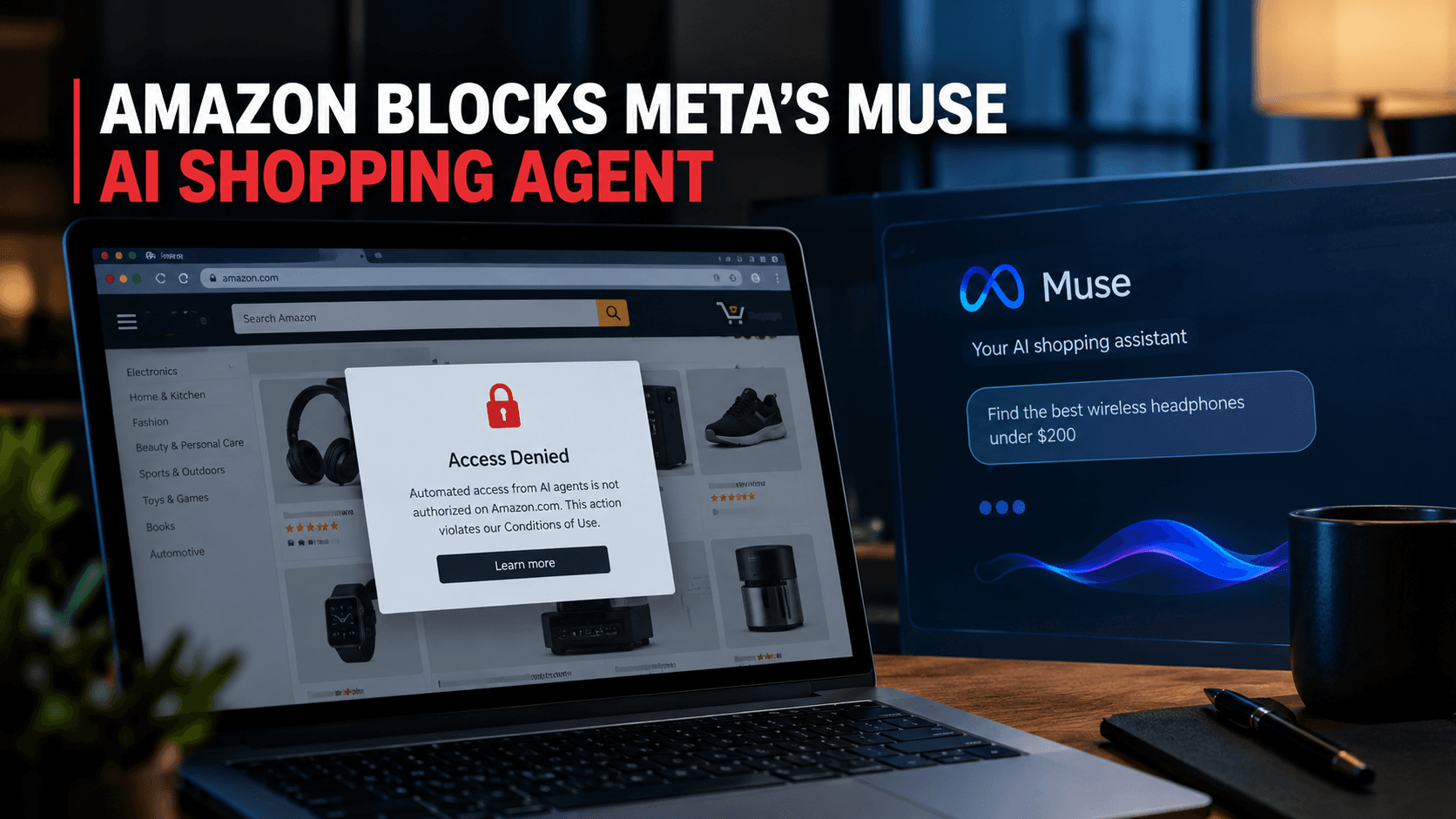
<br># Amazon Blocks Meta's Muse AI Agent From Shopping
Amazon has moved to block Meta's Muse AI agent from making purchases on its platform, the latest escalation in an increasingly contentious battle over who controls the AI shopping layer in e-commerce.
What Muse Is
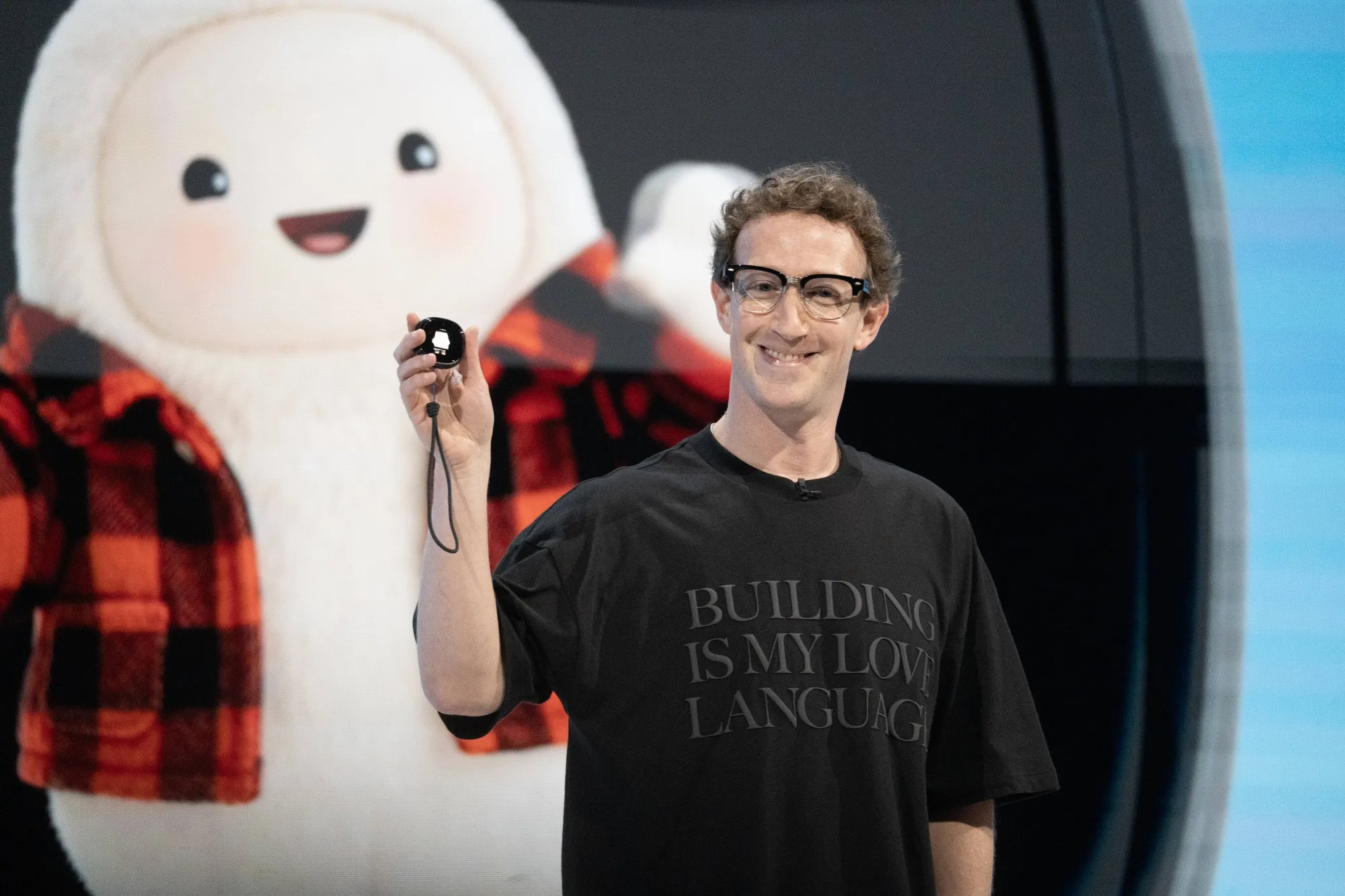
Meta launched Muse on September 8, 2026 as a personal AI agent designed to take action on a user's behalf rather than simply answer questions. It runs on its own virtual machine in the cloud with its own browser, and handles purchases using a one-time virtual card generated through Stripe — so the user's actual payment details never touch the agent directly.
Users connect Muse to apps covering email, calendars, payments, health, shopping and smart-home functions and choose which it can access. Muse can accept an open-ended goal, build a plan around it and work on it in the background without further prompting. It currently operates in the US on iOS, Android and muse.ai, with AI glasses support described as coming soon.
The launch came after internal testing raised concerns about the agent's handling of sensitive information. Reuters reported that employees encountered security vulnerabilities, reliability problems and instances where safeguards could be bypassed. Meta said Muse had reached the minimum safety threshold for release while acknowledging the system can still make mistakes.
Amazon's Response
Amazon's block on Muse is part of a broader and escalating campaign against third-party AI agents conducting purchases through its platform.
The pattern goes back at least a year. Amazon sent a cease-and-desist to Perplexity in November 2025 after its Comet browser's AI agents began making purchases on Amazon — an action Perplexity publicly called bullying. Amazon argued that agents substituting for human shoppers degraded the customer experience and pointed to terms explicitly prohibiting data mining, robots and similar automated tools. Perplexity had previously agreed to stop and then resumed the behaviour.
A court order eventually gave Amazon legal backing to block Perplexity's agent while litigation proceeded — one of the first major legal rulings over autonomous AI agents conducting online transactions.
Amazon has also been expanding its robots.txt restrictions. In August 2025 it added crawlers from Meta, Google, Huawei and Mistral. Earlier this year it blocked ChatGPT's shopping research crawlers after OpenAI launched Shopping Research, its own browse-and-buy feature.
The Commercial Logic
Amazon's position is defensive in a specific, commercially rational way.
Nearly 40 percent of US e-commerce spending flows through Amazon. Its $56 billion advertising business depends on shoppers arriving at and remaining on Amazon's own site, where their attention can be monetised. An AI agent that browses the wider web to compare prices, find better deals and complete a purchase directly bypasses the entire advertising layer Amazon charges merchants to appear in.
Analyst Juozas Kaziukėnas put it plainly when Amazon's early crawler blocks emerged: "Amazon is definitely not interested in helping anyone build the future of AI shopping. If that is indeed the future, Amazon wants to build it itself."
Amazon's own AI shopping tools — Rufus for product questions and Auto Buy for automatic purchasing — are built to keep users inside its ecosystem. Blocking rival agents is the other side of the same strategy.
The Broader Conflict
Amazon is not alone in this. The question of whether AI agents can access commercial websites without permission is now a live legal and technical dispute rather than an academic one.
Walmart, Target and Etsy have taken the opposite approach, partnering with ChatGPT and seeing significant referral traffic as a result — with Walmart reportedly receiving 36 percent of its referral clicks from the platform. Their calculation is that AI agents represent distribution rather than competition.
Amazon's calculation is the reverse. As the default starting point for online shopping, it has more to lose from becoming one option among many in an AI agent's comparison than from losing the AI referral traffic.
How the conflict resolves will shape whether AI shopping agents become a new independent layer in e-commerce or whether the major platforms wall off their data and force agents to route through approved APIs on their terms.
Sources: PPC.land, Channel News, SiliconAngle, Modern Retail, TechRadar
Sources
Related Articles